Wearing shirts that fit makes you comfortable and confident. I have compiled a handy guide with tips on rolling up your sleeves and dealing with sleeves that keep falling.
Finding shirts with the right sleeve length might be challenging at times. This may be because most shirts are designed with one size in mind without making any exceptions.
For instance, you’ll not find any shirts specifically made for “under 5’8″ tall,” but you’ll find XS, S, M, L, and XL-sized shirts.
How Do I Know If My Shirt Sleeves Are Too Short or Long?
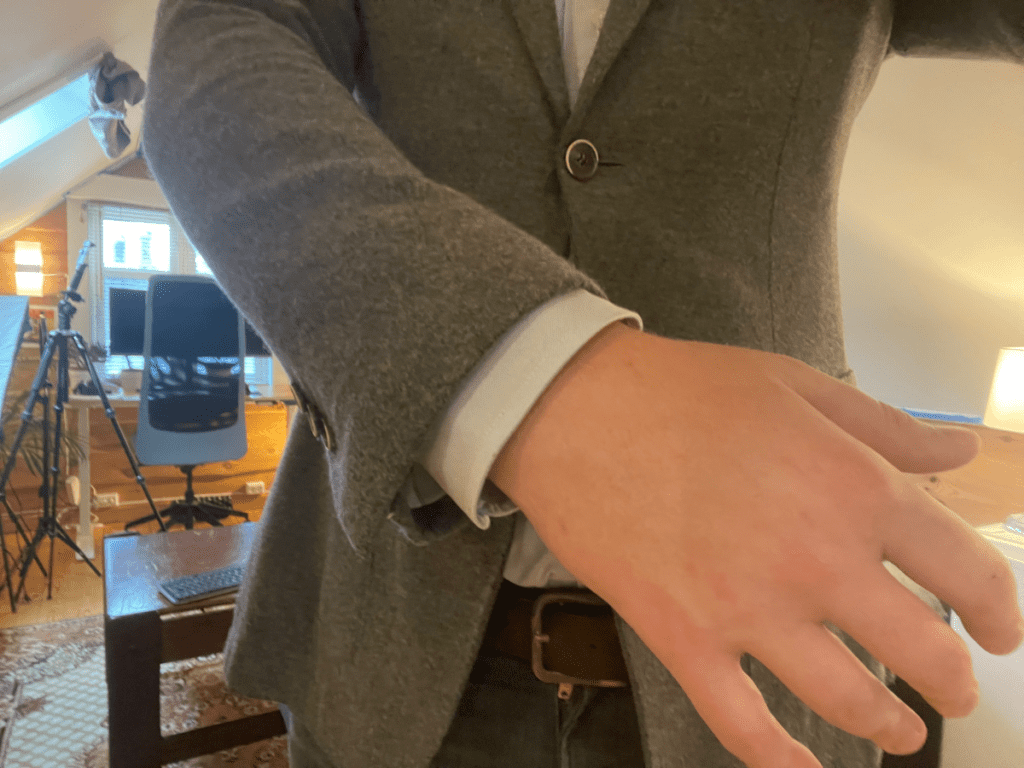
Your shirt sleeves are too short if you can see the seam between your shirt cuff and the sleeve. On the contrary, if there’s no visible shirt cuff, know that your shirt sleeve is too long.
When the sleeves are too long, you may find them falling at times. This may force you to seek a tailor’s service or look for other DIY solutions to keep the sleeves up.
How Long Should Sleeves Be?
Follow the steps below if you’re unsure of how long your sleeve should be:
First, you need to stand at attention (standing straight with your hands on the sides)
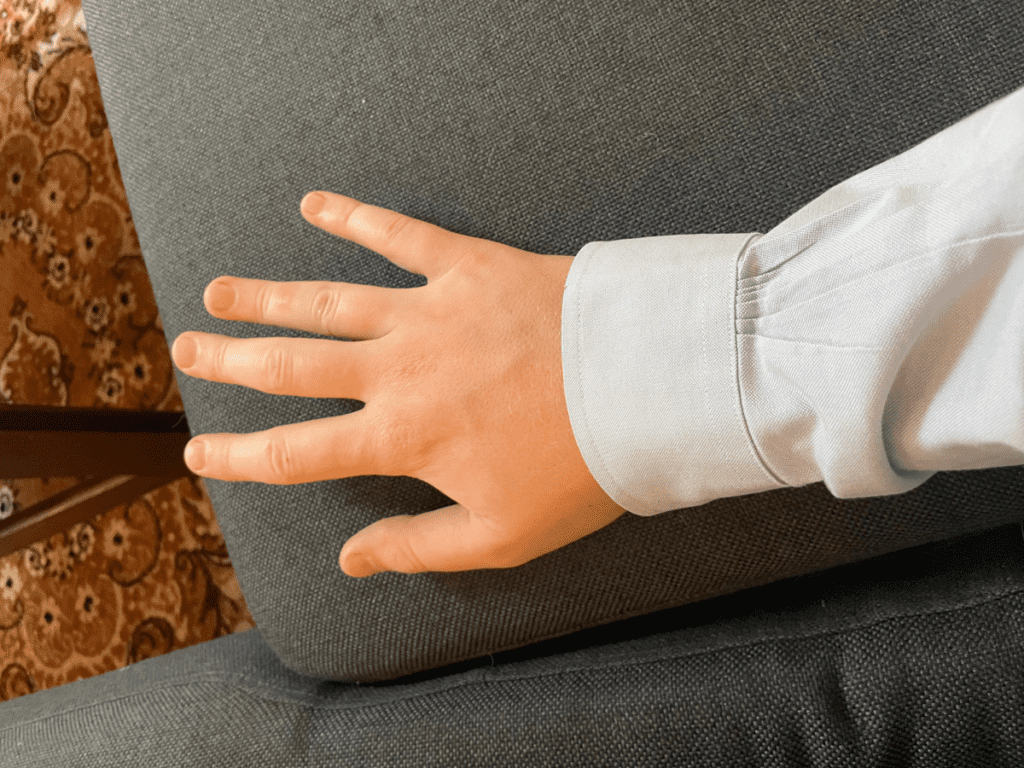
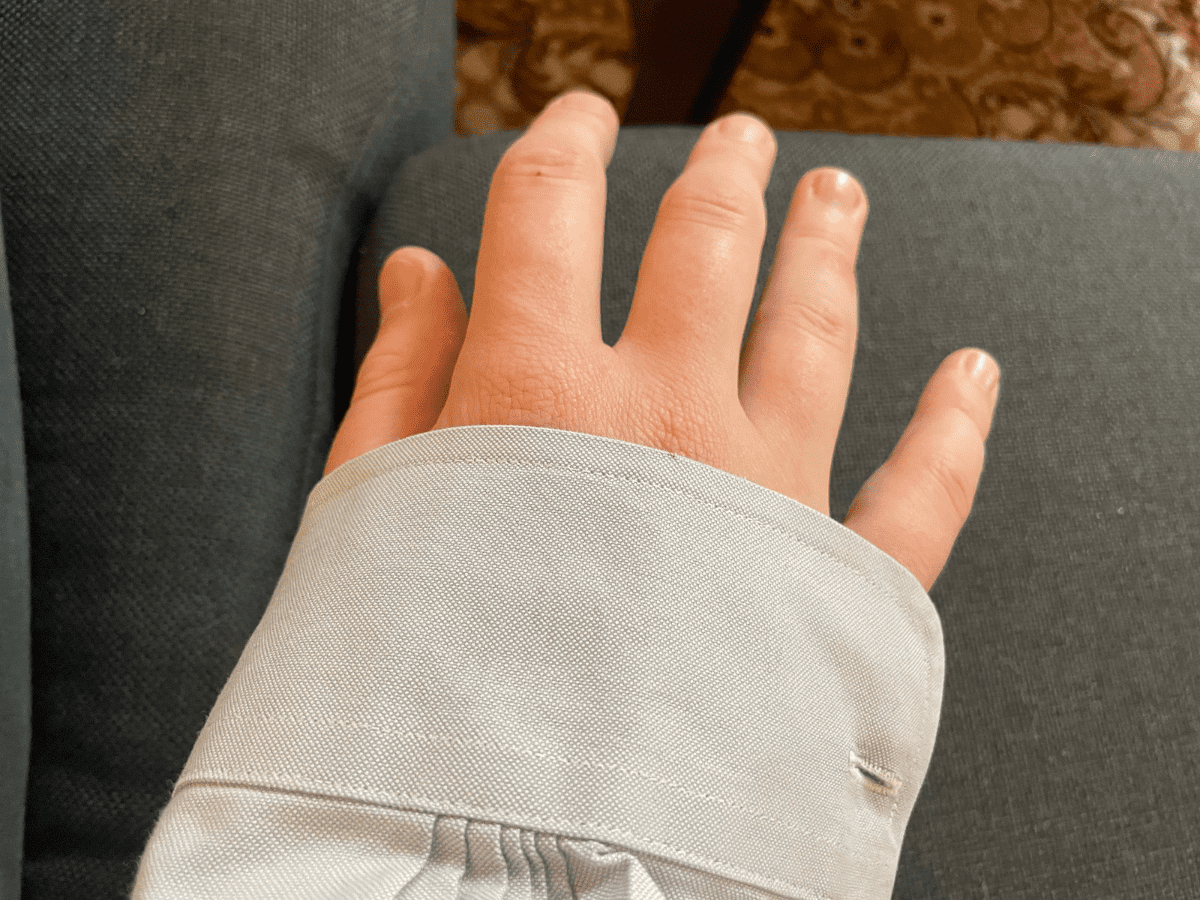
- Next, unbutton your shirt cuffs. The sleeves should come down to the first knuckle of your thumb (center of the back of the hand). Even though this may be too long for some folks, it’s key to ensure that the cuffs are sized appropriately to your wrist.
- This helps prevent the cuff from sliding too far over your hand when buttoned. The extra length makes bending or raising your arms easy without the cuff sliding up over your forearm.
- Ensure that the sleeves don’t come down any lower than the edge of the back of your hand because you need to be able to check your watch easily.
- When wearing a jacket, take note that an inch of your cuff should be visible.
- If your sleeves are covering your hand completely, you need to adjust. If you don’t adjust the sleeve length accordingly and instead opt to roll up the sleeves, you may find them falling.
I also wrote an article on keeping your shirt from riding up that may interest you.
How to Adjust Your Cuffs Tighter
If your cuff is coming too far down over your hand, I advise you to tighten the cuffs to improve the fit.
However, if the cuff stops at the correct spot on the hand, then it means that you don’t need to make them tighter. This is probably because there’s extra fabric blousing above the cuff.
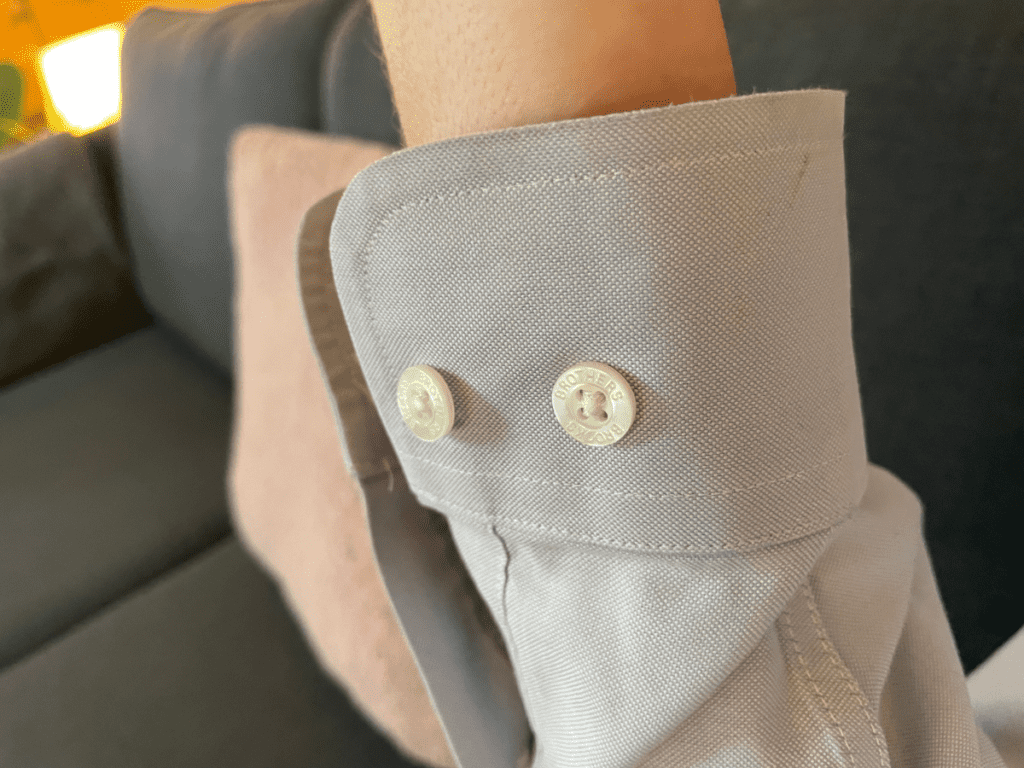
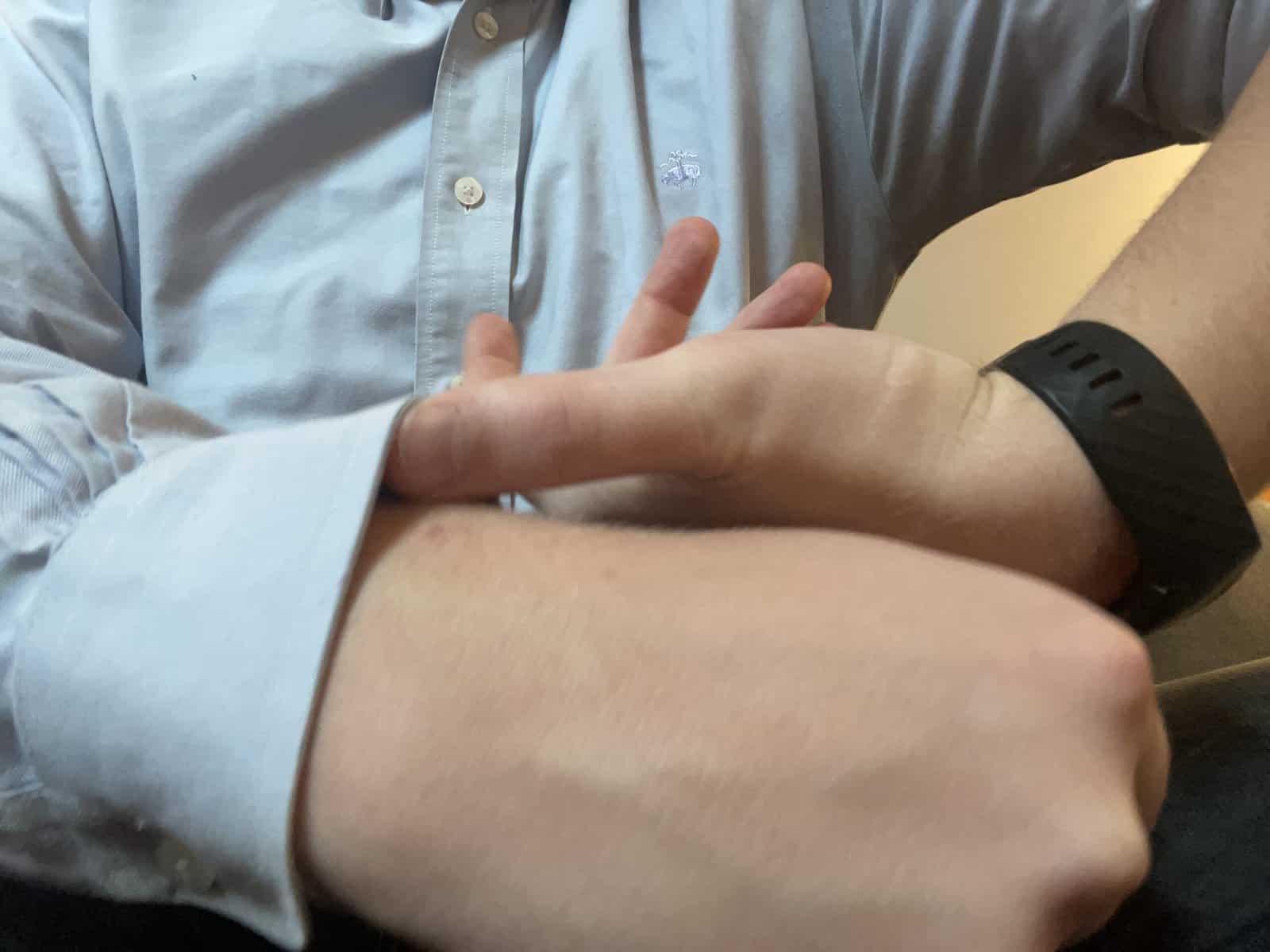
The cuff size should be 1.75 – 2″ larger than your wrist measurement as a rule of thumb. Note that cuffs are measured from the center of the button to the buttonhole.
How to Avoid Overly Long Sleeves
As the old saying goes, “An ounce of prevention is worth a pound of cure” same applies to your sleeves if you want to keep them from falling. There are two ways in which you can avoid overly long sleeves:
Buying Custom Shirts
Going custom will be great since many made-to-measure shirt brands are currently on the market. So, you can get a decent quality custom shirt at an affordable price, which is pretty cool!
However, you should note that even if buying these shirts ensures proper sleeve length, it’s not the easiest or the most affordable way.
The drawback of buying these shirts is you’ll have to submit your measurements if you are buying from an online made-to-measure brand. This is tricky for first-time custom buyers since it may result in an ill-fitting shirt.
Shop Specialty Brands
If your sleeves keep falling, one of the best solutions may be buying shirts explicitly made for shorter people.
Thanks to brands such as Under 510 and Ash & Erie, they make clothes specifically for short guys (with shorter arms). All their shirts, including dress shirts and button-ups, feature short sleeves.
6 Ways to Fix Sleeves That Are Too Long
Take a look at this scenario: You’re dressing for an event. Your shoes have been shined, your suit’s been dry cleaned, and you’re all set to go.
You wear your pants, button your shirt and then tuck in. You buckle your belt, tie your shoes and throw on your favorite jacket while glancing over the mirror.
But oops, something looks a bit off. Your sleeve is too long to the extent it’s peeking from underneath your jacket. Don’t be like most sloppy guys who shrug this off and continue their night like it’s no big deal.
A smart outlook free of falling sleeves should be your top concern. Below are ways you can roll up your sleeves to solve this problem:
The Rubber Band Trick
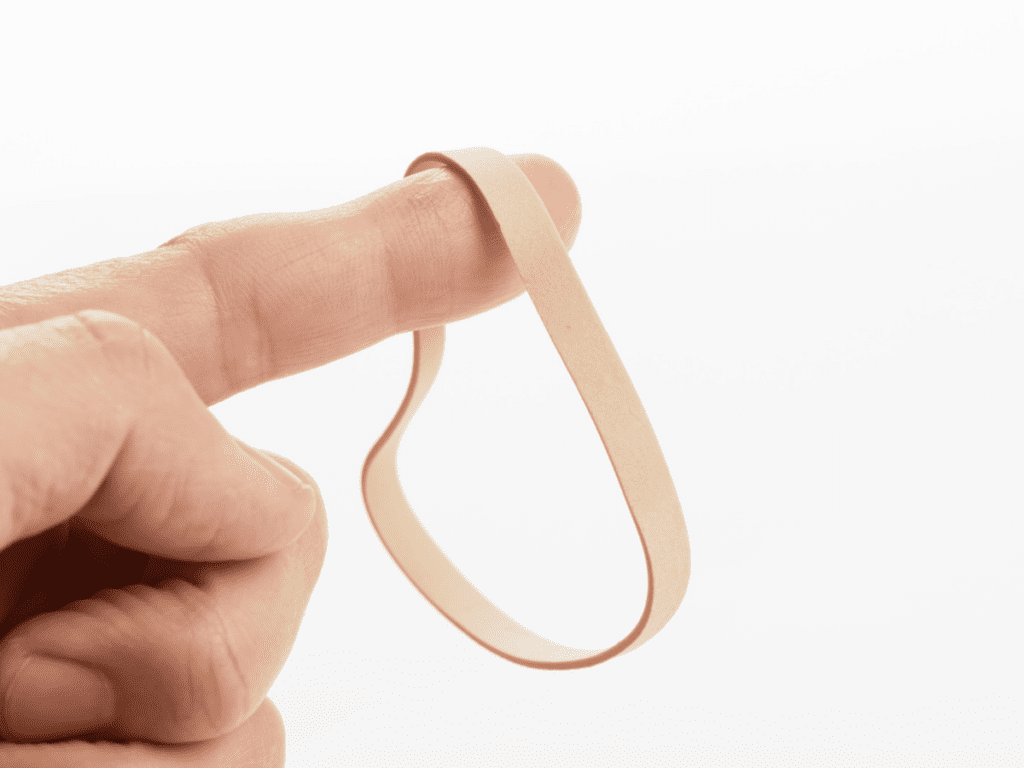
This is one of the quickest and simplest ways to fix a falling sleeve. Read on to learn the process:
Step 1: Get 2 Rubber Bands
Ensure that the rubber bands you get are large enough to wrap comfortably around your forearm.
Step 2: Remove Your Jacket
If your jacket is on, remove it and place the rubber bands over your sleeve. Position them around the middle of your forearm (where there’s the most meat).
Step 3: Tug Your Shirt Sleeves Up
Tug the sleeves until the cuffs hit your wrist. This point gives you the appropriate sleeve length. Make sure the cuffs end at the bend of your wrist.
Try bending your wrist up, and if your cuff is barely touching the top of your hand, know you’ve done it well. Next, repeat the process on the other arm.
Step 4: Put On Your Jacket
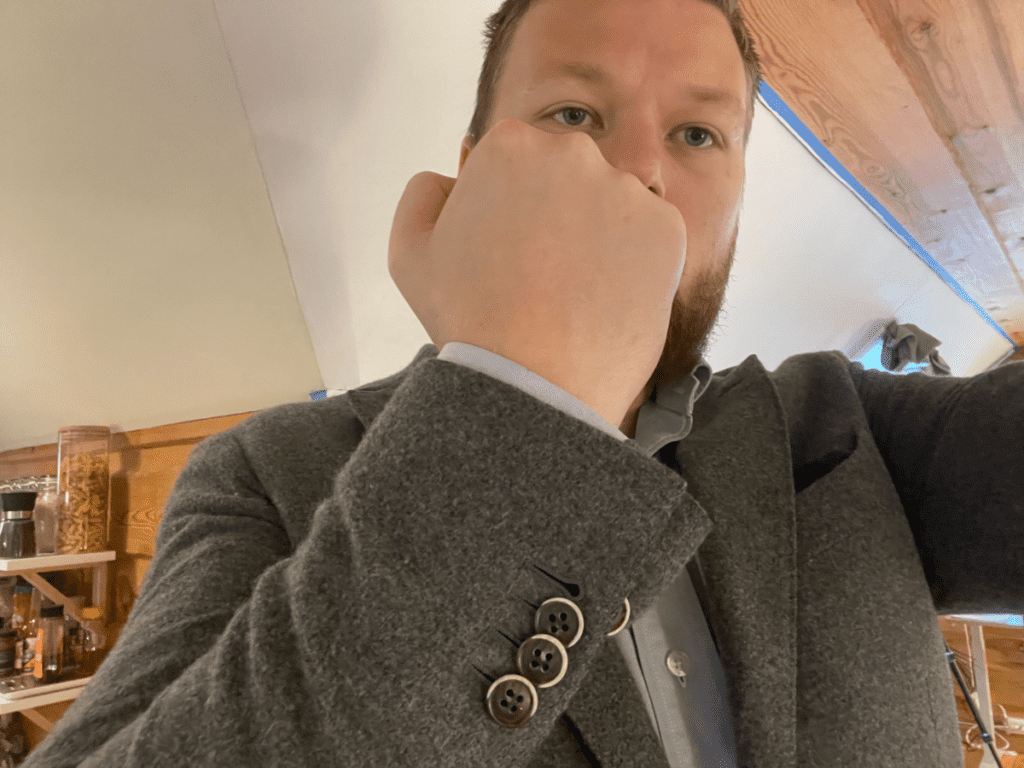
Adjust it properly after your jacket is on and you are ready to go. However, you need to ensure that not more than half of your cuff shows from underneath your jacket.
Adjust your shirt sleeves to only peeking out a half-inch if your jacket’s sleeves are short. I find shorter sleeves with proper cuff spacing better than the opposite.
The Classic Sleeve Roll
Also known as the Simple Roll trick, Classic Roll is a timeless and classy way to keep your sleeves from falling.
If you don’t want to spend too much time folding your shirt after a hectic schedule, this is the best way to fix your falling sleeves. You can also use this method if you work all day and don’t prefer exposing too much arm.
However, it’s recommended that you use this technique mostly when wearing an Oxford shirt or a dress shirt. Check out the tips below to guide you:
Foremost, unbutton your cuff and remove the cuff links.
- Secondly, fold the end of the sleeve over repeatedly until the sleeve reaches your elbow.
- Take note that you only need to fold your sleeve a few times. Next, ensure the sleeve roll is tight to prevent it from falling.
- Lastly, if you find the sleeve a bit loose, you can secure it with a safety pin to make it stay in place.
The Faux French Cuff Sleeve Roll
If your sleeves are too long and keep on falling, Faux French Cuff is a versatile and suitable trick for everyday wear.
You can try it when going to a meeting or down to the pub with your mates. Follow the steps below to know the process:
- First, ensure that you roll your sleeves (only once)
- Then button your shirt in reverse
- Use the cufflinks to keep the roll in place
- To complete the look, put on a jacket, and kick off your day
The Italian Roll/Master Sleeve Roll

Try the Italian Roll trick if you prefer having the most stylish look. It gives you a simple fold that’s not quite symmetrical.
The good thing is you can adjust the sleeves at will. To use this method effectively, check out the tips below:
The first thing you need to do is to unbutton both the cuff and gauntlet buttons.
- Flip the cuff back and inside out, then pull it below the elbow without folding. Don’t forget to turn the sleeve inside out as it goes.
- Next, take the bottom of the inside-out portion of the sleeve and fold it up. Continue folding the sleeve until it traps the bottom of the cuff.
- You can leave as much or little of the inside-out cuff showing above the fold, depending on how you want it. You’ll find this method interesting, especially if the inside of your cuff has a contrasting lining.
Remember that this roll is simple to unfold and pull once you’re done wearing your shirt.
The AIFA Sleeve Roll
Although the AIFA Roll may be the least well-known sleeve roll type, it screams casual and would be ideal when strolling through the park. It will accentuate your triceps and biceps as it follows the rule of thirds. Go through the tips below to learn the process:
Like the other rolls, start by unbuttoning the cuff
- Grab the cuff edge and roll it back twice (over itself).
- If you want to roll the cuff edge further, ensure you don’t go beyond your elbow.
The High Roller

Try the High Roller if you want to show off your arms. It’s ideal for people that do manual work since it gives them a laidback outlook. Check below how you should do it:
Roll the sleeve up to the elbow about 3 – 5 times. This depends on the length of your arm
- Confirm whether the sleeve sits just above your elbow
- If it doesn’t, adjust the sleeve roll to get the right length
Can I use Garters to Fix My Falling Sleeves?
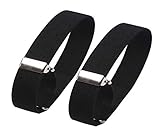
- 1 Sleeve Garter Material:70% Polyester 30% Elastic, Shirt Sleeve Holder Comfortable to Wear. Suitable for: business people, bartenders, bar staff, teachers, office workers, waiters and grooms.
- 2 Adjustable almost all Sleeve and Arm,Elastic adjustable arm band, suitable for arm circumference: 12.7-50 cm / 5-20inches.
- 3 Give your partners or customers a good first impression, so that you look professional and trustworthy
- 4 Examine: Cyprinus Carpio being By the Producer, We Examine Shirt Sleeve Holder every detail, Every one .Choose the Best one

Do you know what a sleeve garter is? If you don’t, it’s a piece of fabric clothing or a narrow fabric band that allows you to customize your sleeve length.
It’s fastened slightly above your elbow to help keep your sleeve in place. Therefore, if you are tired of falling sleeves, try investing in a pair of garters.
Compared to using rubber bands, wearing shirt garters makes you more stylish and outstanding in a crowd. Some people, however, prefer concealing their sleeve garters. They have to slip on a V-neck sweater or a jumper over their shirt to achieve this.
You’ll notice that most sleeve garters are elastic, especially for men. However, this doesn’t mean that you won’t find metal or silk sleeve garters for men in the market.
Considering the wide range of colors and patterns, I’d recommend you first check online before getting some. Even though garters are not that common, you can get them in an online clothes shop at an affordable price.
How to Wear Garters
Would you like to pull off a classic David Beckham look? If yes, try matching a light blue shirt with a pair of smart black trousers and complete the fit with garters and sunglasses (Ray-Bans).
Alternatively, if you’re heading to a 1930s-themed party and don’t want your sleeves to keep falling, put on garters with a standard pair of trousers and a waistcoat.
Sleeves FAQs
Question: Can I Lengthen My Short Shirt Sleeves?
Answer: No, you can’t. This is because shirt sleeves are not reinforced with extra material, unlike jacket sleeves. So, if you find yourself with a short sleeve, you have no other option but to buy a new shirt or order bespoke since no tailor can extend the sleeves for you.
Question: Can I Shorten My Shirt Sleeves?
Answer: Yes, you can. Since this involves just a simple alteration, any decent tailor should be able to shorten your sleeves easily.
Question: How Can I Fix My Baggy Shirt Sleeves?
Answer: Look for a good tailor if your sleeves are baggy and uncomfortable to make a slimmer fit.
Bottom Line
Avoid too long or short sleeves when buying a new shirt by going custom. Alternatively, for the shirts you already own, getting them fixed by a tailor is the best long-term solution.
You can also try rolling up your sleeves or wearing an extra layer for a quick D-I-Y fix. Last but not least, you can make it a habit to buy clothes made specifically for shorter individuals.
I also have a comprehensive guide on stopping all your clothes from falling down that may interest you to read next.

I’m an expert wardrobe organizer and a bit of a clean freak. I created this website and its YouTube channel to share practical guides about laundry and organizing. My teachings have been featured in multiple large news publications, and I’ve self-published two wardrobe organizing books and an entire course on the subject.