
We have all been here: you are doing the laundry without paying particular attention, and you accidentally use too much detergent.
If this happens once or twice, it really is not a huge problem. However, there are some serious drawbacks to using too much laundry detergent in the long term.
Using too much laundry detergent is bad for your clothes and harmful to your washing machine. The extra soap suds leave residue on your clothes, making them look dull with white marks. Your washer is more likely to malfunction if you use too much detergent, so one needs to run a cleaning cycle.
If you have accidentally been a bit heavy-handed in pouring laundry detergent into your washing machine, worry not!
In this article, we describe exactly what to do if you have used too much laundry detergent.
We also explain the effects of using too much soap in your front-loader washing machine.
Can Too Much Laundry Detergent Be Bad?
Washing machines require a surprisingly small amount of laundry detergent. People tend to use a little more than the recommended amount, especially if their clothes are extra dirty.
This is entirely counterproductive.
Besides wasting money on buying more detergent than you really need, using too much laundry soap is harmful to your clothing and the functioning of your washing machine.
Effects Of Too Much Detergent On Your Clothing
If you use too much laundry detergent, your clothes will look dull and murky once they have dried. You may even see some white, chalky marks or spots, especially if you use washing powder instead of liquid.
It is harder for your washing machine to rinse all the suds from your clothing if you use more detergent than necessary.
The excess detergent causes a build-up of residue on your clothing, making them less bright and more prone to collecting dust and pet hair. It is difficult to wash this residue out.
Not only is this bad for our clothing, but it is bad for our skin. The soapy residue can irritate your skin or result in an itchy rash.
Have you ever wondered if you can do laundry without detergent?
Too Much Detergent Is Bad For Your Washing Machine
Using more than the recommended amount of laundry detergent contributes quite significantly to the wear and tear on your machine.
If you use too much detergent over months or years, your washing machine will gradually become weaker until it just gives up one day.
Excess detergent accumulates in nooks and crannies inside the machine. This becomes a breeding ground for mold and bacteria. Over time, this gives your machine a nasty odor.
The machine has to work harder to rinse your clothing if you use too much soap. This places strain on the motor and can cause it to malfunction.
The excess suds may also block the washing machine’s drainage pipe. Soap-suds will remain in the machine, building up residue.
When you run your washing machine on high-efficiency cycles, it uses less water. You, therefore, should use an even smaller amount for these cycles.
How To Tell If You Use Too Much Laundry Detergent
The top indications that you are using too much laundry detergent are:
- Bubbles left behind in the washing machine drum when you remove your clothes
- Excess suds leaking from the machine during the washing cycle (in extreme cases)
- Detergent does not fully rinse from your clothing, and they appear dull with white marks when they dry.
- Your washing machine has a funky, musty smell
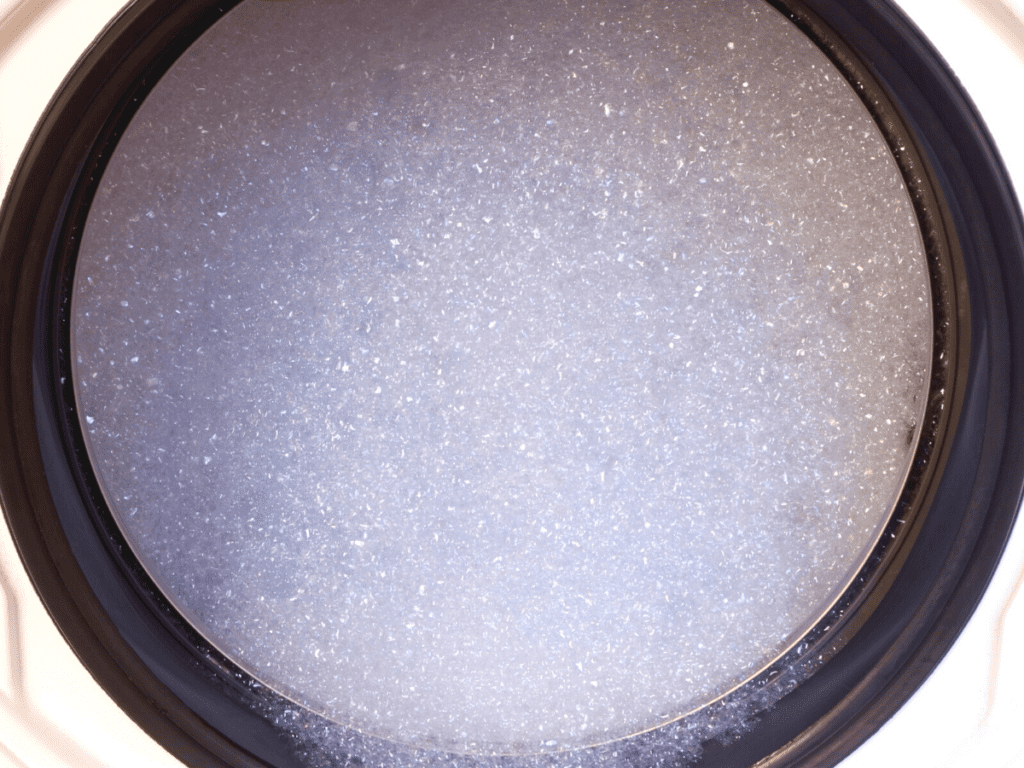
What To Do When You Have Used Too Much Laundry Detergent
Accidents happen! Using too much detergent once or twice by mistake is totally fine as long as you take some steps after the incident:
- Leave the clothing in, and let your machine run a second rinse cycle. If it does not have such a setting, simply run another wash cycle without any detergent. Your clothes should come out less soapy.
- Take your laundry out of the machine, and let it run a cleaning cycle. This will help to get rid of excess suds inside the machine, preventing the build-up of residue that causes mold and bacteria to grow.
- If your washing machine does not have a setting for a cleaning cycle, simply run a rinse cycle while the machine is empty.
- You can add a commercial washing machine cleaner or a ½ cup of white vinegar into the hole you normally put the detergent into. This will help to flush the drainage system out and get rid of all excess suds.
What Is The Correct Amount Of Laundry Detergent To Use?
Manufacturers usually recommend using much more laundry detergent than one actually needs. It is just to encourage customers to buy more detergent.
Generally, it is better to use less than what it says on the packaging.
Also, do not assume that the cap on the detergent bottle is intended for measuring the amount you need. You will use way more soap than necessary!
For a normal front-loader washing machine with a standard size load (10 to 15 pounds), use the following guidelines:
- Add 2 teaspoons of concentrated liquid laundry detergent
- Or use 2 tablespoons of laundry powder
- Or use 1 pre-measured pod
For a larger load of washing, double these quantities.

If your clothing is very dirty and stained, pre-soak them before you put them into the washing machine. This is far more effective in getting your clothes clean than adding more laundry detergent.
It is useful to measure out the correct quantity of detergent you need in the detergent cap and to mark a line at the right level with a permanent marker.
This way, you will not need to dirty a spoon each time you put some laundry in to wash.
Conclusion
Remember that when it comes to laundry detergent, less is more!
Using the appropriate amount of detergent will save you money, keep your washing machine in good working condition for longer, and keep your clothes looking bright and clean.
If you accidentally use too much detergent, don’t fret! Just run your clothes through another rinse cycle, and then when the machine is empty, run another cleaning cycle to flush out the excess suds.

I’m an expert wardrobe organizer and a bit of a clean freak. I created this website and its YouTube channel to share practical guides about laundry and organizing. My teachings have been featured in multiple large news publications, and I’ve self-published two wardrobe organizing books and an entire course on the subject.
Anthony
Friday 2nd of February 2024
Very helpful fixed the issue
Jeri
Wednesday 13th of April 2022
Helpful