
Building a capsule wardrobe offers many benefits. It lets you enjoy all of the pieces you have in equal measure, makes the act of dressing up more convenient and enjoyable, and of course, let’s not forget how much closet space it saves. Now, just think of how practical a capsule wardrobe would be if you designed it around traveling.
You can build a travel capsule wardrobe by sticking to your absolute clothing essentials. Plan your outfits based on your destination, activities, and expected weather. Skills in layering clothes will also help.
In this article, I will further shell out those steps. I’ll give you a comprehensive guide to building a travel capsule wardrobe that’s suitable for your needs.
1. Determine the Details
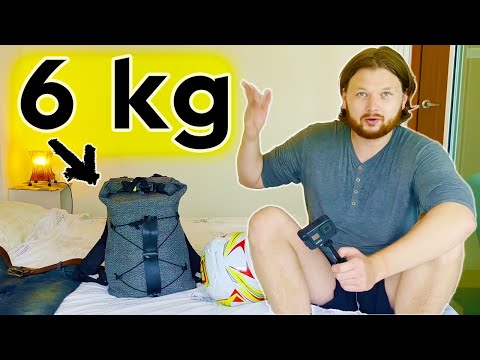
As we have mentioned above, the first step towards building a travel capsule wardrobe is to determine the details of your trip. There are three main things that you should consider.
Your Destination

The destination will determine the articles of clothing that are most suitable for you to pack. Taking the time to research the culture of your destination is always a good practice and can minimize any wardrobe-related misunderstandings. These are some of the questions you can ask yourself:
- What is the usual climate in that location? Is it an area known for its intense heat?
- What is your destination’s culture?
- How do they generally perceive clothing?
- How do the locals dress?
Dressing like the locals can help minimize the risk of getting targeted by pick-pockets and other negative elements.
If there’s one tip I’d like you to take away from this article, it’s this: blending in in an unfamiliar location is a safer route than standing out.
Your Planned Activities
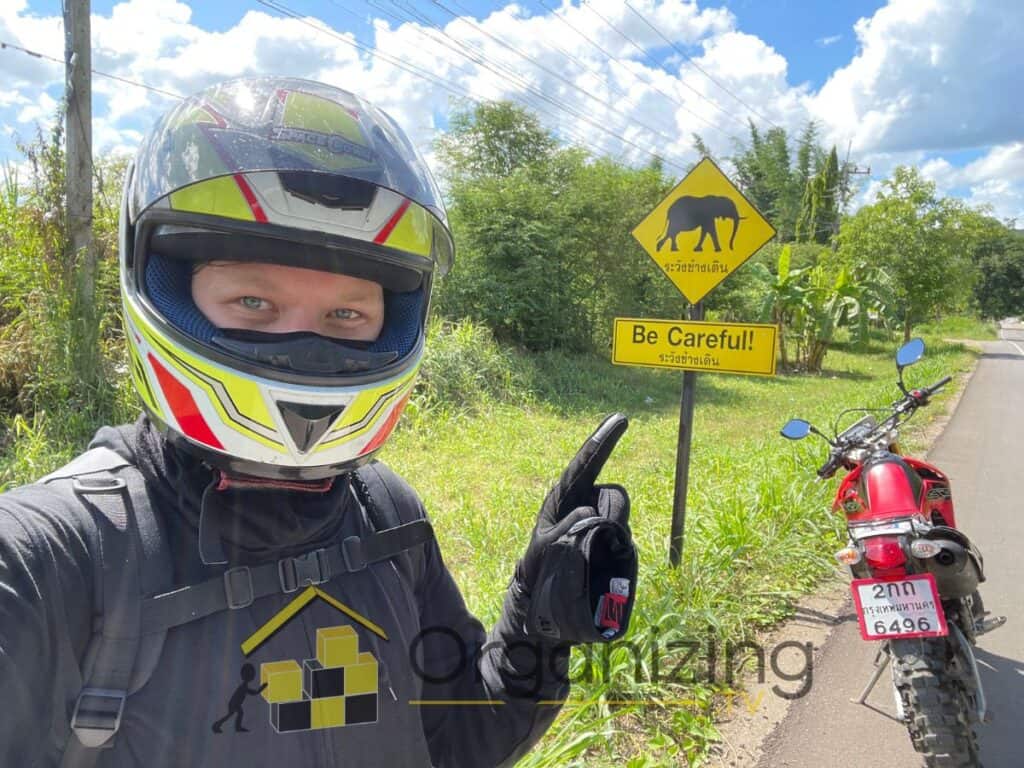
The next thing that you should consider is your planned activities. Are you going mountain climbing? Hiking? Swimming? Do you plan on partying and going out? Will you be attending a special event? Who are the people you’re meeting?
I usually pack one set of “fancier clothes,” but I still make sure that every piece will seamlessly match with many of the other pieces I’m taking along.
Your Expected Weather
Lastly, don’t forget to account for the weather. Relying on the weather forecast is a nice idea, but it’s still ideal to research the usual weather patterns of your destination at the time of your visit. This way, you’ll also be able to prepare for sudden changes.
2. Identify Your Essentials
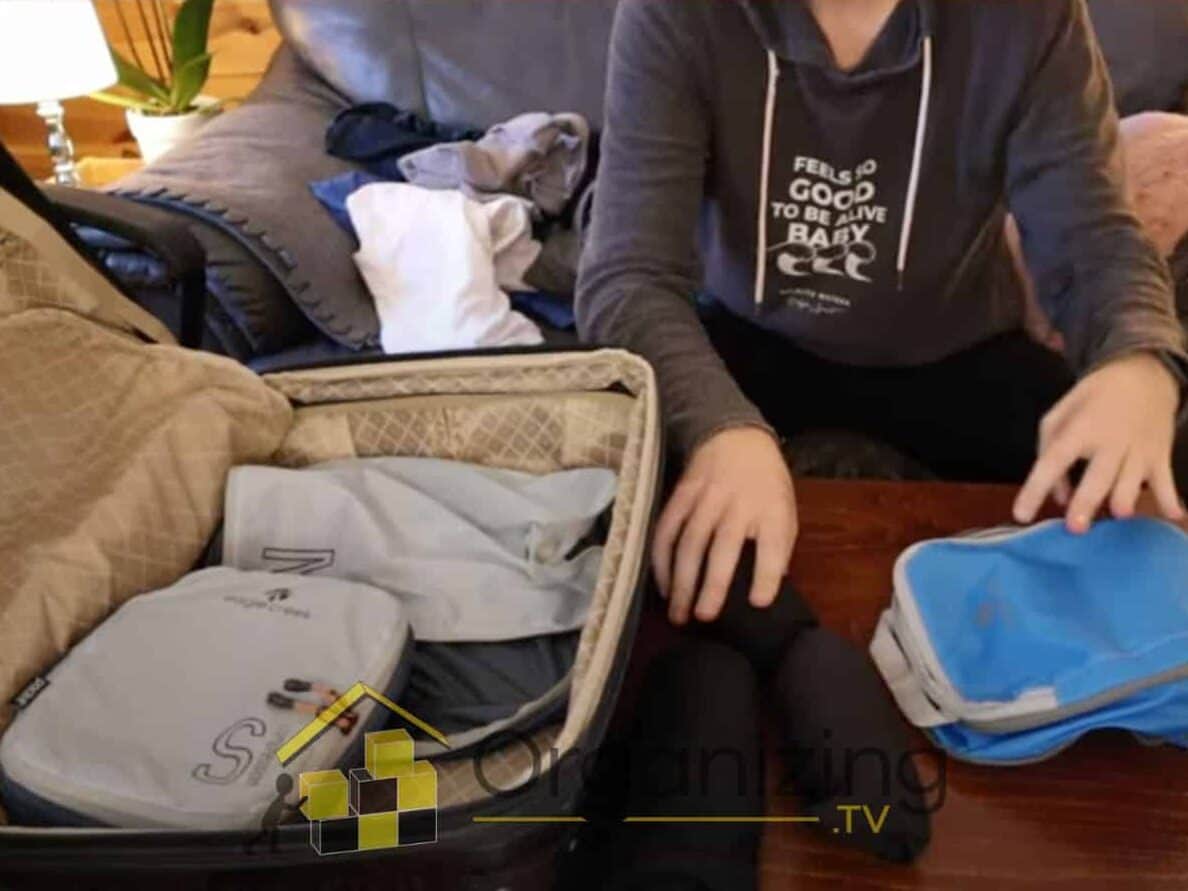
When in doubt, it’s best to pack closet essentials in neutral colors. There are plenty of resources online that share ready-made checklists of preferable articles of clothing to bring. These references can help immensely, especially if you’re new to creating a capsule wardrobe.
However, I still advise sticking with the items you are most comfortable with. For instance, do you enjoy wearing jeans, or are you more confident in shorts? Do you tend to wear blouses more than shirts? Make your essentials your own. Focus on the articles of clothing that bring you the most comfort, convenience, confidence, and joy.
In addition, the “neutral color” rule isn’t an absolute requirement. The only reason why many capsule wardrobe enthusiasts recommend them is that colors such as black, white, grey, and tan usually never go out of style.
They also don’t stand out as much. However, keep in mind that one of the objectives of building a capsule wardrobe is to enjoy your clothes more.
So if you love color and patterns, don’t hesitate to add them to your packing list. A single carefully curated bold-colored or patterned piece can go a long way in giving your outfits a spark of color.
3. Mind the Material

If there’s one factor that sets a travel capsule wardrobe apart from the regular one, that would be fabric.
This tip is also easy to forget. There are two main benefits to minding the material of your chosen pieces:
- Certain fabrics have textures that instantly add visual interest to a neutral article of clothing.
- The material of your chosen piece of clothing can impact how comfortable it’ll be. I personally recommend sticking to fabrics that can help you manage sweat. Depending on your destination and planned activities, you may also opt for those that can keep you cool or warm.

4. Layering Is Key
I must admit that there’s a learning curve to hurdle through when you first start layering clothes. However, there are tips that can help make the process easier.

Here are a few that helped me master the art of layering when I was just beginning to immerse myself in the world of capsule wardrobes.
- Focus on pieces instead of outfits. It is significantly easier to streamline your travel wardrobe when you think in terms of pieces instead of full outfits. Choose items that will look well when mixed and matched with each other.
- Favor lightweight pieces. This is a great tip to keep in mind, regardless of the type of capsule wardrobe you’re building. Opting for lighter pieces will benefit you when traveling. This is not only because they are comfier to wear, but they’re also easier to fold and pack.
- Choose your outerwear wisely. In fact, I recommend sticking to only a single bulky outerwear when traveling. After all, these pieces tend to take up a lot of precious luggage space.
5. Stick To Versatile Shoes

Here’s a quick rule of thumb to remember when choosing shoes to pack: limit it to two pairs whenever possible. The only time when I would possibly recommend bringing more than two pairs of shoes with you when traveling is when you’re attending a special event.
I prefer to pack only a single pair of shoes when traveling. My favorite go-tos are black sneakers and/or brown loafers.
I usually opt for black sneakers for casual trips. Meanwhile, I go for loafers when I’m not quite sure of my activities as they’re more befitting for formal events.
The main benefit of sticking to a single pair is that you might not even need to pack it anymore. You can wear it from the get-go.
6. Accessorize!
It is not uncommon for people to go over the top when it comes to packing accessories. After all, they don’t take up a lot of space.
Indeed, maximizing limited luggage space is one of the primary benefits of opting for a travel capsule wardrobe in the first place. However, that’s not the core essence of this practice.
Building a capsule wardrobe seeks to streamline your fashion choices, refine your taste, and learn restraint. You will be going against this philosophy if you choose to bring your entire collection一even if they do fit in one box.
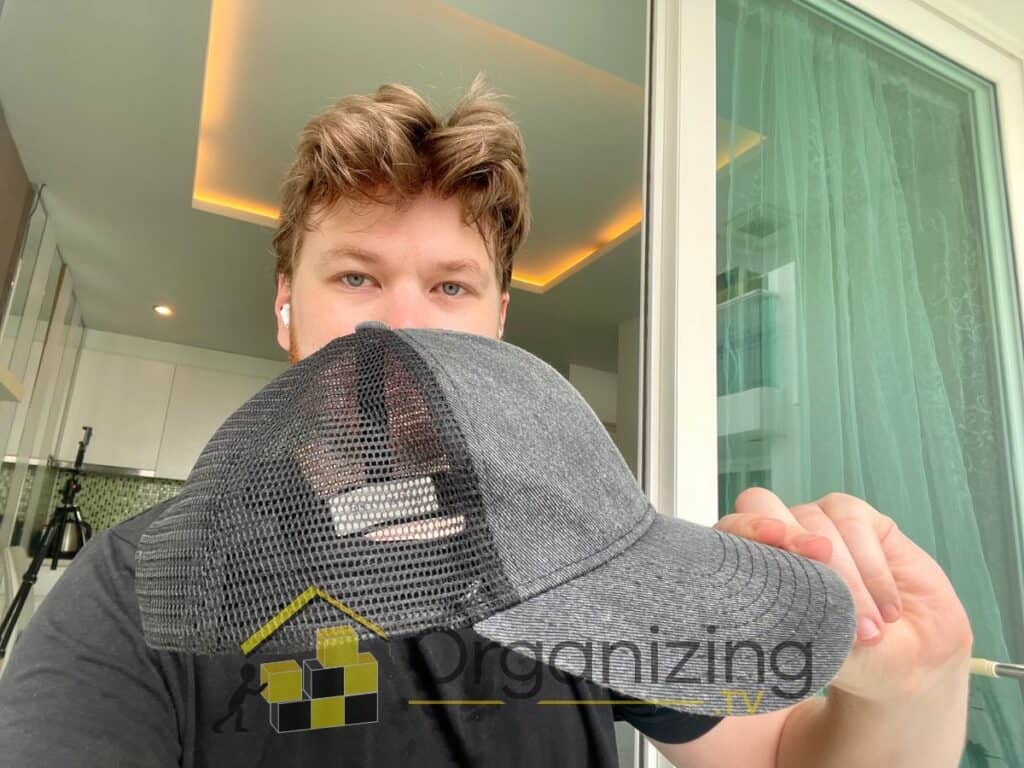
Instead, I recommend two complementing sets that you can mix and match when it comes to jewelry, and only bring one piece for all the other accessories you want to bring. For instance, instead of bringing multiple headwears, just bring a hat and a beanie. That’s it!
7. Pack Like a Pro

If you’ve been following this post so far, then chances are all that’s left for you to do now is pack. Don’t worry—a travel capsule wardrobe is significantly easier to pack than a regular wardrobe.
However, there are a few tried-and-tested tips that will make the packing process even more efficient:
Choose the Right Piece of Luggage
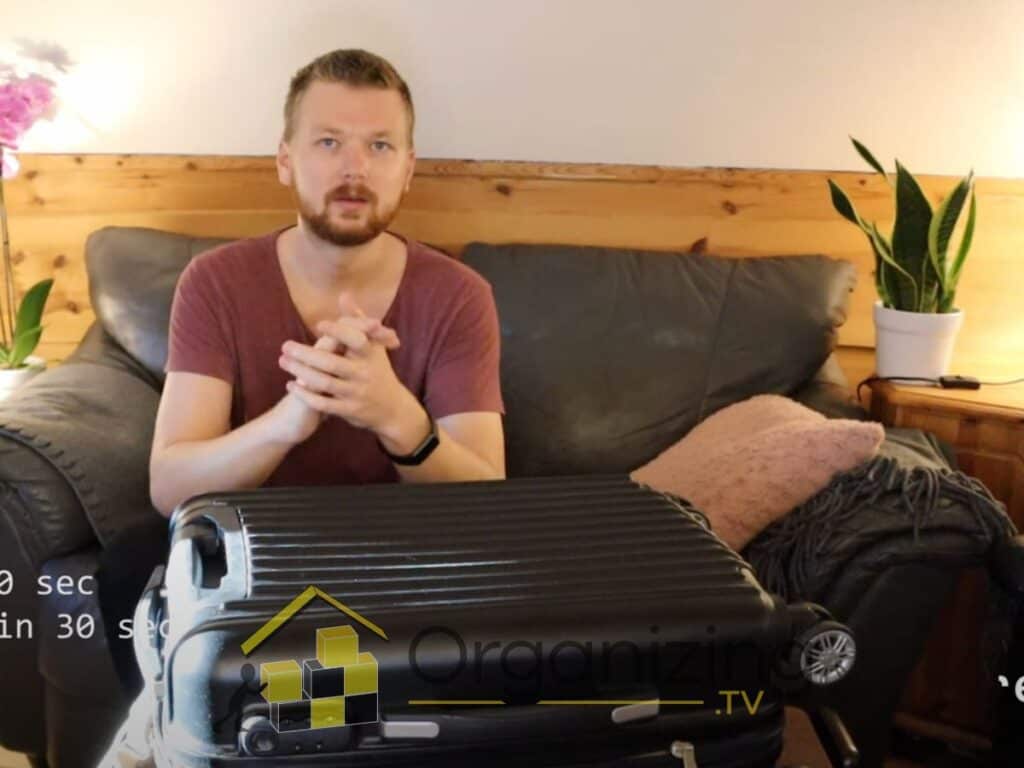
Choosing the right luggage isn’t just opting for the one that will best fit your things. There are other factors that you should also consider. For instance, I find a smaller suitcase ideal when I’m traveling by air.
This way, I don’t have to worry about checking it in. Another factor to consider is your planned activities. Do you expect a lot of walking? If so, you might want a lightweight piece that you can easily pull around while you’re sightseeing.
On the other hand, if you’re planning to do a lot of outdoor activities, then it would be ideal to bring a larger suitcase that can fit all your gear.
Finally, don’t forget to check whether your preferred piece of luggage is compliant with airline regulations.
Best Luggage Options
There are plenty of luggage options you can choose from. By keeping the tips I’ve shared with you in mind, I am confident you’ll be able to determine the most suitable option for you. In the meantime, here are my top three picks from Amazon.com:
1. Travelers Club Chicago Expandable Luggage

- 3 piece set includes: 20″ Carry on luggage, 15″ Boarding tote, and 10″ Travel kit toiletry case
- Luggage Expands for extra packing space
- Luggage has 4 spinner wheels for improved and smooth mobility that’s easy on the wrist when traveling
- Luggage material: ABS hard-shell that’s light yet durable
- 15″ Boarding tote features a back strap that can attach onto luggage trolleys

I really appreciate how versatile this product is. You won’t need any other luggage again, especially if you’re into capsule wardrobes. As a three-piece set, it will come with a 20” (51 cm) carry-on luggage, a 15” (38 cm) boarding tote, and a 10” (25 cm) toiletry case.
The main luggage is expandable and comes with spinner wheels. It is also worth noting that this luggage is made of a durable hard shell. It can last you for years with proper use and care.
2. Rockland Fashion Luggage
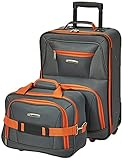
- Upright: 20″ x 13″ x 7.5″ (with wheels).Number of wheels:2
- Tote bag: 13.5″x 11″x 5″
- Telescoping handle
- Ergonomic padded top and side grip handles
- Fully lined
If you’re looking for a soft side option, then you might want to consider this two-piece set from Rockland. It will come with a 20” (51 cm) upright luggage with wheels and a 13.5” (34 cm) tote bag. It has multiple design options, including printed patterns such as floral and dotted.
3. Samsonite Omni PC Expandable Luggage
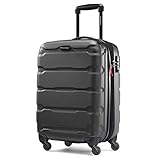
- 20″ SPINNER LUGGAGE maximizes your packing power and meets most carry-on size restrictions for those traveling domestically and looking to stay light.Number of wheels:4
- PACKING Dimensions: 19″ x 14.5″ x 9.5″, Overall Dimensions: 22″ x 15″ x 9.5″, Weight: 6.81 lbs.
Those who have the budget can invest in this 20” (51 cm) carry-on luggage from Samsonite. This is the piece that I really recommend if you’re planning to do a lot of international travel.
After all, it comes with all the bells and whistles. Some of its features include a TSA-compatible lock, multidirectional spinner wheels, and a scratch-proof 100% polycarbonate textured surface. It comes in 14 color variants and a 10-year limited warranty.
Best Packing Cubes
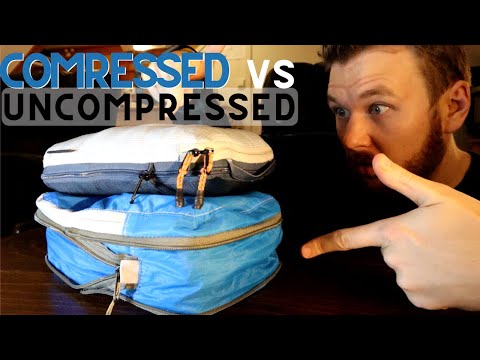
According to the Points Guy, using packing cubes has multiple benefits. Aside from allowing you to organize and categorize your belongings satisfyingly, these handy square-shaped nylon and mesh bags can also keep clothes wrinkle-free. More importantly, they also help save a lot of space.
There are definitely other travel organizers out there aside from packing cubes. These include toiletry kits, pouches, and more. Regardless, you can make the most of your organizers by knowing how to fold properly. You should check out this quick guide I wrote on folding clothes properly.
I have found packing cubes to be a very convenient addition, though. These organizers typically come in sets of different sizes.
I’m sure that you’ll always find the right size for your toiletries without the need to get an extra pouch. Here are the best packing cube options at Amazon.com.
1. Veken Packing Cubes

- Do you love to travel? Are you tired of fumbling inside your luggage and unpacking everything to look for an item the same old way? Concerned you will leave expensive items in the hotel? Use packing cubes to sort, organize and find your things in a flash. Say goodbye to all your travel woes!
If you’re looking for a no-nonsense packing cube set, then I recommend taking a look at the six-piece Veken Packing Cubes set. It comes with four cubes in various sizes as well as a laundry bag and shoe bag.
All the cubes have a minimalistic design. This set is available in nine different colors.
2. Bagail Compression Packing Cubes (Lazada)
Compression packing cubes are a real game-changer and what I use personally. As their name suggests, these packing cubes can really press down your belongings and remove unnecessary spaces.
Quality compression packing cubes like this set from Bagail can save up to 60% of space compared to using regular packing cubes.
3. Viton Packing Cubes

- 【MULTI-FUNCTIONAL PACKING CUBES】Fit like a glove for most airline carry-on, handbag, weekend bag, backpack, duffel bag, etc., perfect for family breaks, business travel, vacation, hiking, camping, rv, travel, outdoor camping, daily storage, etc. Waterproof, sturdy and recyclable, waterproof protects your clothes from spillage or leakage, an excellent travel accessory to keep your luggage tidy.
Those who are looking for a more affordable option can check out the eight-piece packing cubes by Viton. It comes with various-sized cubes and pouches that are more than enough to organize things for 18 to 32” (46-81 cm) luggage sizes.
Conclusion
One of the most stressful things when it comes to traveling is the packing process. It is not always easy to make everything you want to bring fit into your luggage.
Fortunately, building a travel capsule wardrobe can help maximize your luggage space while ensuring that your personal style never misses a beat, no matter where you are in the world.
Just make sure to learn about the weather conditions and culture of the place you’re visiting and consider the activities you plan to do.
If you’re looking to build your own capsule wardrobe at home, you can check out my article here. It focuses on the process from a man’s POV.
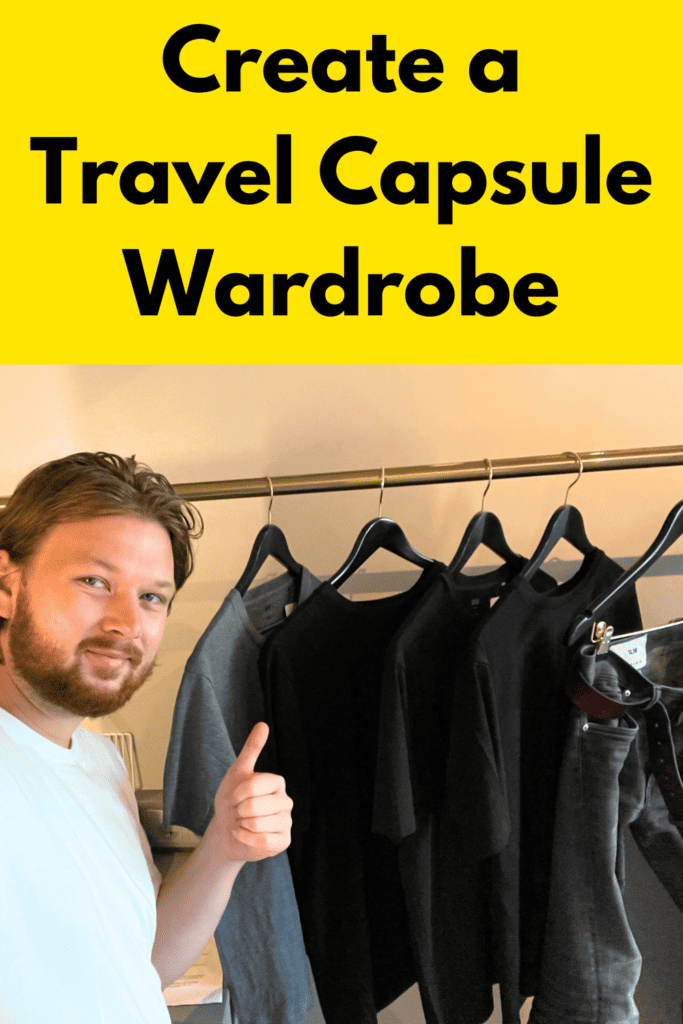

I’m an expert wardrobe organizer and a bit of a clean freak. I created this website and its YouTube channel to share practical guides about laundry and organizing. My teachings have been featured in multiple large news publications, and I’ve self-published two wardrobe organizing books and an entire course on the subject.