
Over the past few years we all have all experienced masks moving around uncomfortably. While they may not be mandatory for us regular people anymore, I figured I could show you how to wear a mask correctly to prevent it from riding up or falling.
I have highlighted some tips below to make sure your mask is comfortable as it is safe.
How to Fit Your Mask Properly
If you want to wear a mask properly and keep it from falling, ensure that it covers your nose and chin. Next, check for air leaks in your mask edges and adjust them accordingly.
Check out more tips on how to improve your mask fit:
- Tie knots in the ear loops
- Ensure you tuck in the sides of the mask. This enables the mask to lie flat against your face.
- For a snug fit, use a mask fitter or a brace.
- To help push the edges of a disposable mask closer to your face, layer a well-fitting and non-medical cloth mask over the disposable mask. However, exercise this only if you can still breathe easily when wearing 2 masks.
- If possible, consider keeping facial hair shaved. It allows your mask to fit more closely to your face.
How to Keep Your Mask from Riding Up or Falling
There are several ways to ensure your mask doesn’t ride up or fall. They include:
What to Do If Your Mask Is Too Big
You can shorten the ear loops to make your mask fit closer if it’s too big. You can achieve this by tying a knot in each ear loop.
Keep in mind that this knot should sit behind your ear. In addition, it shouldn’t pull the top and bottom of the mask together.
Why? Because this will open up a space for air to flow in and out.

What to Do If Your Mask Is Too Small
If your mask is too small, it may be uncomfortable to wear and may ride up at times. To solve this problem, tie a shoelace or a piece of string to each ear loop.
When you put on your mask, tie the extended strings together at the back of your head. This simple trick helps to keep your mask in place.
Don’t Crisscross Your Ear Loops.
Criss Crossing your ear loops may make your mask feel like it fits better. However, this is not the case.
By doing this, you pull together the sides of the mask where the ear loops are joined. This results in a gap along your cheeks that germs can enter.
I recommend that if your mask is too big, instead of crisscrossing the ear loops, follow tip #1.
5 Ways to Alleviate Pressure on Your Ears When Wearing a Mask
Elastic loops may do more than keep your mask securely in place. At times, they may irritate the back of your ears.
This has been a common issue among healthcare workers because of the prolonged use of masks while on duty. As a result, this has led to clever hacks to deter the painful side effects.
Below are five easy ways you can go about it:
Face Mask Strap Clip
To ease the pressure on your ears, you can attach a paper clip or any other type of clip to the ends of each loop. Pull the loops to the back of your head and then fasten them together using the clips.
This method helps prevent the loops from wrapping around your ears and helps fit your mask to avoid falling.
You can buy them on Amazon (paid link).
Headband With Buttons
Another trick you may use is sewing two large buttons onto the side of a knit headband. A headband features a cotton blend with a stretchy Lycra that hugs your head without additional pressure. Before wearing your mask, ensure you put on the headband first.
Next, wear your mask and attach the loops around the buttons rather than your ears. The only thing you need to ensure is that the buttons are in line with your ears.
Face Mask Baseball Cap
When sporting this baseball cap, you’ll practically forget whether you are wearing a mask.
Why? Because it features buttons on each side of the head to keep your mask in place. The baseball cap comes with a metal slide adjuster on the back to ensure a perfect fit.
However, note that the mask and the baseball cap are sold separately.
Scrub Cap With Buttons

Thanks to the buttons sewn onto either side of the scrub cap, they are a favorite among healthcare workers. Besides being available in various fabrics, these caps also feature adjustable ties at the back of the head.
They ensure the cap fits appropriately. When wearing an N95 mask, they’re a great way to protect your hair from pulling or yanking.
A Non-Elastic Mask
Last but not least, avoiding elastic ear loops is another excellent way to prevent ear irritation. Instead, you can use two sets of ties, including a filter pocket and a nose wire to ensure a close fit without rubbing against your ears.
How to Fix Common Face Mask Problems
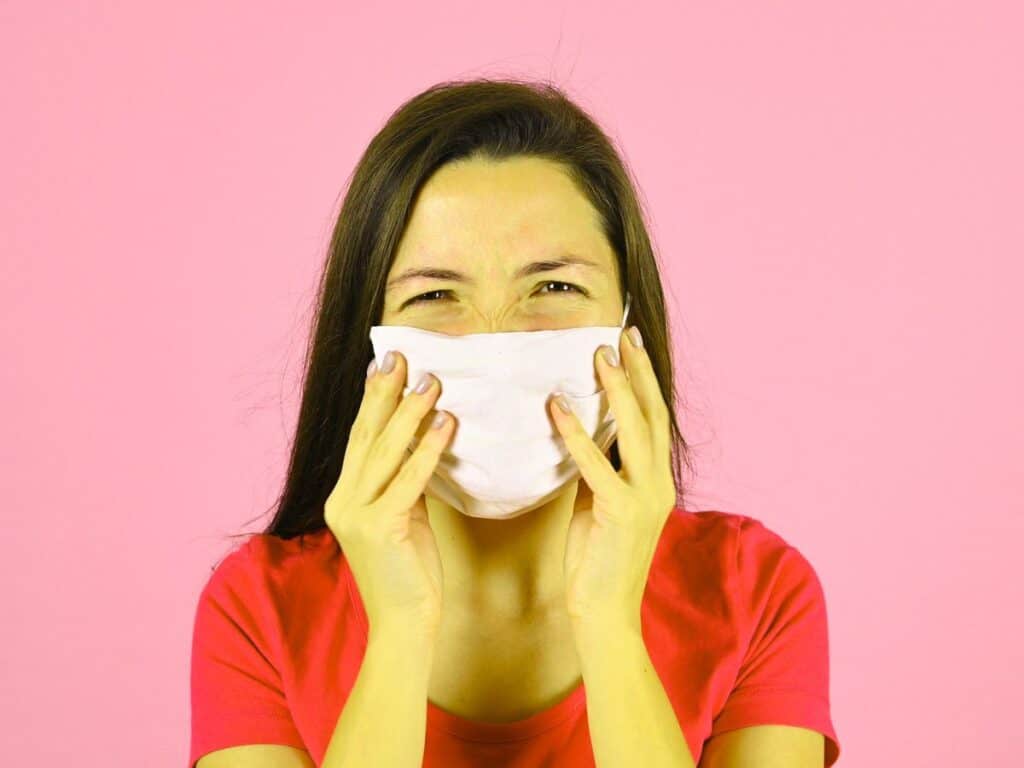
Wearing a mask can be very useful, but it also comes with other associated problems.
Read on to learn some of these problems and how to fix them best:
Irritated Skin
Do you find yourself with oilier skin every time you take off your mask?
Wearing a mask for too long causes acne breakouts around your jawline. Three things rub against your skin when a mask is on – humidity, general heat, and the mask fabric.
As a result, moisture, irritation, and potential bacteria cause acne.
How to Fix Acne Problem

There are two ways in which you can get rid of acne. They are:
The first method involves spot-treating with acne dots (paid link). It’s one of the easiest ways to get rid of acne on your face.
However, you need to note that drying out your skin with ingredients normally found in acne treatments may make you produce more oil on your face.
Get a solid facial cleanser like the Daily Exfoliating Cleanser from Ghost Democracy to fix this problem. It will clean your under-mask area without stripping your skin of its natural moisture.
The most effective way to prevent acne issues is simply changing your mask, especially if you are using a disposable one.
If yours is a cloth mask, make sure you toss it in the washing machine daily. This way, you’ll prevent acne-causing germs from getting on your face.
Overheating and Sweating
You’ll notice that some cloth masks aren’t always breathable. They can irritate or chafe your skin to make matters worse, as discussed above.
When you’re spending a lot of time outdoors under the sun, you’ll notice that even the most breathable cotton masks may feel heavy.
As a result, this may cause discomfort due to overheating and sweating.
How to Fix Sweating Problem
You should invest in a lightweight or moisture-wicking mask that’s easy to breathe in to avoid sweating. Avoid a heavier fabric unless you want a puddle of upper lip sweat.
Bad Breath

As an avid skier, there’s nothing more rank than putting on a ski mask covered in a season’s worth of breath and saliva.
Take note that you can’t entirely blame bad breath on your face mask. However, there’s something to be said about how face masks emphasize what we smell when we exhale.
The worst thing is that it’s not always pretty.
How to Fix Bad Breath
The best solution to fix this problem is to practice good oral hygiene. This involves starting your day with a quality water flosser to streamline your entire dental routine.
Would you like a quick DIY fix for your smelly mask?
I recommend using a portable cleaner formulated for PPE to prevent odor-causing bacteria buildup. For example, if you want naturally-derived ingredients to freshen and deodorize your mask, you can try Cavey’s sanitizing spray. It has 70% alcohol to kill germs.
Glasses Getting Fogged Up
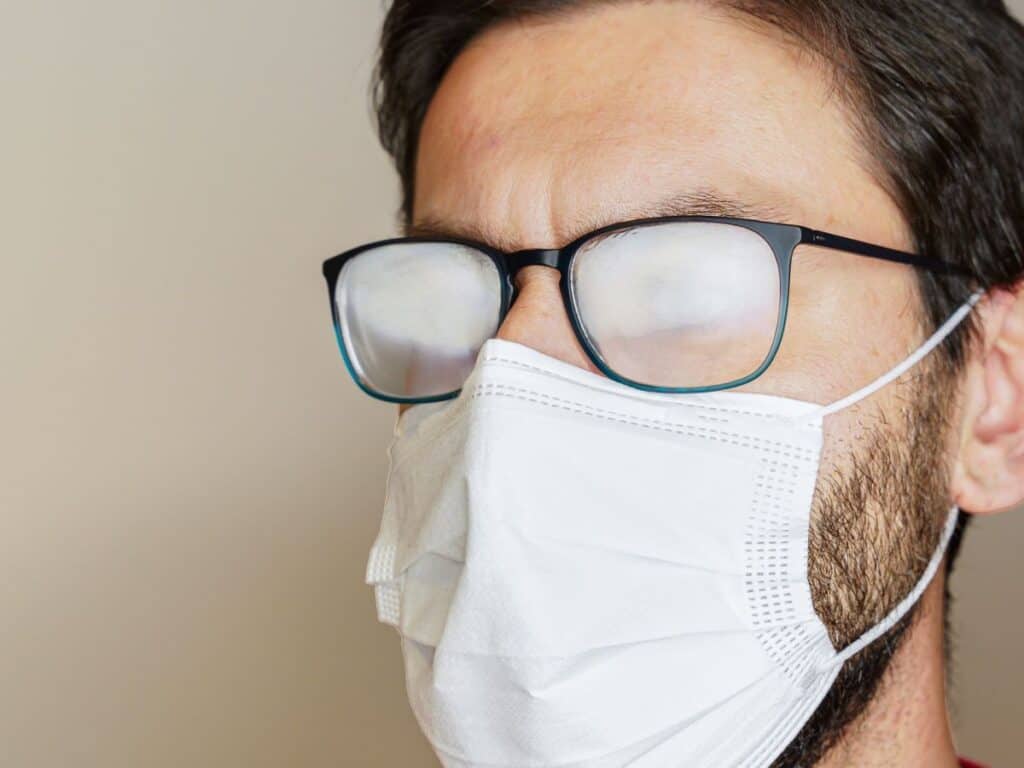
According to Marie Budev, glasses get fogged up when the hot air from your breath escapes from the top of your mask and lands on the cooler surface of your lens.
This happens mostly when your mask doesn’t fit your face well.
How to Fix This Problem
Try getting a mask with a metal wire sewn in to go over your nose bridge. Note that most reusable cotton face coverings have this feature.
Next, pinch the top of your mask to make it fit the shape of your nose. Tighten the sides of your mask if possible by adjusting the straps. This will make the mask fit snugly.
If your glasses are still foggy, try putting an adhesive bandage or medical tape on the bridge of your nose. This will help close the gap between your nose and your mask.
Before putting on your mask, Budev recommends rinsing your glasses with a little soap and water. The soap foam helps prevent water from building up and fogging your lens.
You can also apply special anti-fogging sprays designed for glasses to fix this problem.
How to Handle and Care for Your Mask

If you want your mask to be beneficial to you, you must take good care of it, especially if it’s reusable. I have highlighted some important tips below to enable you to handle your mask well.
They include:
Wash Up
The New York City Department of Health and Mental Hygiene recommends using alcohol-based sanitizer to wash your hands.
If a sanitizer is not available, you can wash your hands with soap and water before putting on your mask for at least 20 seconds.
Don’t Adjust It
Once you put on your mask, try to refrain from touching it. When you want to speak, don’t pull it down. If you want to take a drink and decide to remove the mask, you should not put it back on. Instead, it would be best if you put on a new mask.
Remove Carefully
Before taking your mask off, ensure that you first wash your hands. The CDC advises that you avoid touching your nose, mouth, and eyes during removal.
The only thing you should touch is the mask’s ties or elastic.
On the other hand, NYC health officials recommend that you place your mask so that no one can touch it and then rewash your hands.
Clean Thoroughly
The California Department of Public Health recommends running your mask through a wash and dry cycle before reusing it.
Alternatively, you can also hand wash it with soap and water and dry it completely before reusing it. It’s also advisable to have several masks to rotate them.
To prevent a freshly cleaned mask from contamination, keep it away from common surfaces such as tabletops. Instead, store it in a paper bag. Avoid containers and plastic bags that lock in moisture.
In the case of disposable masks, I recommend you check out information about cleaning or sanitizing from the manufacturer.
Once you’re done using a disposable mask, discard it in a trash bin and ensure you wash your hands.
I have also created comprehensive guides on stopping all your clothes from riding up, and stopping all your clothes from falling down that may interest you to read next.

I’m an expert wardrobe organizer and a bit of a clean freak. I created this website and its YouTube channel to share practical guides about laundry and organizing. My teachings have been featured in multiple large news publications, and I’ve self-published two wardrobe organizing books and an entire course on the subject.