
We often apply sunscreen on our skin in summer. Whether we’re sunbathing on the beach, on the outdoor picnicking, or just strolling around, we will slather on sunscreen to protect from sunburns.
Unfortunately, it’s not all rosy about sunscreen. They form whitish or yellowish stains that can easily set in if not immediately acted upon. Luckily, we have put together a guide to help you remove sunscreen stains and restore your garment to its original form.
While there are several methods, one of the fastest ways of removing sunscreen stains is to use dishwashing soap. Make a solution of one cup of warm water and one tablespoon of dishwashing detergent, stir thoroughly, and blot out the sunscreen stains. Finally, rinse with cold water and launder as usual.
Why Does Sunscreen Stain Clothes?
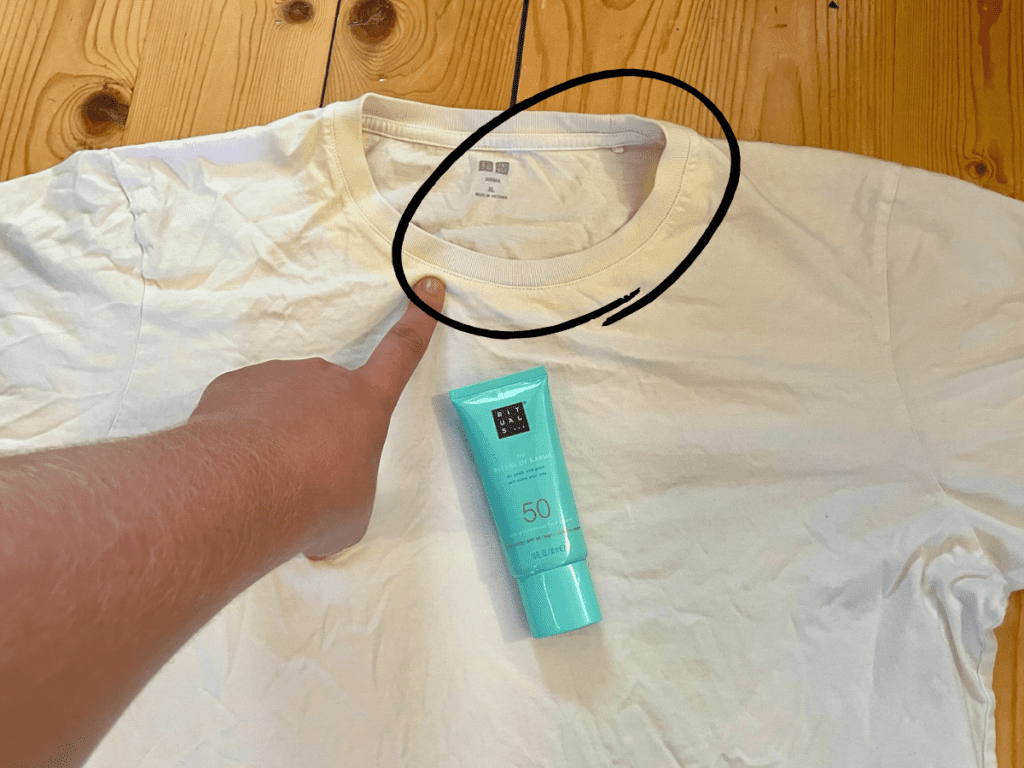
Sunscreen stains clothes due to its oily ingredients, the main one being avobenzone. This is the chemical responsible for its yellowish to orange colored stains on clothes. It happens when Avobenzene reacts with chemicals in hard water, mainly the iron ions, to form reddish chemical compounds.
If left untreated, these compounds can permanently stain clothes by setting deeper into the clothes fiber. That is why it is always recommended to remove the stain at the earliest opportunity. Even when unable to wash immediately, be sure to scrape off the excess material and pretreat as you wait to wash later.
Removing Sunscreen Stains With Commercial Stain Removers
The starting point is to find out the compatibility of your garment with the particular stain remover. To do this, read the garment care instructions label. It is usually located at the back of the garment or on the side seam.
This label has all the conditional requirements, from the right stain remover to drying temperatures. One thing to look out for is signs such as “dry clean only.” Seeing that should warn you to spare this one for the professional dry cleaners to handle it.
Additionally, testing is also recommended to avoid spoiling the whole garment. Testing is done by applying a few drops of the solution in an indiscreet corner of the garment and observing the results.
Pretreat the Stain
At this point, first, remove any sunscreen matter that is on the stain. To do this, scrape it off by using a blunt knife, an old credit card, or a spoon. The point is to use any tool that will safely remove the material without damaging the clothing fabric.
Next, turn the spot inside out and run cold water on it to help flush more of the stain material. Once that is done, it is now time to pretreat the spot with an enzymatic cleaning agent.
One of the most effective stain removers is the Tide ultra stain release liquid. It is specially formulated for removing enzymatic stains such as sunscreen from clothes.
To use it, just pour some on the measuring cap and apply a few drops on the stain, and spread it uniformly with your fingers. Then using a soft-bristled brush, scrub the stain in a circular motion a few times, and let it sit for 30 minutes.
Washing and Drying the Garment
In this stage, measure the right heavy-duty detergent dose, and wash the garment under the warmest washer setting allowable for the garment. If you’re using hard water sources, make sure to add a water softener to your wash as well.
As we found earlier, iron ions in hard water make sunscreen stains tougher. Finally, you can unload the garment, rinse and dry it. But this is only after ascertaining if the stain has completely been removed.
Otherwise, you might want to repeat the process with a tougher stain remover to avoid stain setting in the clothing. One way is to use a commercial rust remover, as it is quite effective against stubborn sunscreen stains.
Other Methods of Removing Sunscreen Stains From Clothes
Using Baking Soda
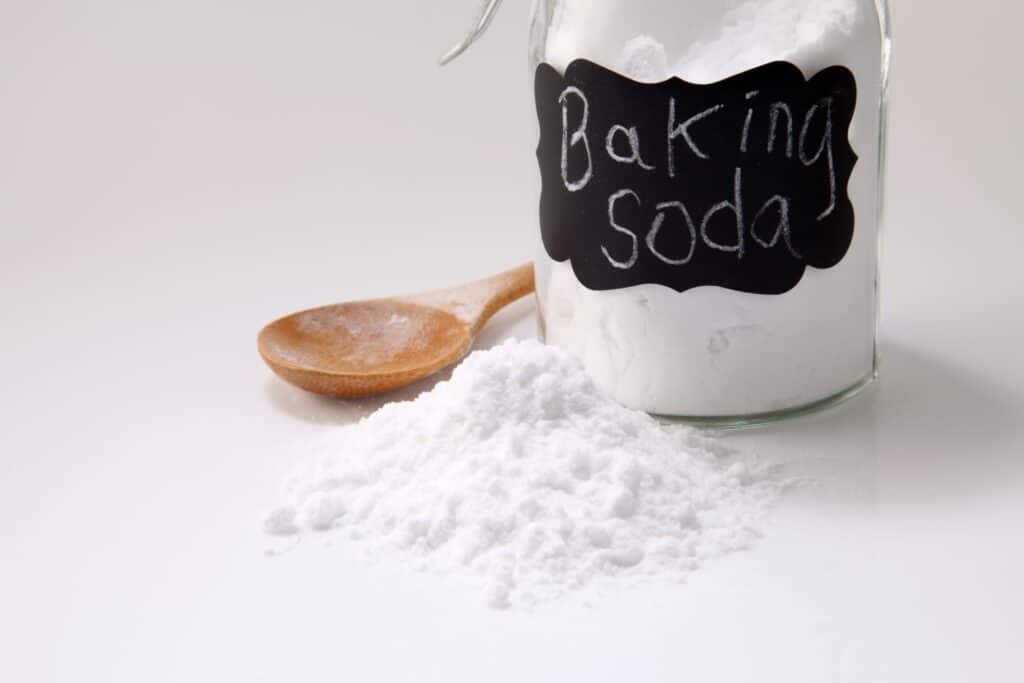
Baking soda is a brilliant sunscreen stain remover. Baking soda’s power lies in its absorbency, making it easy to suck in the oily additives in the sunscreen. Once these are removed, cleaning work becomes easier.
Before applying baking soda to the stain, remove the excess sunscreen matter on the stain. You can use the usual tools like in the other methods; old credit cards, spoons, blunt knives, etc. One thing, though, is to be careful to avoid pushing the stain material farther into the fabric.
The next step is to sprinkle baking soda on the stain and spread it evenly, ensuring it is covering the whole stain adequately. The aim is to cover the stain with a sufficient amount to absorb the sunscreen oils from the stain.
In the absence of baking powder, you can use talcum powder or cornstarch, and the result will be the same. Allow the powder on the stain for about 1 hour.
The alternative is to soak it in a baking soda water solution. Create this solution by measuring½ a cup of baking soda and adding it to 1 liter of cool water in a basin. Use this solution to soak the stained part overnight and then wash as usual.
After 1 hour, check on the powder on the strain to see if the stain is disappearing. One way is to touch the powder on the stain. If it feels moist, that is a sign the stain has been removed.
You can then brush off the powder using a soft bristles brush. You can launder the garment with enzyme stain removers, rinse and dry.
White Vinegar
White vinegar doesn’t need much introduction when it comes to removing stains in laundry. It reacts and obliterates oily stains making it quite convenient to clean sunscreen stains. But before using white vinegar, note that it has a bleaching effect.
Therefore, it is essential to check on the garment care label for colorfastness or use it only on white clothes.
Another thing is its compatibility with some other cleaning agents. For instance, mixing vinegar with bleach will result in a vigorous reaction producing noxious fumes.
Also, note we recommend only white vinegar, as the other types may stain white clothes.
To start off, mix 1 part vinegar with 1 part cool water in a bowl and stir briskly to make a pretreatment solution.
Then soak the stain in this solution for 1 and ½ hours before rinsing and washing with heavy-duty detergent.
You can finally rinse and dry if the stain has been removed.
Using Eucalyptus Oil
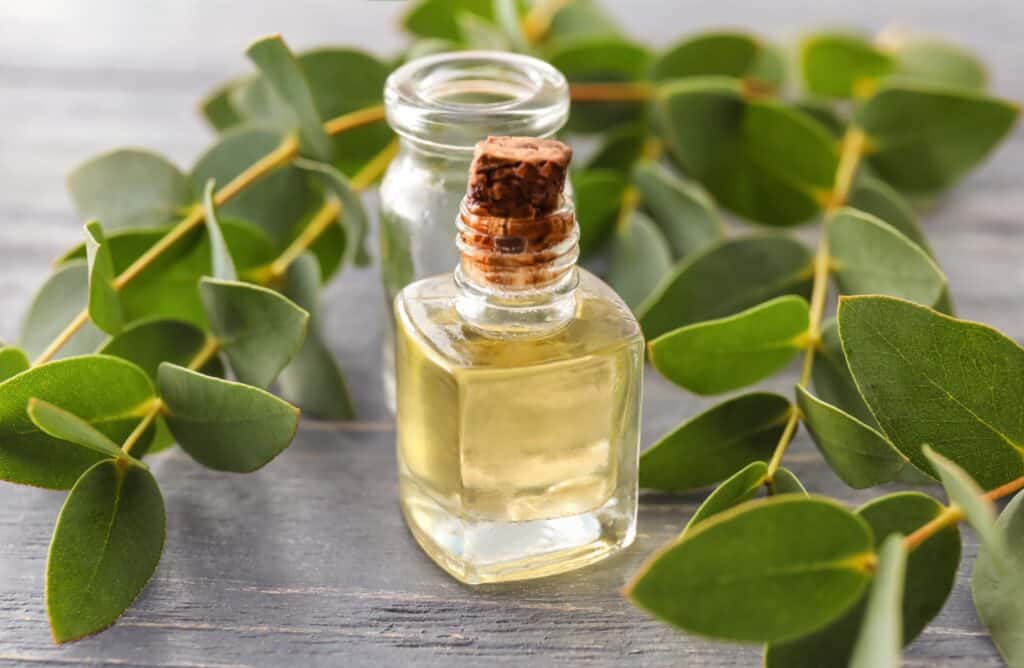
Eucalyptus oil is fantastic when it comes to removing sunscreen stains. The reason is eucalyptus oil acts as a degreaser, which makes it possible to dissolve the sunscreen oil. One thing with eucalyptus oil is that it will leave your clothes smelling natural and fresh.
Further, eucalyptus oil contains antibacterial compounds making it one of the well-known homemade disinfectants. Obviously, removing the stains and infectious bacteria at the same time is a huge plus.
Prepare a solution of 1 part eucalyptus oil and 4 part water in a bowl and presoak the garment with it. You can then wait for 30 minutes before washing with your normal detergent.
Be cautious with eucalyptus oil as not every eucalyptus oil is effective. Only go for the natural eucalyptus essential oil and not the inorganic types. This is because the inorganic eucalyptus oil contains synthetic additives and pigments that may further stain the clothes.
Removing Sunscreen Stains With Lemon Juice
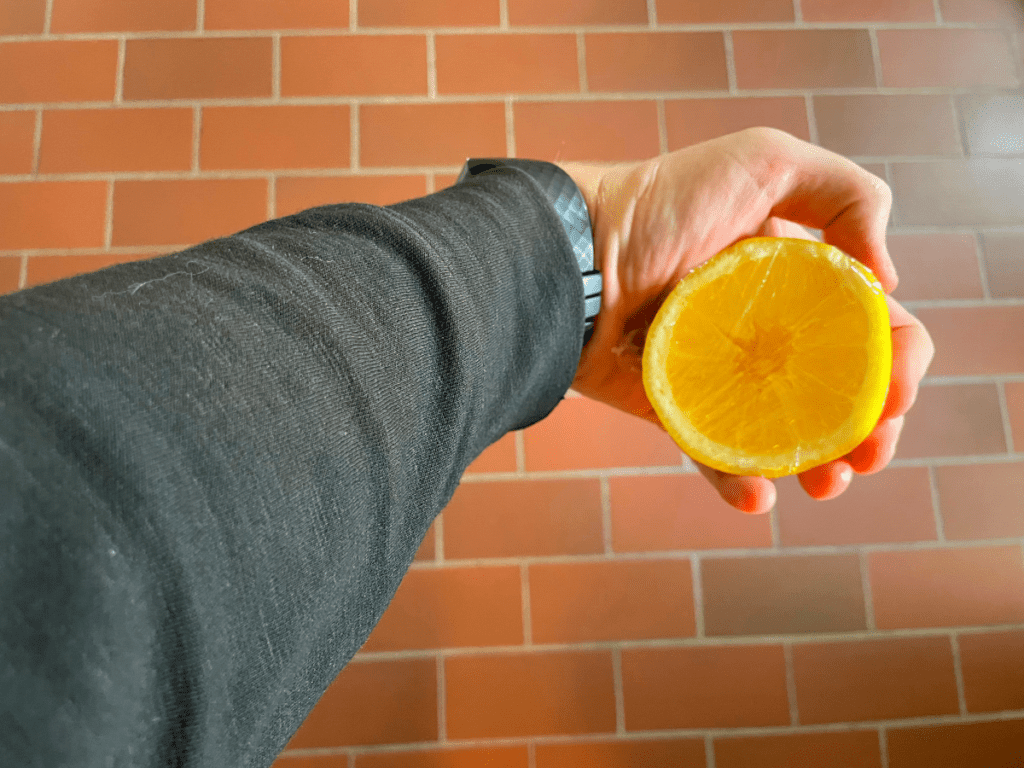
Lemon has a high level of acidity that falls between 2 to 3 on the PH scale, courtesy of its rich citric acid properties. This aspect makes it one of the perfect choices of cleaning agents for removing sunscreen stains. Sunscreen is mainly oily, making it to be dissolved by acidic substances such as lemon juice.
Before using lemon juice, you should keep note of its bleaching ability to avoid ruining your color clothes. So unless your clothing is colorfast, keep them off the lemon juice.
To pretreat sunscreen stains with lemon juice, cut it into two and squeeze the juice on the stain. If a lemon fruit is not available, you can still use store-bought lemon juice, as it will equally work.
Once you apply the stain, be sure to spread it on the stain to ensure every part of it is covered. Wait for 1 hour for the lemon to soak into the stain, and then wash normally with a normal detergent and dry.
Using Liquid Dish Soap
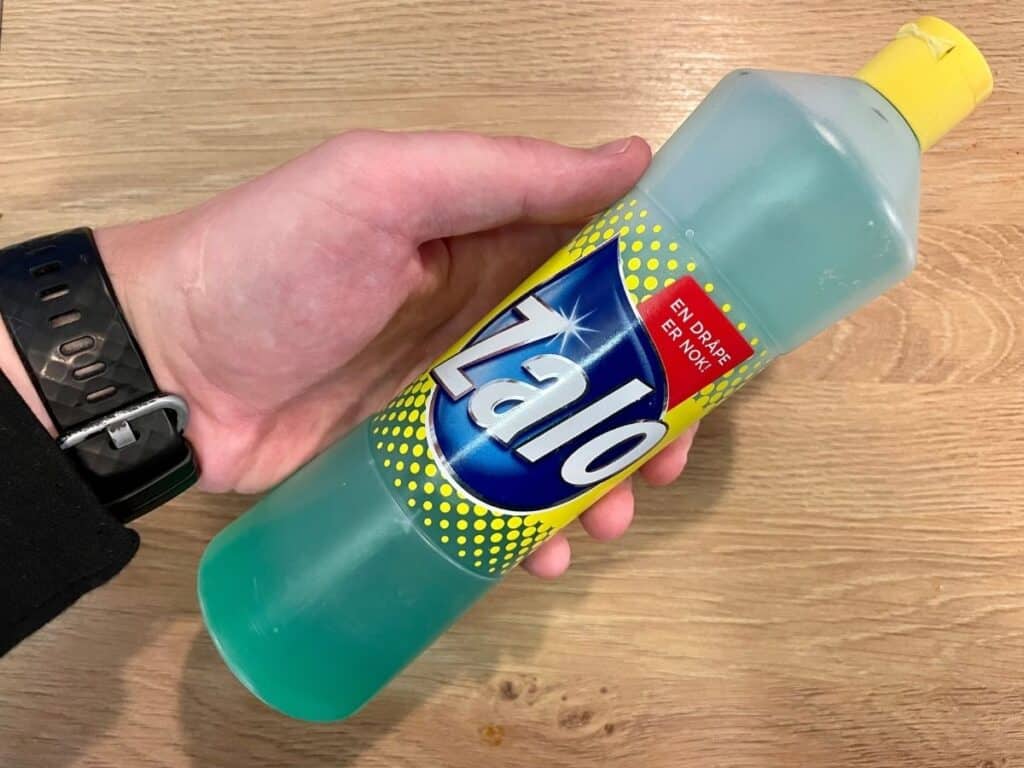
Liquid dish soap is a popular kitchen cleaning detergent for clearing all kinds of kitchen greases and oils. As the main ingredient in sunscreen is oil, this makes it perfect for removing its stains.
Before using dish soap, turn the stained part inside out and soak it with running water. This is to soften the stain as well as flush out some of the stain residues.
Mix one teaspoon of dishwashing detergent in one cup of warm water, and stir well to create a pretreating stain remover solution. Using a white piece of cloth or cotton gauze dipped in this solution, dab the stain until it is removed.
Thereafter rinse the spot with cold water before laundering normally. Finally, like with most other methods, inspect the stain before passing it through a dryer to avoid stain setting.
How to Prevent Sunscreen Stains
To avoid the hustle of dealing with sunscreen stains, it is best to minimize the chances of staining the clothes in the first place. Let us examine a few tips to help you keep off sunscreen stains on clothes.
Wait for Sunscreen to Dry on the Skin
Ensure the sunscreen on your skin is completely dry before dressing up. One way to do this is to take some time and work on the skin until the sunscreen is completely dry.
Of course, this is challenging, especially when dealing with children, as they’re less patient. But still, trying can go a long way in reducing contamination of the clothes.
Consider Using Alternative Sunscreen
Remarkably, not all sunscreens produce pesky stains. Most of the staining sunscreens have avobenzone as the main ingredient.
Recall that Avobenzone reacts with iron ions, resulting in the staining compounds. To avoid this, you can use other non-avobenzone-based sunscreens.
I also made a list of the 7 best sunscreens that won’t stain your clothes that you can check out.
Avoid Hard Water
Sunscreens stains become severer when clothes are washed with hard water due to the reactions with the ions mentioned above. Water softening ensures the hard water ions are bound and not available for reacting with the sunscreen.
Avoid Certain Fabric Types
It is also known certain fabric types are likely to be more severe on certain fabric types than others. For example, sunscreen stains on organic fabrics such as cotton are less severe compared to synthetics. Consequently, stains on polyester, rayon, and spandex are more likely to be tougher to clean.
Frequently Asked Questions
Can Dry Cleaning Remove Sunscreen Stains?
Stained dry-clean-only clothes should be taken to professional dry cleaners. The drycleaning attendants have the necessary cleaning equipment and experience to remove the stains.
So yes, it is the most appropriate place to have your sunscreen stains removed.
Once there, remember to show the attendant the specific spot that requires attention so as to mark it for cleaning.
How Do You Get Sunscreen Stains Out of White Clothes?
Using bleach is the best method of removing sunscreen stains from white clothes. With bleach on whites, you can remove even the toughest stain as you’re not afraid of leaking any dye. All you have to do is to check the garment care label for compatibility.
To use it, soak the garment in bleach diluted with water. Adding a ⅓ cup of bleach to 4 liters of water should be potent enough to remove the stains without hurting the clothing fabric.
Does Sunscreen Come Out in the Washing Machine?
Sunscreen stains can be removed in the washing machine. But first, you’ve got to pretreat with a tough stain remover.
To do this, you can use commercial or homemade stain removers. Some of the local stain removers are based on vinegar, chlorine bleach, and dishwashing soap, among others. After pretreating, you can wash normally with a heavy-duty detergent, rinse and dry.

I’m an expert wardrobe organizer and a bit of a clean freak. I created this website and its YouTube channel to share practical guides about laundry and organizing. My teachings have been featured in multiple large news publications, and I’ve self-published two wardrobe organizing books and an entire course on the subject.