
Clothes falling down can be annoying and, at times, embarrassing. In this comprehensive guide, I will show you how to stop all your clothes from falling by buying the right clothes, and if you already have bought them, I’ll teach you some tricks to fix the issue.
The most common reason is that your clothes are not the right fit for your body. Usually, they are too small, short, worn out, or have a bad cut. Clothes made from slippery fabric tend to slide down due to a lack of friction. The quickest fix is to secure your clothes in place by adding friction with, for example, a belt or rubber bands. Tightening the garment is also effective.
Throughout the rest of this guide, we will dive into detail for each garment type, as there are many nuances for each type.
As you can imagine, neck garters, shirts, and skirts are quite differently shaped and positioned, so we need to make some adjustments between each.
How to Stop Glasses From Falling Down
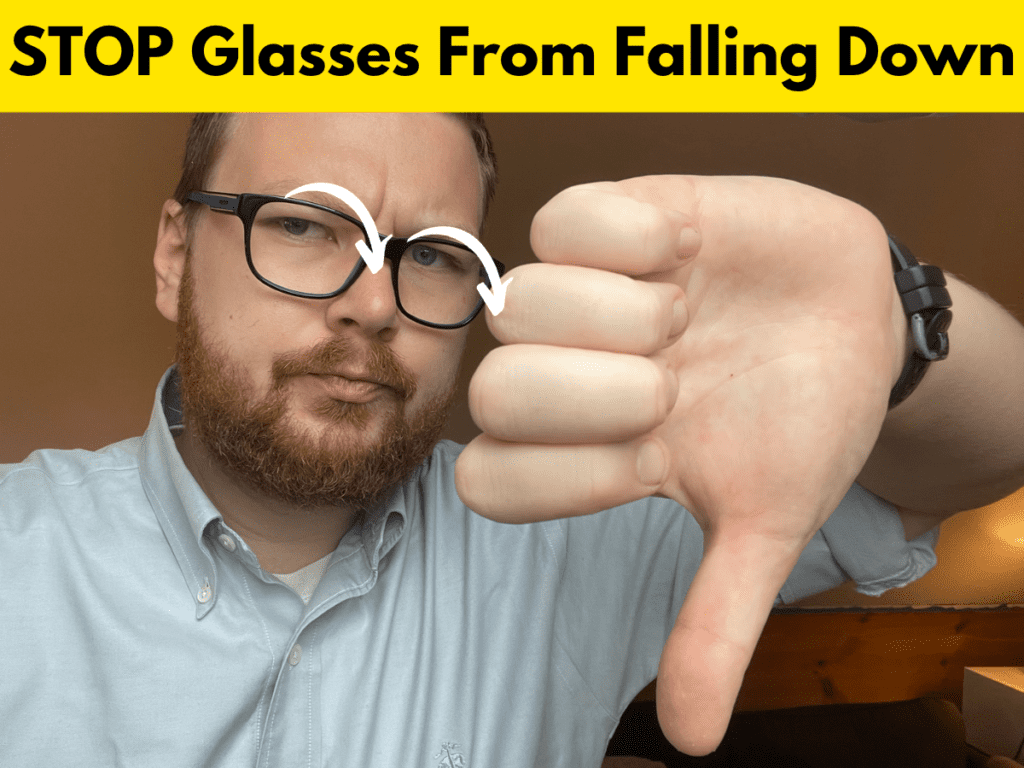
Glasses falling down as you are working or moving about is one of the most annoying problems I know. But there are some really easy fixes that can make your day a lot better.
The fastest and easiest method of preventing your glasses from falling is by using hair ties.
With a pair of hair ties, wrap one on each of the two bending parts of the glass temple several times until it is firmly holding on to it. The hair tie creates resistance on the glass temple eliminating the sliding problem.
More in my guide on keeping glasses from falling down.
How to Stop Neck Gaiters From Falling Down
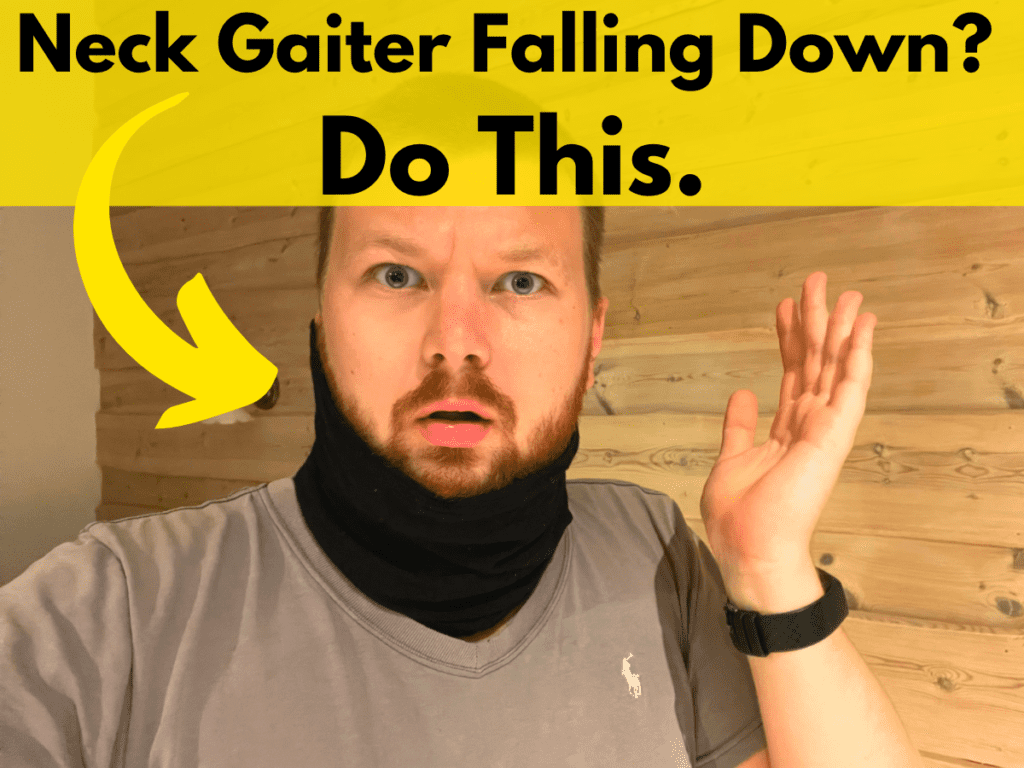
Usually, when you wear neck gaiters you are not in a position to be constantly adjusting it. So having a neck gaiter that sits properly on your face is essential.
The simplest solution is to lay down your neck gaiter and use a pair of scissors to make one cut an inch from the right and one inch from the left, around an inch down to make straps.
Or you could use a hat or cap to fix it in place.
I have written a guide for you on keeping them from falling down.
How to Stop Masks From Falling Down
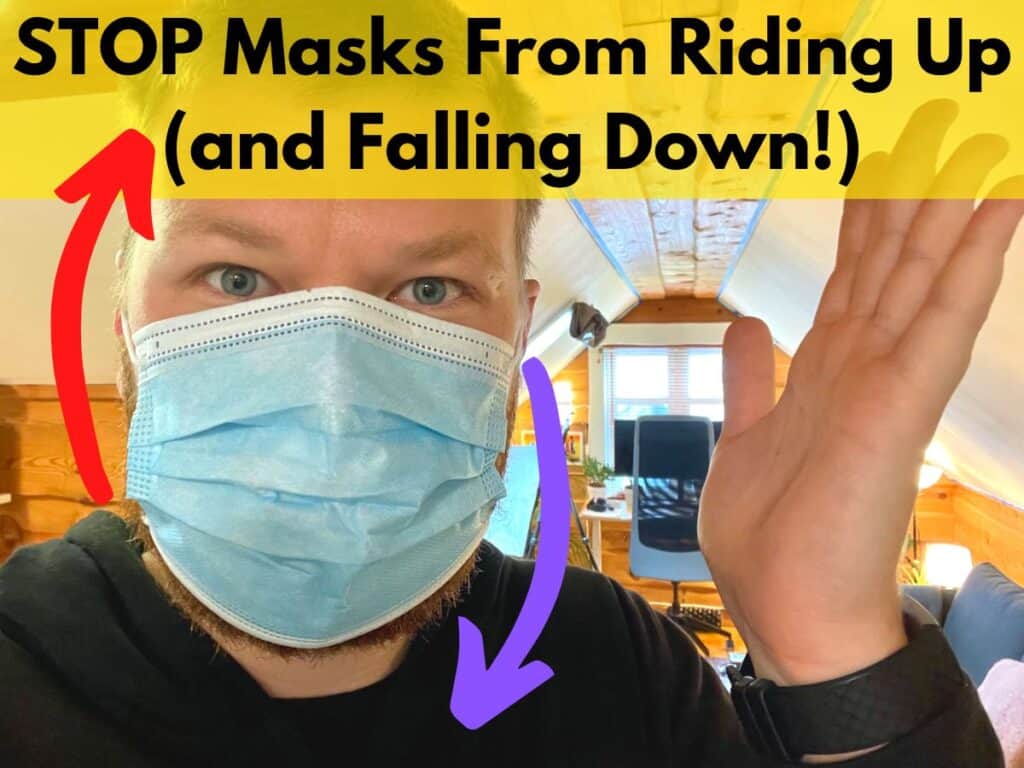
While this is not medical advice, I added a guide on how to keep your masks from falling down:
1. Tie knots in the ear loops
2. Ensure you tuck in the sides of the mask. This enables the mask to lie flat against your face.
3. For a snug fit, use a mask fitter or a brace.
4. To help push the edges of a disposable mask closer to your face, layer a well-fitting and non-medical cloth mask over the disposable mask. However, exercise this only if you can still breathe easily when wearing 2 masks.
5. If possible, consider keeping facial hair shaved. It allows your mask to fit more closely to your face.
For more details, check out my full article on keeping masks from riding up and falling down.
How to Stop Tube Tops From Falling Down

Tube tops are very prone to falling down since there is no bodily support to keep them up beside your breasts. But I have written up a guide on steps you can take to ensure that it won’t come down.
The easiest way to keep your tube tops from falling down is to add boning to the tube top. You can also try adding some friction using a silicone liner or fashion tape.
Some also have success adding a tube bra underneath to add more friction. Consider adding a safety pin to hold the tube top and bra together.
Continue reading my complete guide on keeping tube tops from falling down.
How to Keep Bra Straps from Falling Down
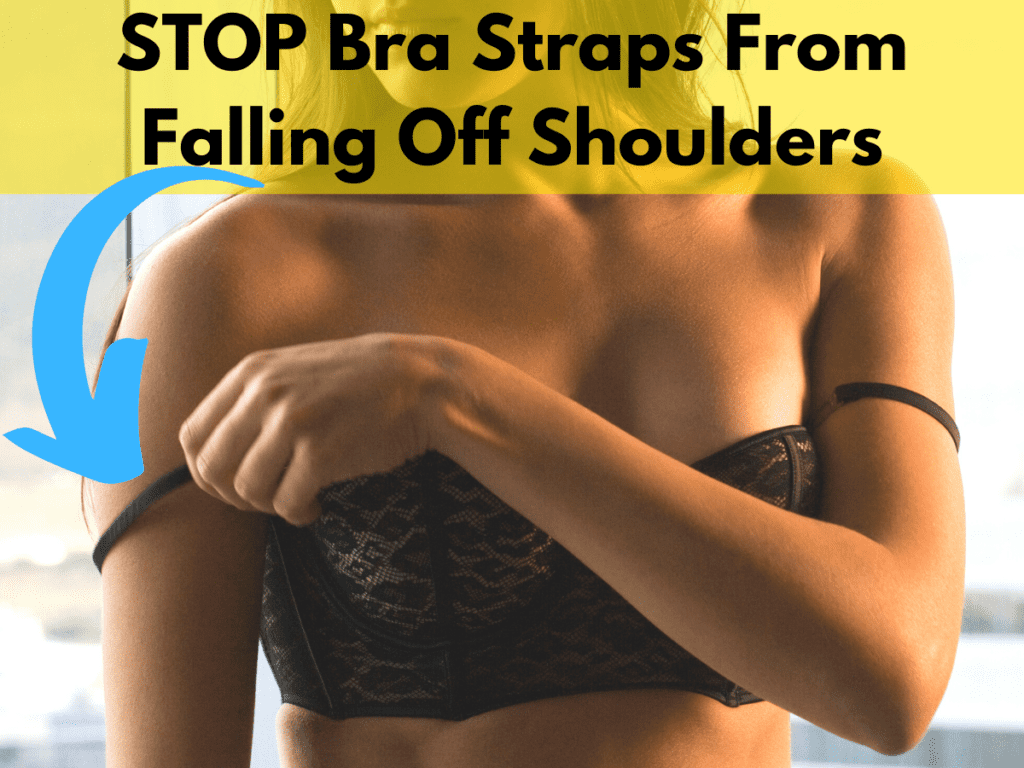
Bra straps falling down can get really annoying as you go through your day.
Usually, your bra straps fall down because the bra is not sitting properly on your body. This can be because the bra is too big, the straps are too long or loose, or because of your body type/posture.
A quick fix is to add a clip or safety pin that tightens the bra in the back. You can also consider a bra cushion.
I recommend that you continue reading over in my full article on keeping bra straps from falling off for more details and all the steps you need to take to fix the bra.
How to Stop Strapless Bras From Falling Down
Strapless bras can be challenging to keep up as there are no anchors on the shoulders.
Generally, you can add fashion glue or fashion tape to fasten it to yourself. Adding a rubber lining will add much-needed friction.
Always make sure that the bra fits your properly before you buy it, if the bra is old, then it may be stretched out too much.
Another emergency option is to use a safety pin to attach the bra to your dress.
Head over to my full article on keeping up strapless bras for more details.
How to Stop Sleeves From Falling Down
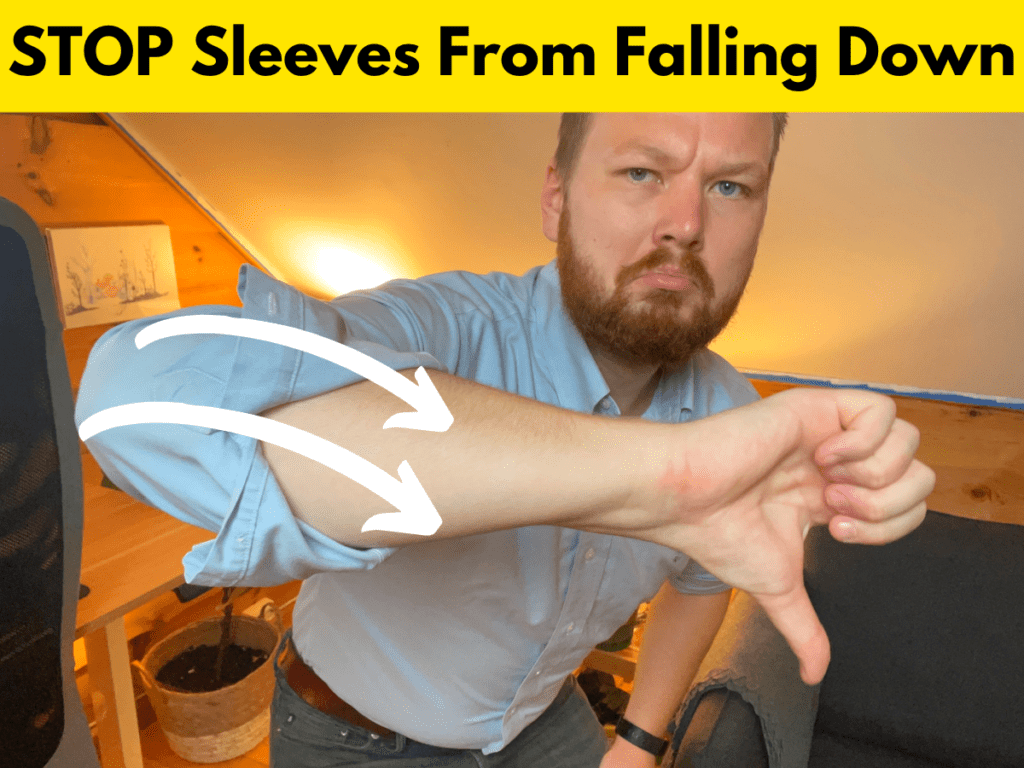
Usually your sleeves fall down because they are not secured properly in place.
Make sure the sleeves of the shirt fits your body. They should reach your first thumb knuckle unbuttoned.
Buttoned, you should be able to place a thumb inside the cuff for a good fit.
When rolling up the sleeve, try to keep it above or under the elbow. Add a rubber band inside the end of the roll to add friction if it still falls down.
I strongly recommend that you check out my full guide on keeping sleeves from falling down to learn how to properly roll your sleeves up.
How to Stop Pants From Falling Down
Pants falling down was one of my biggest annoyances in life. So I have written up a very detailed guide on everything you can possibly do to ensure that the pants won’t fall down anymore!
To stop your pants from falling down you can always wear belts, buy pants with elastic waistbands, or you can wear multiple layers under your pants.
A more permanent solution is to wear suspenders or try pants one size smaller. Some people prefer makeshift belts which are more comfortable than real belts.
Others use clips on their pants to keep them in place.
For more tips, see my full guide to keeping pants from falling down.
In case you’re dealing specifically with plumber’s crack, I also got you covered.
The best methods to fix plumbers’ cracks are varied. They include wearing an undershirt, using a belt, wearing loose pants, wearing the right underwear, and putting on longer shirts.
How to Stop Joggers from Falling Down
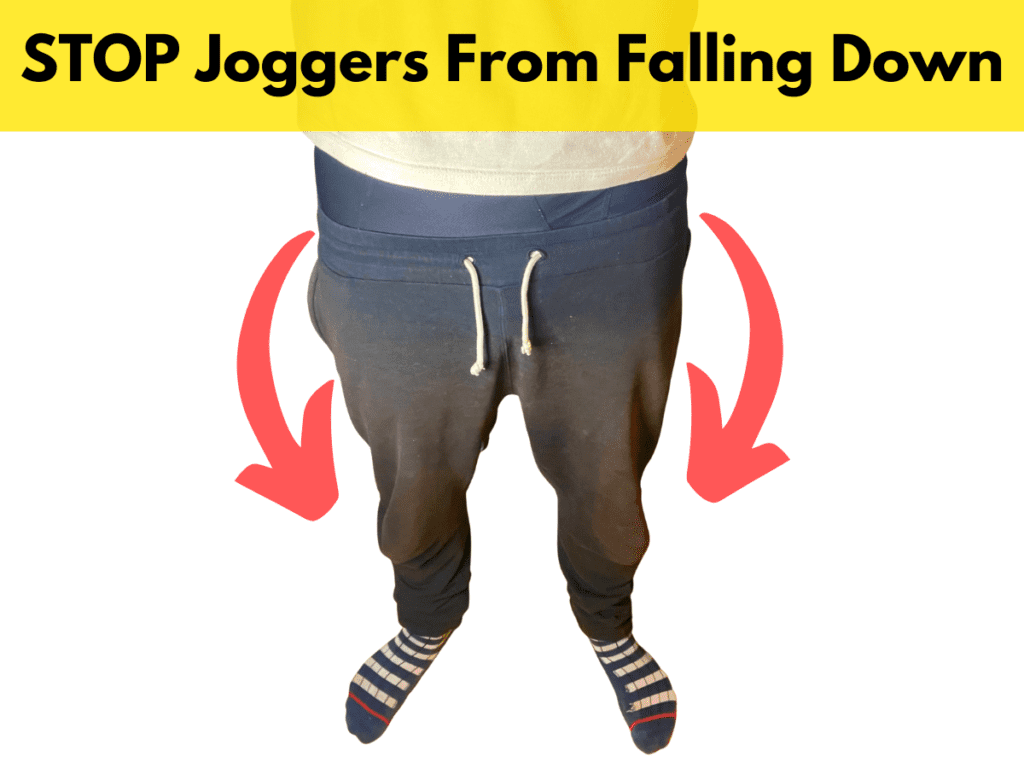
Having to pull up your joggers as you are exercising (or lounging!) is one of the most annoying things ever.
If your joggers are falling down, it is usually because of the fabric, or because of a bad fit.
Look for joggers with a blend of cotton or rayon mixed with some polyester and elastin to keep the pants up. Also always opt for joggers with a tall waist so that your waist can help hold up the joggers.
There is more info over in my guide to keeping joggers from falling down.
How to Stop Shorts from Falling Down
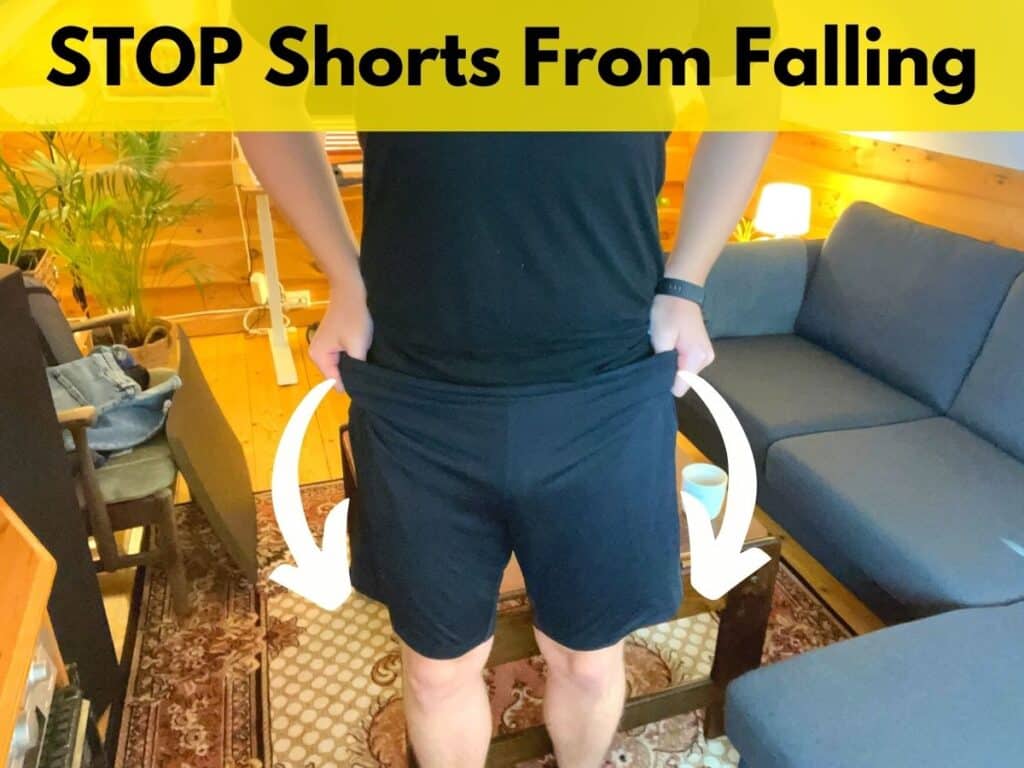
Generally, the shorts are too big or too small if it falls down.
You also want to make sure that the zipper on your shorts is not too tight, and most importantly that your shorts rests on your hips, and not underneath them.
And then there is also the belt of course.
Continue reading over in my guide to keeping shorts from falling down.
How to Stop Skirts From Falling Down
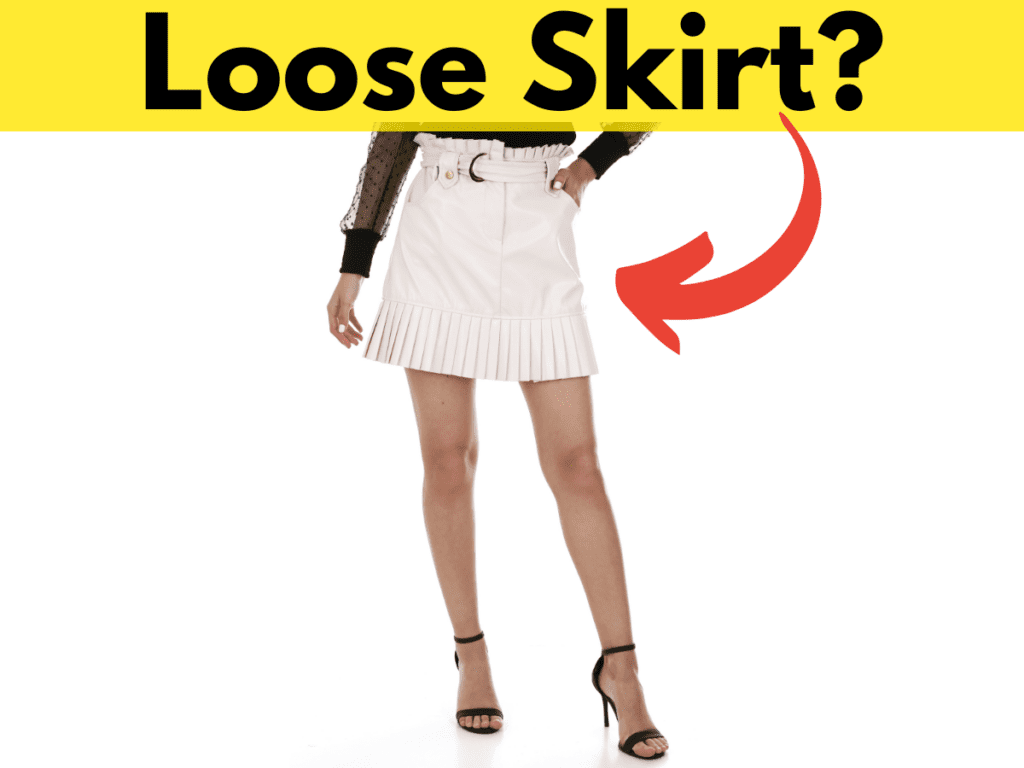
A skirt starting to fall down can be quite annoying, not to mention embarrassing!
Generally, you want to add additional friction around your waist; tucking your skirt into your shirt, wearing a belt, skinny clips, or even a slip are all great options.
Using hairspray or dryer sheets are common home remedies, but they should be used sparingly.
Learn more in my article about skirts falling down.
How to Stop Leggings and Stocking From Falling Down
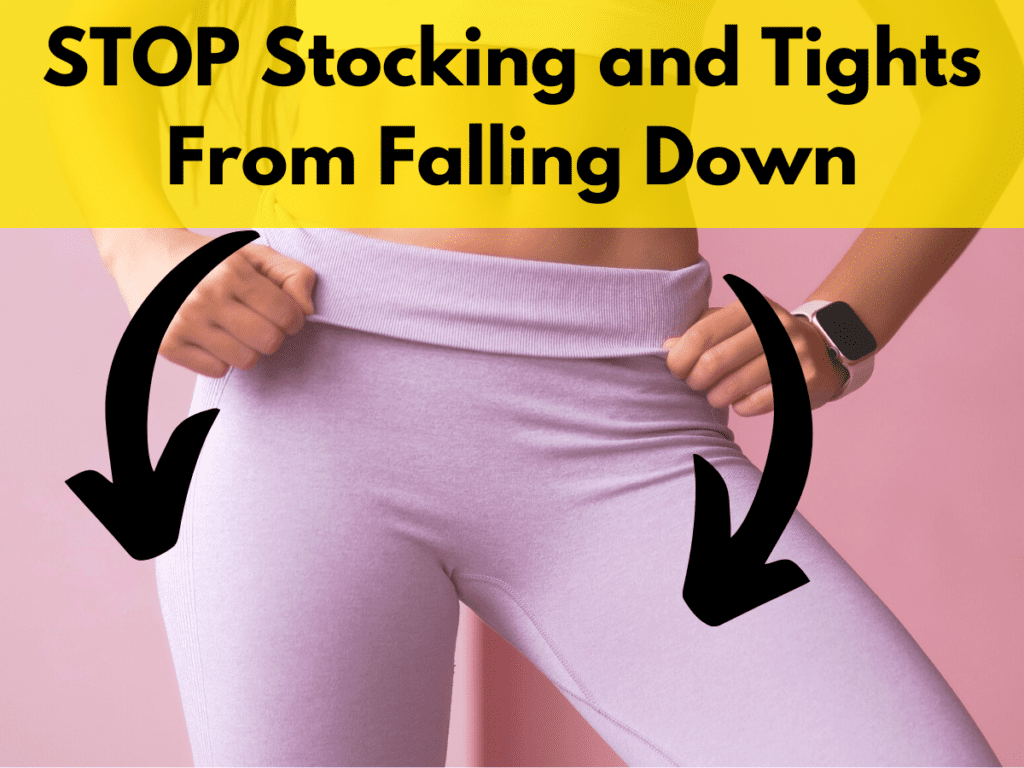
Leggings falling down is a very common problem. There is a very simple solution you can use to stop it from happening again.
A straightforward way to avoid your leggings from slipping down is to use the “sandwich” trick.
Simply, wear your leggings over your briefs as usual. Next, put on another brief over your leggings. Your legging is now placed between two pieces of underwear, with the top one’s role being to pin it firmly to your body.
Quoted from my guide on how to stop leggings and stocking from falling down.
How to Stop Maternity Pants From Falling Down

Maternity pants can be challenging to keep up as your belly grows, but with a few steps, we can keep you comfortable and your pants up.
Your best option is to get a maternity belt. You can also use a regular belt, suspenders, or safety pins on the sides of wide pants to keep them up.
Generally, you are best off wearing comfortable pants like yoga pants, or simply wearing a comfortable maxi dress.
Head over to my guide on keeping maternity pants from falling down for more detailed information.
How to Stop Zippers From Falling Down
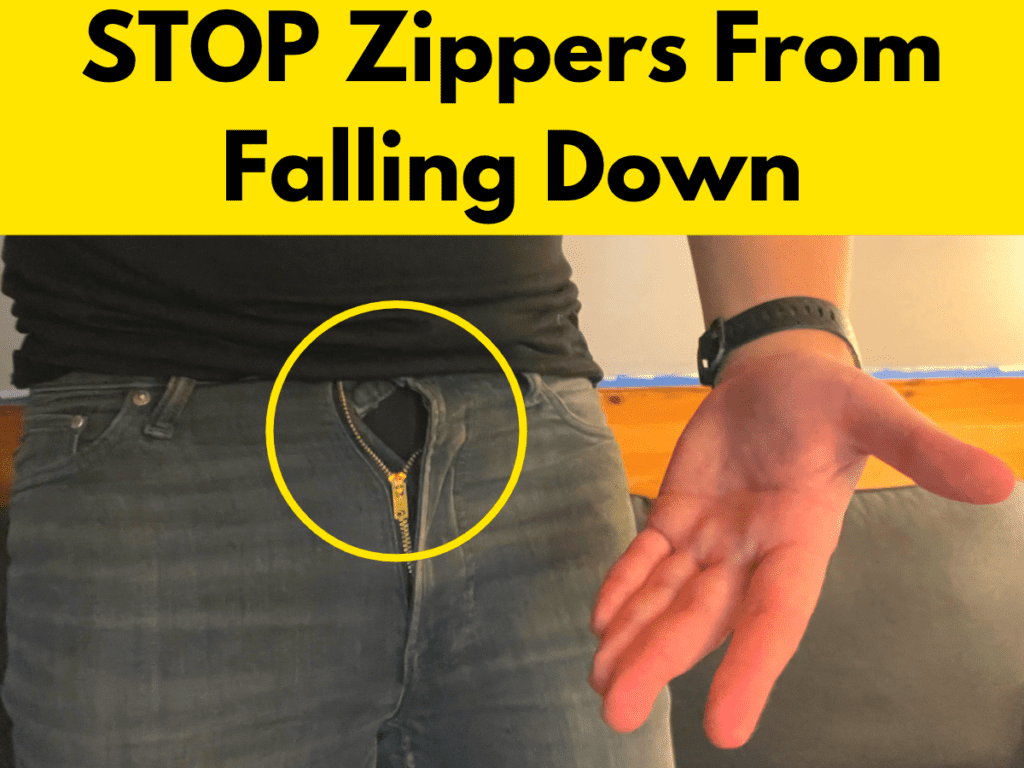
Generally, the easiest way to keep zippers from falling down is to take a hair tie, rubber band, or keyring and secure it to the zipper tongue, then pull up the zipper and fasten it on the button at the top.
If you don’t have a button-up top, you can try to add some friction to the zipper’s teeth using wax.
For more tips and step-by-step instructions on how to do this, check out my article on keeping zippers from falling down.
How To Stop Boots From Falling Down
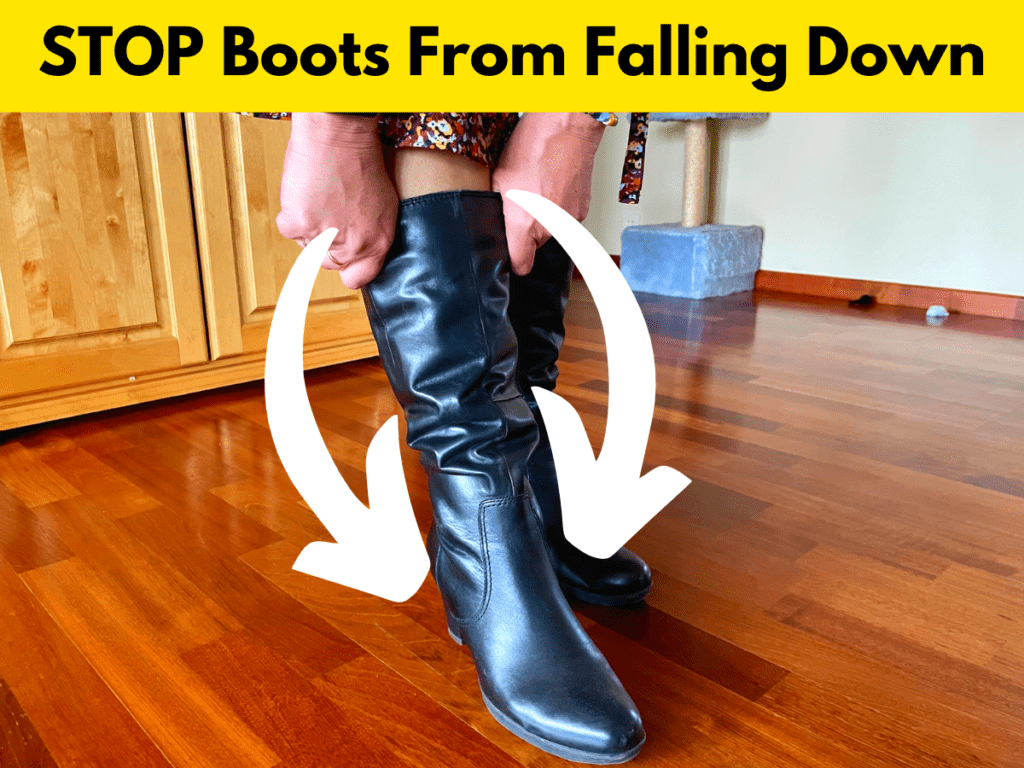
Boots falling down can be frustrating since it often is the piece that completes your outfit. But fret not, I have written up a guide on how to stop boots from falling down again.
If your boots tend to fall down and slouch around your ankles, you can keep them up with the help of fashion glue, boot straps, extra thick socks, or fashion tape. You can also try folding the top of the boots over or around your knees to keep them up all day.
Continue reading here.
How To Stop Socks from Falling Down
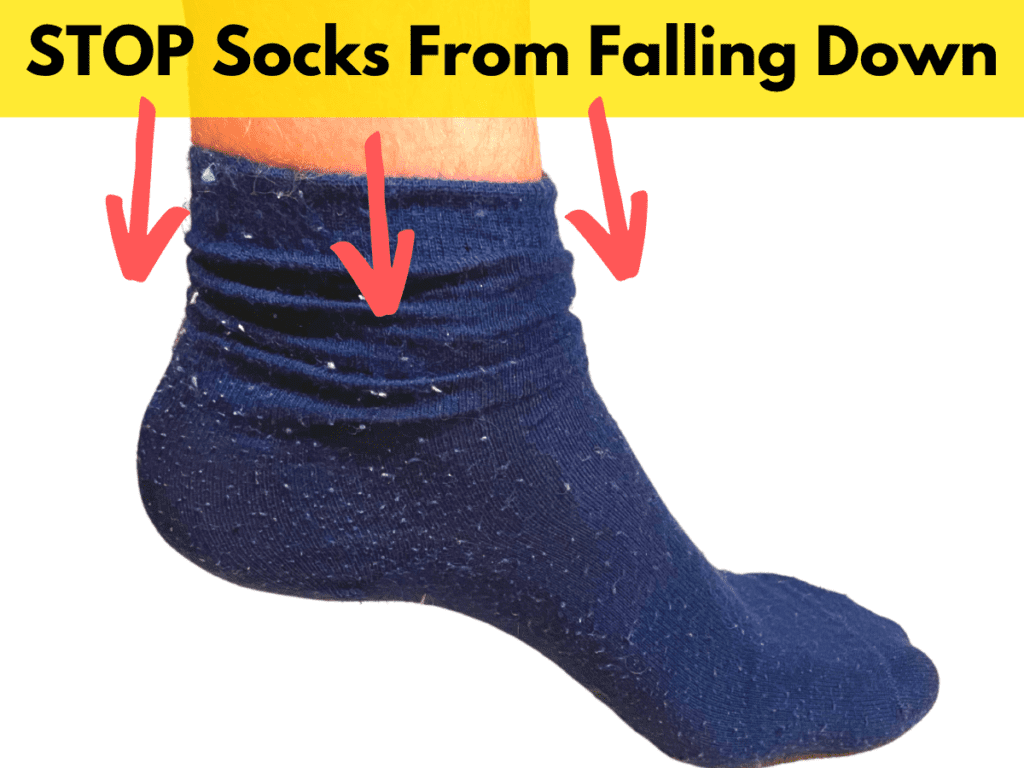
If you have ever found yourself in a situation where your socks start to slip down, you are not alone! Thankfully you never need to worry about it again.
Socks slide because of the high resistance between the shoe and socks or between the socks and shoe. It happens when you buy inappropriate sizes of socks. Buying the right pair of socks will solve this issue.
And low-quality socks fall more because they lose their elasticity. That is why you need to buy a good quality pair of socks.
Learn more in my guide on keeping socks from falling down.
I have also created a comprehensive guide on stopping all your clothes from riding up.
And one on stopping parts of your body from showing through clothing that may interest you to read next.

I’m an expert wardrobe organizer and a bit of a clean freak. I created this website and its YouTube channel to share practical guides about laundry and organizing. My teachings have been featured in multiple large news publications, and I’ve self-published two wardrobe organizing books and an entire course on the subject.