When clothes ride up can be both annoying and embarrassing. In this guide, I’m going to teach you how to stop every way to keep all your clothes from riding up.
Generally, the clothes are the wrong shape for your body, making them slip upward over time. Another very common problem is that the fabric is slippery, since there is no friction to hold them in place this makes them move. The easiest fix is to get clothes that fits your body, or to alter the garment to not ride up.
I’m going to go into more detail for each type of garment for the rest of this article, and give you solutions for all of them.
I recommend that you click on the article linked under the solution for a more in-depth explanation, as I have comprehensive articles on each garment.
Headwear
Both masks and beanies riding up can both be quite annoying. But there are some simple solutions to fixing this.
How to Stop a Beanie From Sliding Up

To keep the beanie from sliding up, pull it down your head until your ears are partially covered by its edge.
Most people wear their beanie with its edges reaching above the ears which makes it loose around the head. In contrast, having your beanie up to point it is partially covering the ears, holds it and helps keep it in place.
Visit my complete guide for more tips on keeping beanies from sliding up.
How to Stop Masks From Riding Up
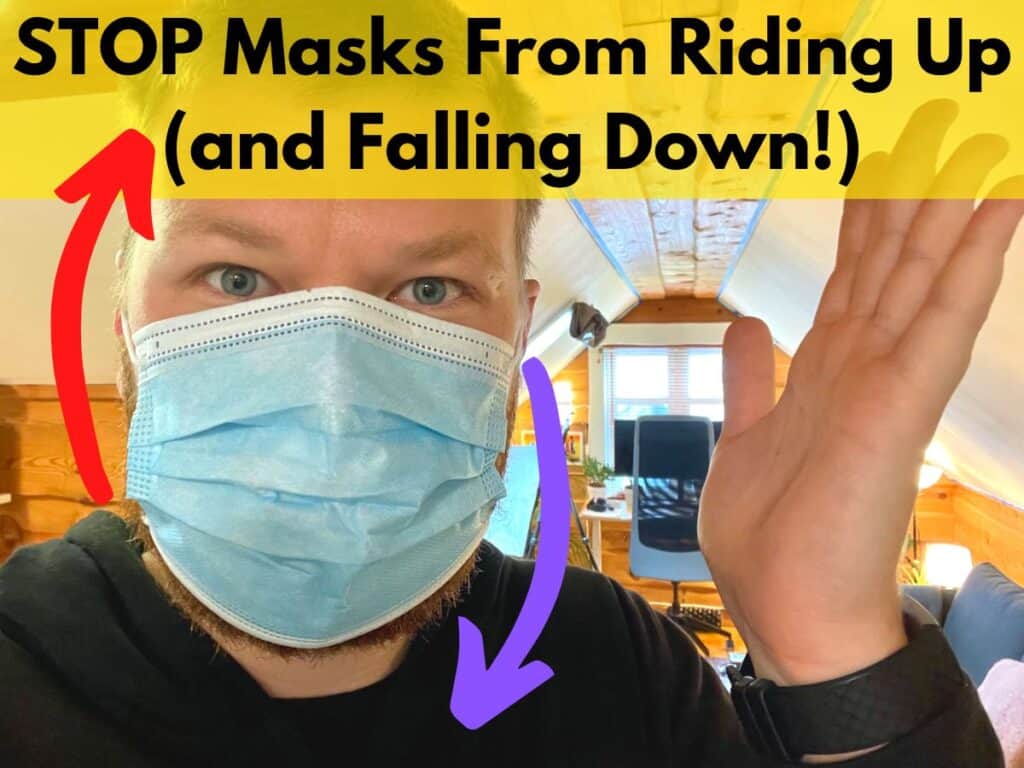
Masks usually ride up because they aren’t sitting well on your face. The strip that runs across your nose should be shaped to properly fit your nose.
Another good option is to tie a string at the end of both of the loops that go behind your ears so that the string you added sits at the back of your head. This will help secure the mask better to your face in the front too.
More on masks riding up (and falling down) here.
NOTE: Since this is a clothing guide, please don’t take this as medical advice, as it is not. If you are having any issues with your masks it is best to ask a medical professional.
Tops
Tops riding up can vary depending on the type of garment. While shirts and sweaters riding up often stem from similar problems, dresses often have some different causes.
How to Stop Sweaters From Riding Up
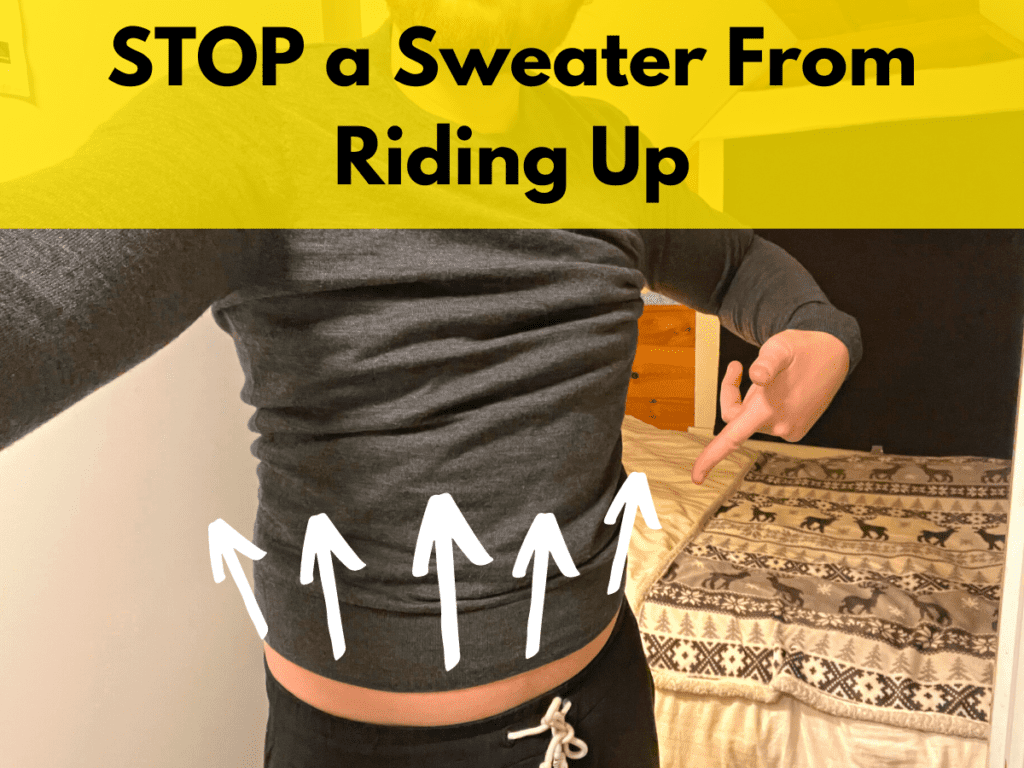
Because it doesn’t fit properly, the biggest reason for the sweater riding up is the fitting and the length of the sweater.
Keep in mind that you will wear a sweater on your shirt and turtleneck, so you should buy one size bigger and sweeter than yours.
Quoted from my comprehensive guide on stopping swearters from riding up.
How to Stop Hoodies From Riding Up
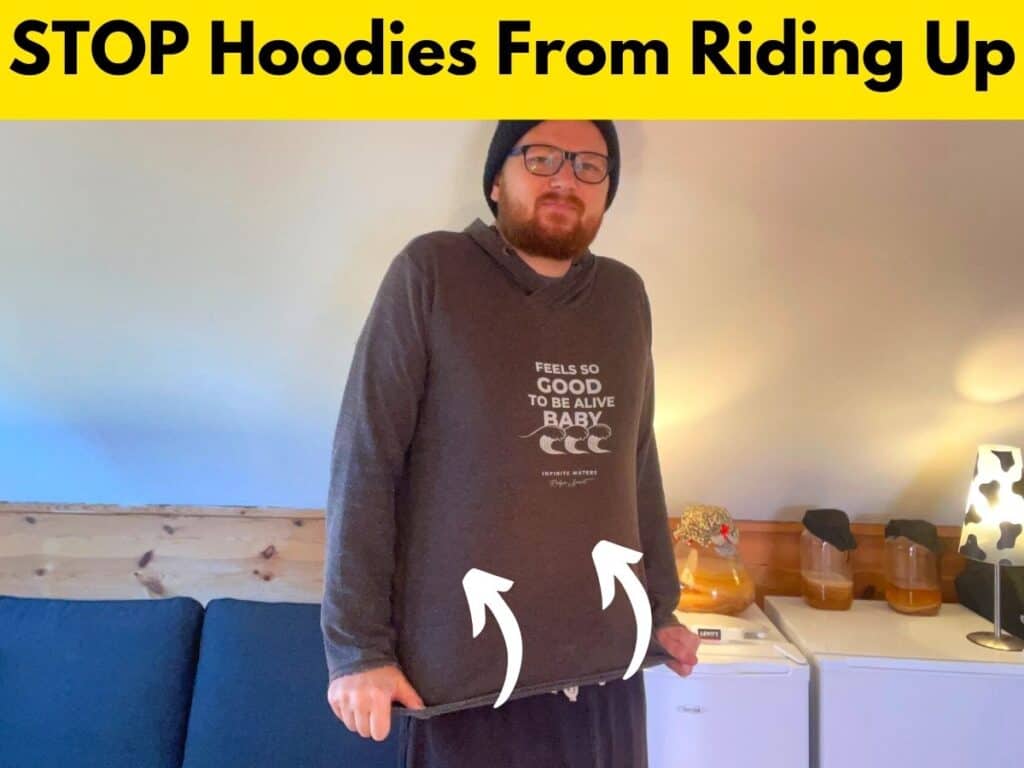
Hoodies riding up is quite similar to sweaters with a few little differences.
In addition to picking a non-slippery fabric, and finding a hoodie that suits your body type properly, you also have to consider the zippers on hoodies:
Wash hoodies at a cold temperature so the fabric doesn’t shrink, as the zipper will always stay the same as its original size.
If the fabric around the zipper shrinks, it will push the zipper up, creating that classic bump we often get in the front on zippered hoodies.
Check out my full article on hoodies riding up for more tips.
How to Stop Shirts From Riding Up
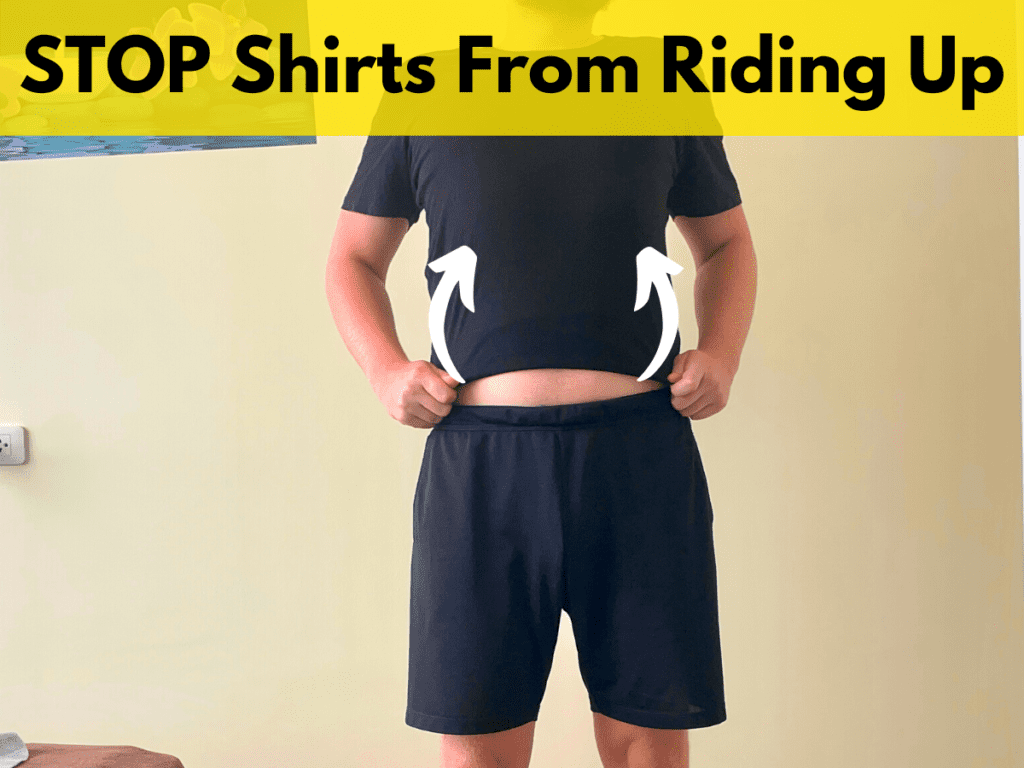
Generally, shirts ride up because they are too small or have a cut that doesn’t match your body type.
The easiest way to fix this problem is by sizing up your shirts if they are too small or changing to a cut that better matches your body.
Check out my article on stopping collard shirts and regular shirts from riding up to learn more.
How to Stop Dresses From Riding Up
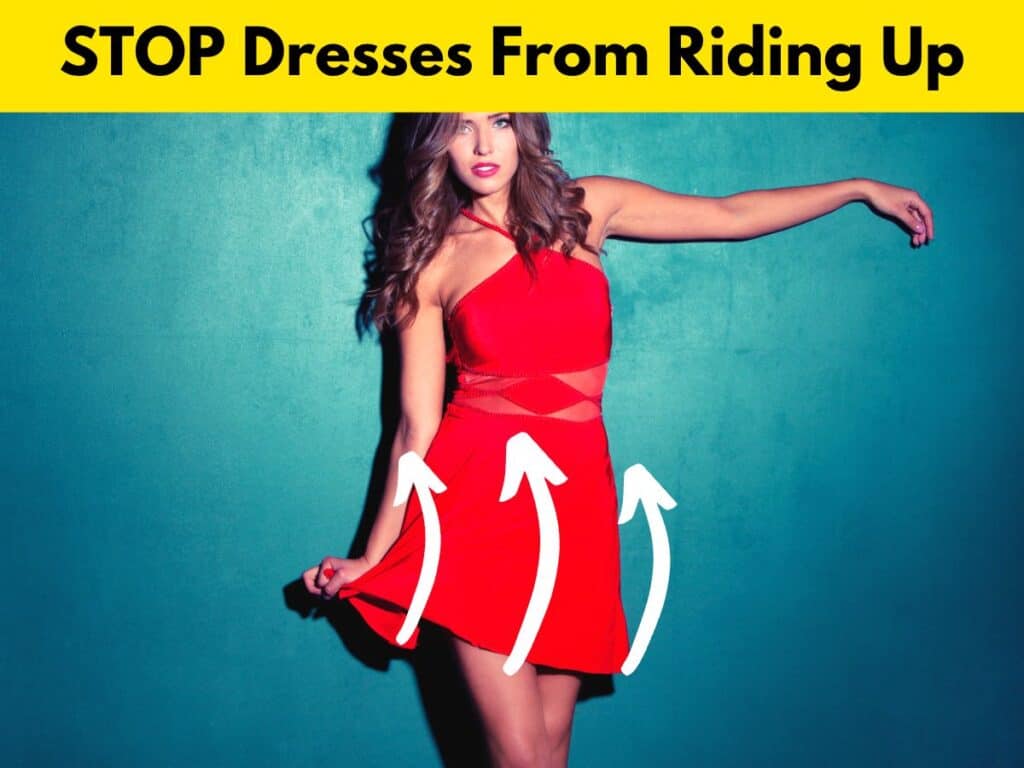
Generally, tight dresses, short dresses, and ones made from slippery fabrics are most prone to riding up. Make sure that the dress fits your body type, this is especially important around your hips.
You can also wear a layer with some friction underneath to keep the dress better in place. Dress weights, certain creams, and fashion tape can also help you keep your dress from riding up.
More on why your dresses are riding up, and how to fix it here.
How to Stop Leotards and Bodysuits From Riding Up
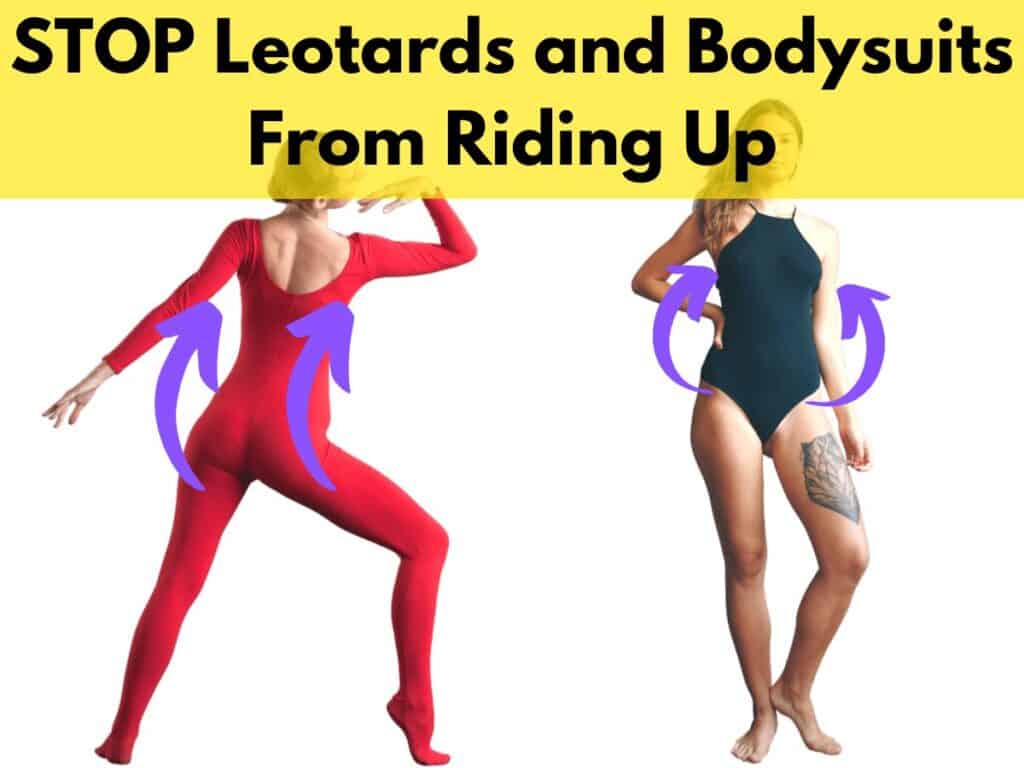
Leotards and bodysuits can be challenging to keep up if they don’t fit right.
Generally, you can add friction by wearing tights underneath; If you don’t like that, then secure it by adding fashion tape, body glue, or some hair hairspray underneath the garment.
Next time you buy a leotard or bodysuit, try it on and move around a bit to make sure it doesn’t ride up before you buy it.
More on how to stop your leotards and bodysuits from riding up here.
Bottoms
Bottoms riding up are often caused by the fit, or because of the fabric. But there are some nuances between the different types of bottoms and some clever solutions that you will learn about in this section.
How to Stop Pants From Riding Up
One can stop pants from riding up around your thighs by reinforcing the inner seam with plastic boning.
Or keep your pants from riding up by applying silicone caulk to the hem or sewing in an elastic band. To stop pants from riding up when you sit, hitch them up slightly as you bend at the hips and knees.
Learn more in my complete guide on how to stop pants from riding up.
How To Stop Shorts From Riding Up
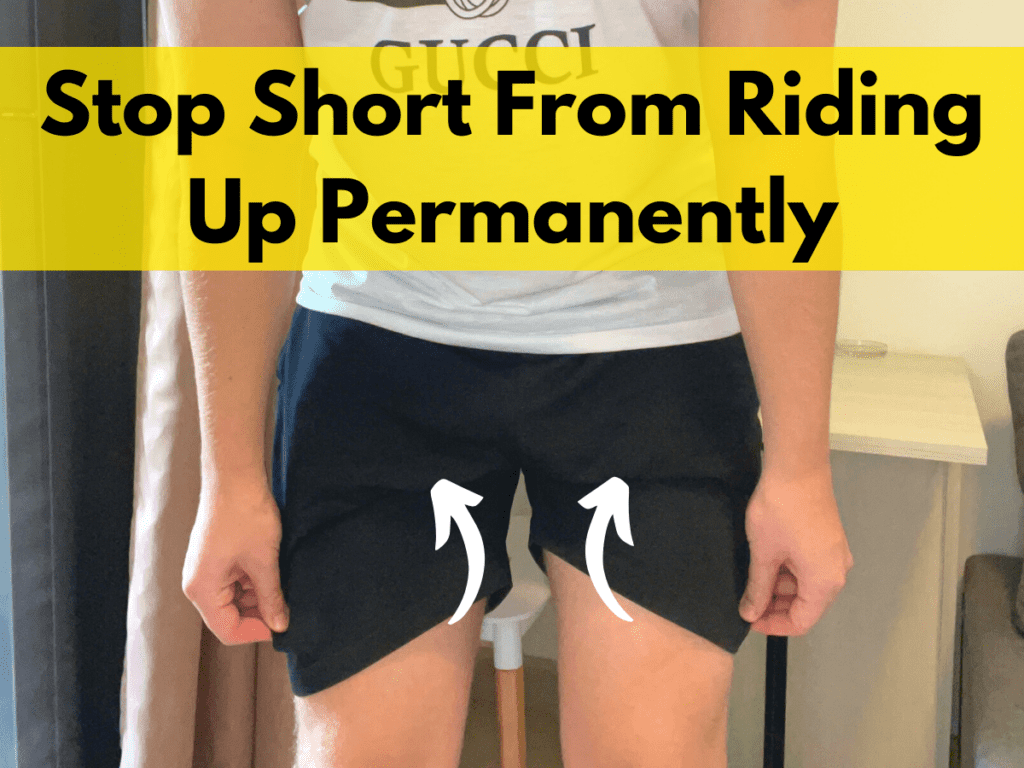
You can prevent shorts from riding up by adding polyester boning. Other tricks include using fabric or cornstarch paste, silicon caulk, adding elastic to the ends, or spraying your thighs with hairspray.
When buying shorts, look for longer styles or select a size up and tailor them.
More details in my complete guide on stopping shorts from riding up.
How to Stop Belts from Riding Up
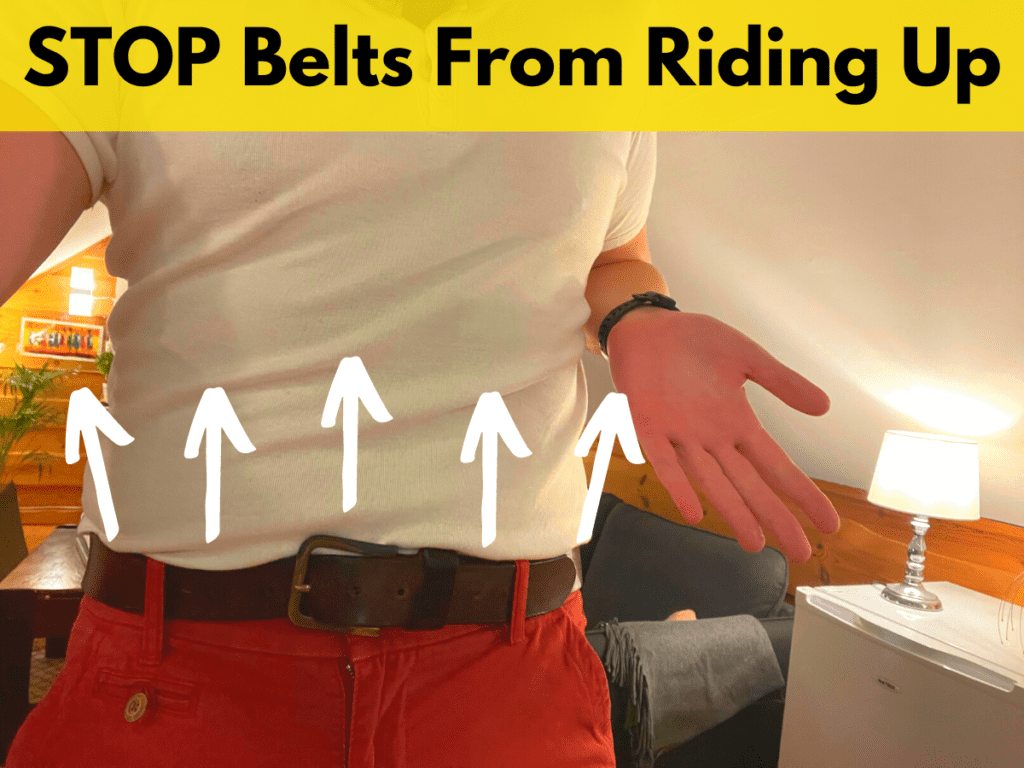
A crucial part of wearing a belt is ensuring you have the correct size. To know how to go about this, use your pants size and go a size higher.
For instance, if your jeans is size 36, go for a size 38 belt. This ensures you have the precise amount of strap leftover once you fasten the buckle.
For more tips visit my full guide on stopping belts from riding up.
How to Keep Skirts From Riding Up
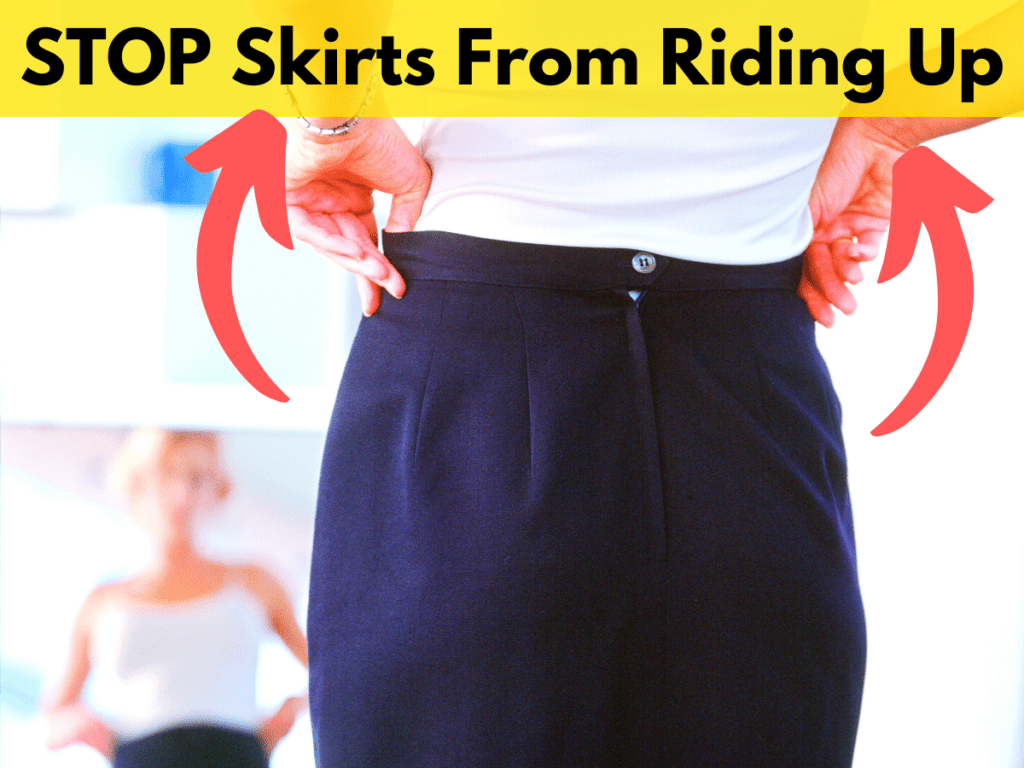
Generally, skirts ride up because of their shape. Short skirts, tight skirts, and ones made from slippery fabrics are most prone to riding up.
Consider getting a skirt that sits naturally on your waist, an A-line or flared skirt, one with some extra length, or investing in some dress weights to keep it down. And of course, find a non-slippery fabric next time you go skirt-shopping.
I recommend checking out my full article on keeping skirts from falling down for more details.
How to Stop Skirts From Blowing up in the Wind
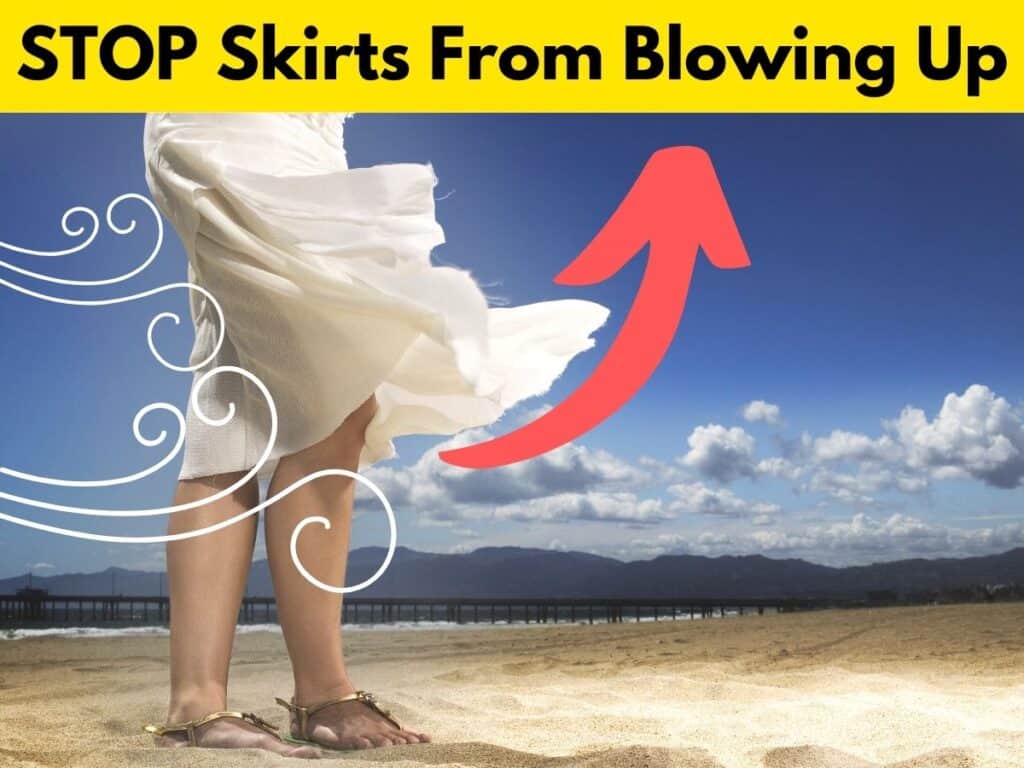
The smartest way to avoid dresses from being blown up by the wind is to use weights at the hems. The hack involves sewing in pieces of weights, usually lead at the lower dress seam.
As a result, the dress becomes heavier at the hem and can withstand strong gusts of wind.
Quote from my full guide on how to stop skirts from blowing up in the wind.
How to Stop Pajamas From Riding Up
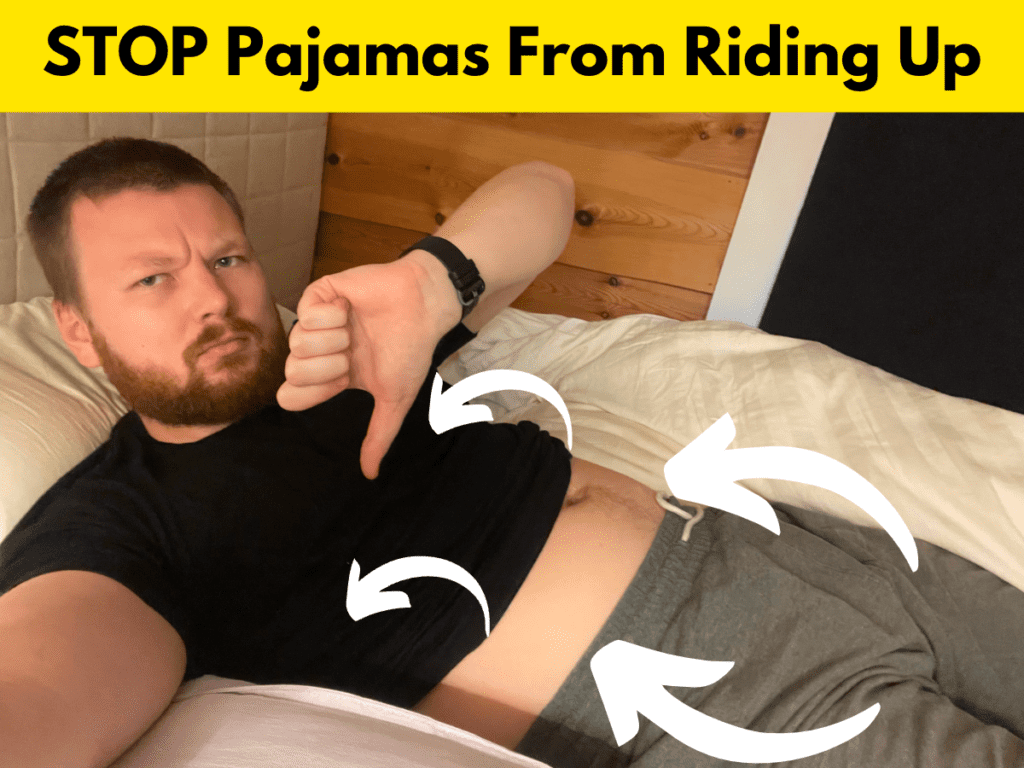
In general, your pajamas and sleepwear tend to ride up mostly because they’re the wrong size and fit. Loose garments with nothing to hold on to on the body tend to ride up the more you move.
This also happens because the fabric is too soft or maybe because of your own body anatomy that lets the clothes ride up unhindered.
Check out my guide on stopping pajamas from riding up to learn more.
Undergarments
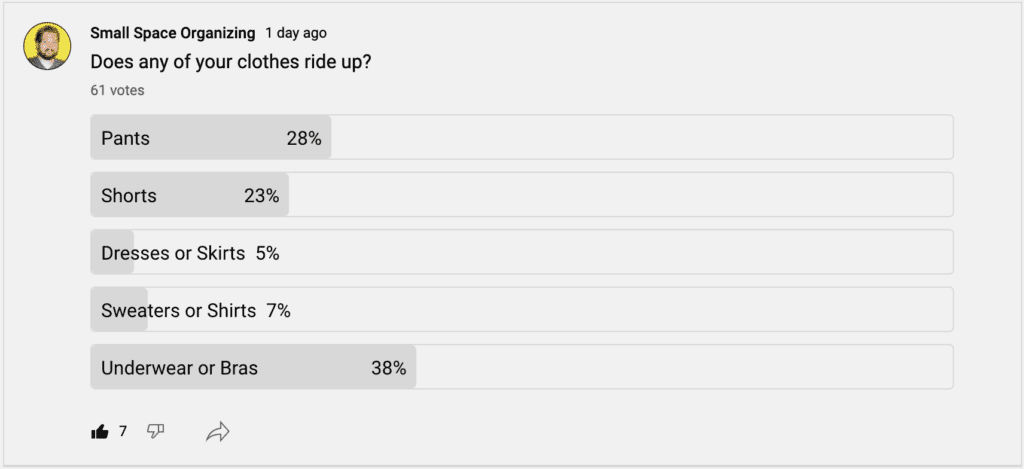
Undergarments riding up can be very annoying. It is especially annoying in public when you sneakily have to adjust them. So let’s solve this problem once and for all.
How to Stop Underwear From Riding Up
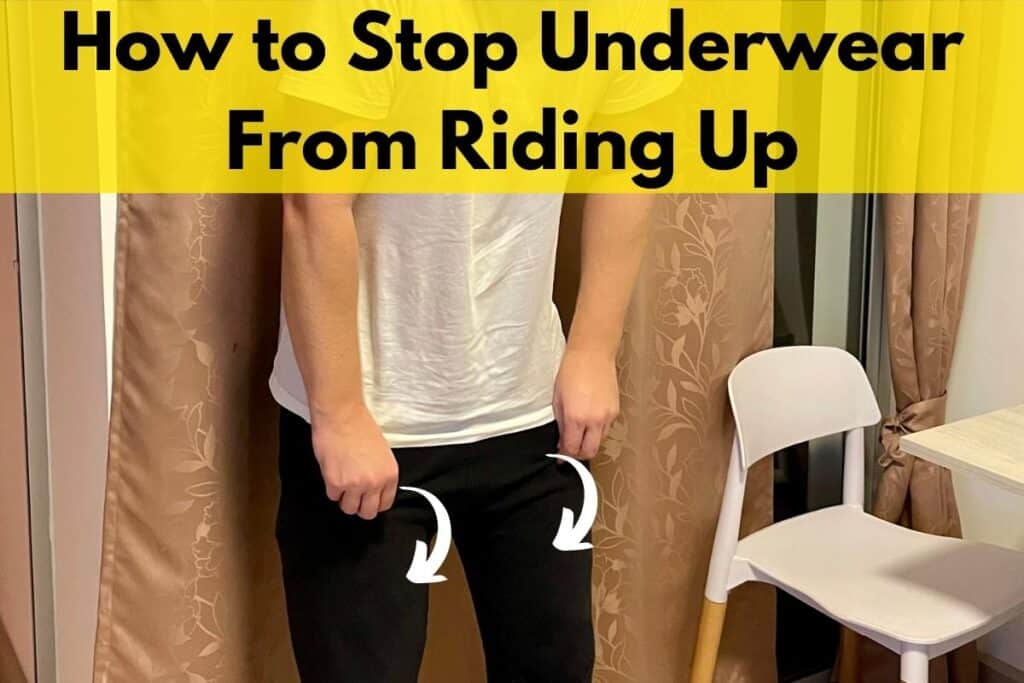
There are several reasons why your underwear is riding up. The most common problems are:
Your underwear is worn out, the elastic band is loose, you have picked a bad fitting style for you, it could also be that the fabric is slippery, that your pants pull on the undies because of activity or fit.
Check out my guide on stopping underwear from riding up for details on fixing these issues.
How to Stop Wediges
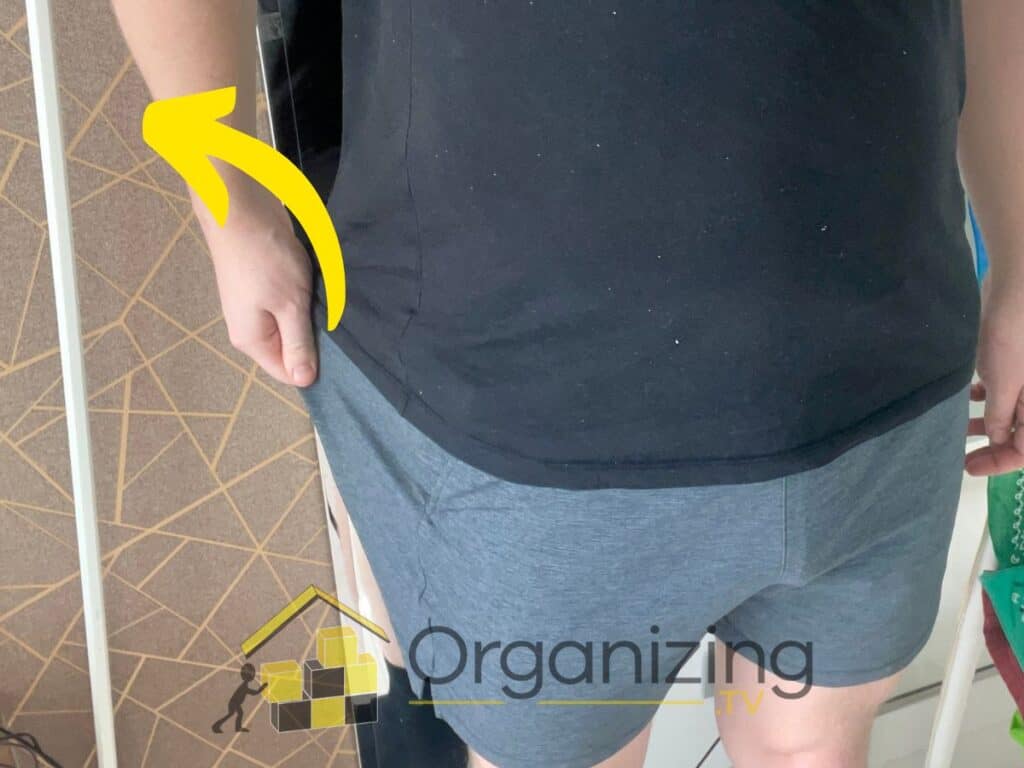
You can stop getting wedgies by wearing the correct underwear size and in the right style.
Replace old undies and have enough to avoid washing them often and wearing them out faster. Experiment with different fabrics and elasticity, as finding the right balance help stop wedgies.
More on preventing wedgies here.
How to Stop Bras From Riding Up

Bras riding up can be quite distracting. There are a few different reasons to why your bras are riding up:
Generally, the bra won’t be the proper fit for your body. Adjusting the straps at the back and over the shoulders may help. But getting a properly fitting bra in a style that suits your body is your best option.
Other common causes are slippery fabric, slippery skin from for example sweating, or that your bra is worn-out.
For more details, check out my full article on stopping bras from riding up.
How to Stop Bikinis and Swimsuits From Riding Up
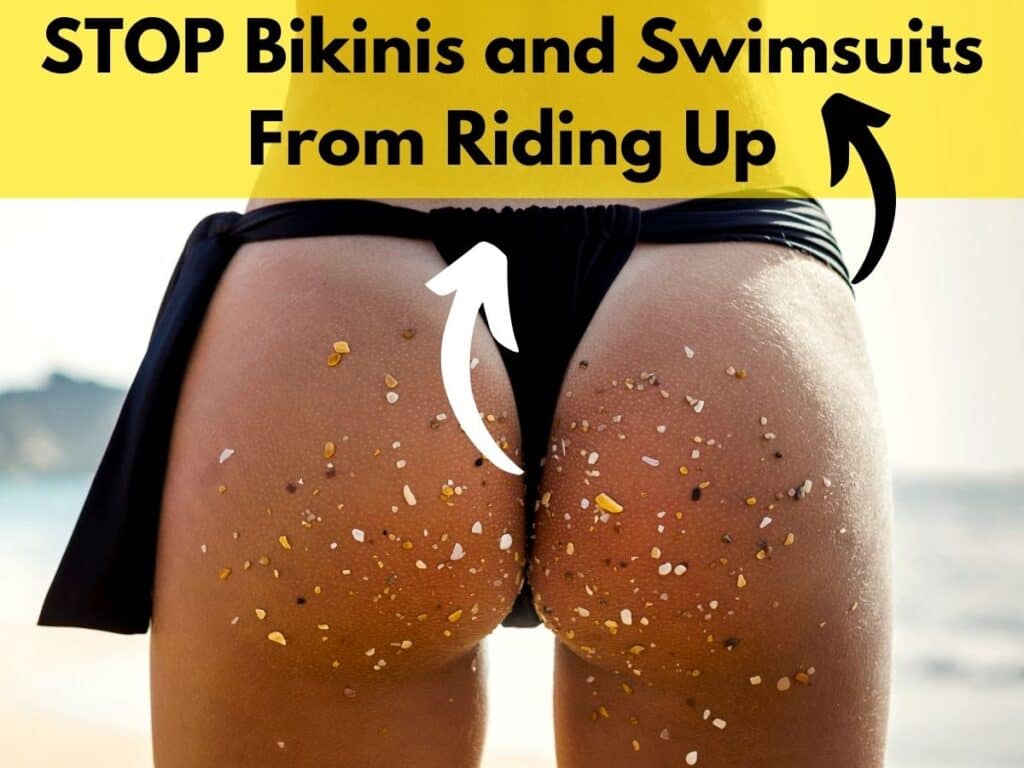
Moisturizing your buttocks before putting on a swimsuit or a bikini is like the solution next door that we had been unaware of for so long.
Moisturizing allows the material of your bikini bottom or swimsuit to stay intact and not find uncomfortable places to fit in.
Check out the full article on bikini bottoms riding up for more details.
I also have a comprehensive guide on stopping all your clothes from falling down.
And one on keeping unwanted parts of your body from showing through your clothes that may interest you to read next.

I’m an expert wardrobe organizer and a bit of a clean freak. I created this website and its YouTube channel to share practical guides about laundry and organizing. My teachings have been featured in multiple large news publications, and I’ve self-published two wardrobe organizing books and an entire course on the subject.