Sliding down eyeglasses is a common problem with most eyeglass users. You’ve to keep pushing it up the bridge of your nose regularly to reposition it.
This is not only super irritating but it lowers your level of productivity and comfort. But worry not, as we have a few tips to share on how to stop this problem from recurring. Read on to learn more.
The fastest and easiest method of preventing your glasses from falling is by using hair ties. With a pair of hair ties, wrap one on each of the two bending parts of the glass temple several times until it is firmly holding on to it. The hair tie creates resistance on the glass temple eliminating the sliding problem.
More Tips to Keep Glasses From Slipping Off
Of course, the above tip is a quick fix for the problem. As we will find out later in the article, there are multiple reasons for the falling down of the glasses.
Naturally, there is no one size fits all solution for the problem. So, here are more tips to stop the problem.
Use Nerdwax
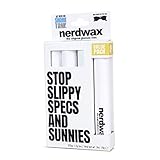
- Nerdwax is an anti-slip eyewear retainer – turns any glasses into non-slip glasses by creating a layer of friction between your glasses and skin. Apply when needed – keeps your glasses in place 1 hour to all day depending on how much you apply.
- Easy to apply & clean – simply wipe any surface oils off your glasses and apply directly to frames.
- Apply when needed – keeps your glasses in place 1 hour to all day depending on how much you apply.

It may sound strange but wax is one of the best ways to prevent slipping down glasses. Whether you use beeswax or any other, using wax is a fantastic hack. But, there is a new commercial wax in the market manufactured specifically for this purpose; Nerdwax.
Nerdwax is an invention of a chap called Don Hejney from Nashville. Having faced this challenge, he came up with and patented a product called Nerdwax. And courtesy of him we have a fantastic product that helps glass wearers to stop this annoying problem.
So how do you use it? Apply a small amount of the wax on each of the nose pads, as well as the part of the eyeglass temple where it is in contact with your skin.
That’s it! Nerdwax is a terrific and effective product.
However, you will need to wash off oils from the skin for it to work. But that is a small downside as only a small amount is required. So, a pack of four can last you for a long time. Plus it doesn’t rub off immediately, anyway.
Another thing to look out for is its reaction to the skin. If you suffer from allergic reactions, you might want to test it first. Put some drops on your skin, for example on a spot on your arm, and observe it after about 20 minutes. If there is no reaction, it is safe for use.
Silicone Nose Pads
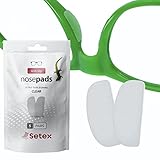
- MIMICS A GECKO’S FOOT fibrillar structures for an ultra strong grip in wet, sweaty and oily conditions
- THOUSANDS OF FIBERS on each nose pad creates a strong dry adhesive to secure glasses to your nose
- ALL DAY COMFORT, cushion soft, not sticky or tacky, easy to clean and has a self stick adhesive
Silicone nose pads are designed for sticking on the glass bridge. Gently press it on the bridge surface with the sticky side facing the bridge. Once in place, they can stay put for a long time and prevent slipping down.
The added resistance helps in holding it firmly on the skin. However, watch out for cheap varieties that are not as durable, and only last for a few days. But there are quality silicone nose pads that can serve you for a long time.
Buying a dozen of these can last a whole year. Surely, that is a long time for a product that will only cost you a few bucks and fix your eyeglass slipping problems. For the best results, be sure to regularly wipe the nose pads with alcohol or soapy water to remove oil.
Ear Hooks

- ANTI-SLIP PROTECTORS FOR YOUR GLASSES- These eyewear retainers keep glasses from slipping down from your nose or falling off while you are doing strenuous exercise. You can wear your glasses comfortably and not be pushing them back in place all the time!
- SKEPTICAL ABOUT WHICH DESIGN WOULD WORK FOR YOU? You are getting 3 different glasses retainers for your choice, circle ones, comas ones, etc. Kids and adult can both use these eyeglasses temple holders. Allowing you working with no stress, studying with more passion and sporting with more energy.
The good thing with silicone ear hooks is their durability. You can use them for years on end without the need for their replacement. Plus, they are versatile and can be used in any weather.
Whether you use them during the hot summer or the chilling winter silicone ear hooks do not irritate your skin. Other benefits of using ear hooks are their ease of use, and versatility to fit most eyeglasses frames. The only downside is you have to keep wiping them clean to avoid contamination by your skin oils.
Moreover, their obvious visibility makes them unappealing to users not keen on attracting undue attention. Quality is another key thing to watch out for. Some poorly-made scratchy products irritate the skin. But you can buy high-quality ear hooks that are worth your money, as they are comfortable to wear.
Friction Sleeves
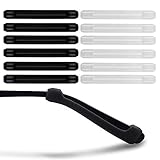
- Reduces the sliding of the glasses and prevents loosening. The non-slip design is simple and practical, perfect for work, everyday wear, or any venue for indoor and outdoor activities.
- Designed to fit frame arms size up to 3-12 mm wide, please choose the size that suits your glasses.
- Strong toughness, no deformation after stretching, long service life, just make your cleaning process safe and fast quickly.
While the nose pads are great in preventing the glass from slipping, glass temple tips are equally important in solving the problem. Therefore, if there is a way to make the glass temple firm on your skin, that will also help.
Luckily, there is an effective way to do this; friction sleeves. Once in place, they increase the resistance of the frame eliminating slipping. Moreover, it is easy to find sleeve socks that also match your glass for an aesthetic look.
Cable Temple

- LMP Optical Cable Temple Retrofit Kit Includes Glue Fine Sandpaper & instructions Universal Fits Most Metal frames 1.3mm
- SLIPPING GLASSES: Are you tires of your glasses constantly falling at work or at home? This kit was made due to the frustrations we consistently heard from our patients. We found that very few manufacturers make a cable temple pair of eyeglasses let alone sunglasses. Many of our active patients requires a pair of eyeglasses with a cable temple and unfortunately there was not much on the market that was fashionable. So we stepped outside our comfort and created a kit for those patients.
Cable temples are designed to hook in your ears from behind. Instead of the slight bending like the ear hook, the cable temple has a semi-circular bend hooking the glass temple around the ears. The cable temple holds the glasses with even a firmer grip.
Furthermore, it’s one of the safest ways to keep your glasses from slipping and falling. Probably, one of the major problems with the cable temple is the irritation they cause around your ears. But right-sizing can get you snugly fitting ones that are comfortable to the skin.
Anchor Tips

- 👓【6 Pairs Ear Grip】We prepared 6 pairs black silicone eyeglass ear grips for you, you can share it for you friends and family, the eyeglasses grips is enough for daily use
- 👓【Size of Glasses Ear Cushion】Size:2.2*0.3 inch,and the hole inner diameter of this silicone ear hooks is 0.12 inch. Applicable to glasses frame with width of 0.15-0.4inch. You can measure you glasses legs before purchase so that you can get suitable one.
- 👓【100% Soft Silicone】Eyeglass temple tips sleeve is made of ultra-soft silicone, allergy-free; high elasticity of these eyeglasses temple tips are durable and no deformation,will not turn yellow after wearing it for a while.
For years, most glass temples and tip designs have remained unchanged, until the Anchor tip by Beta-Simplicity, entered the market with its innovative designs. So what is special with anchor tips?
They are designed to prevent eyeglasses from falling off by providing extra friction around the glass temple and the tip. This friction comes from a thick and soft rubber around the temple tip that holds the eyeglass firmly and comfortably on your skin.
Importantly, with a metal core, the anchor tip can be configured to fit different head shapes. These key features make the anchor tip stand out among the other methods of preventing the glass from falling.
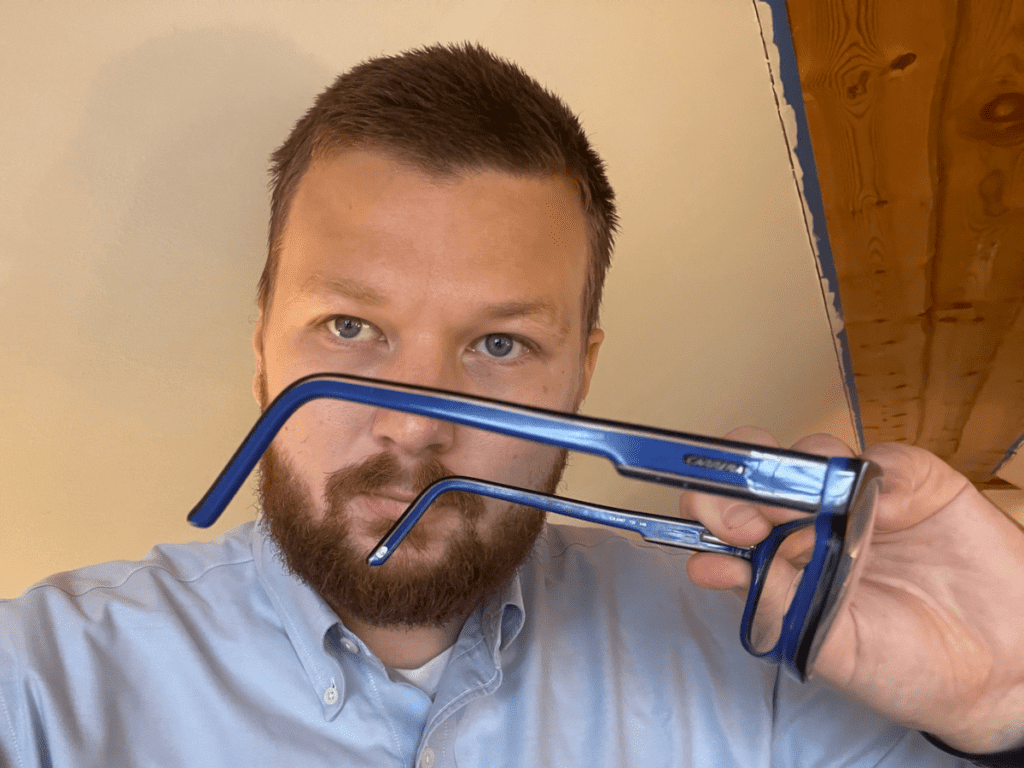
Frame Tightening
Like all things in continuous use, glasses wear out with time. Eventually, parts like frames and hinges will require repairs or replacement. Mainly, frames lose their grip due to loose hinges. On the other hand, the hinges can become weak from missing or loose screws.
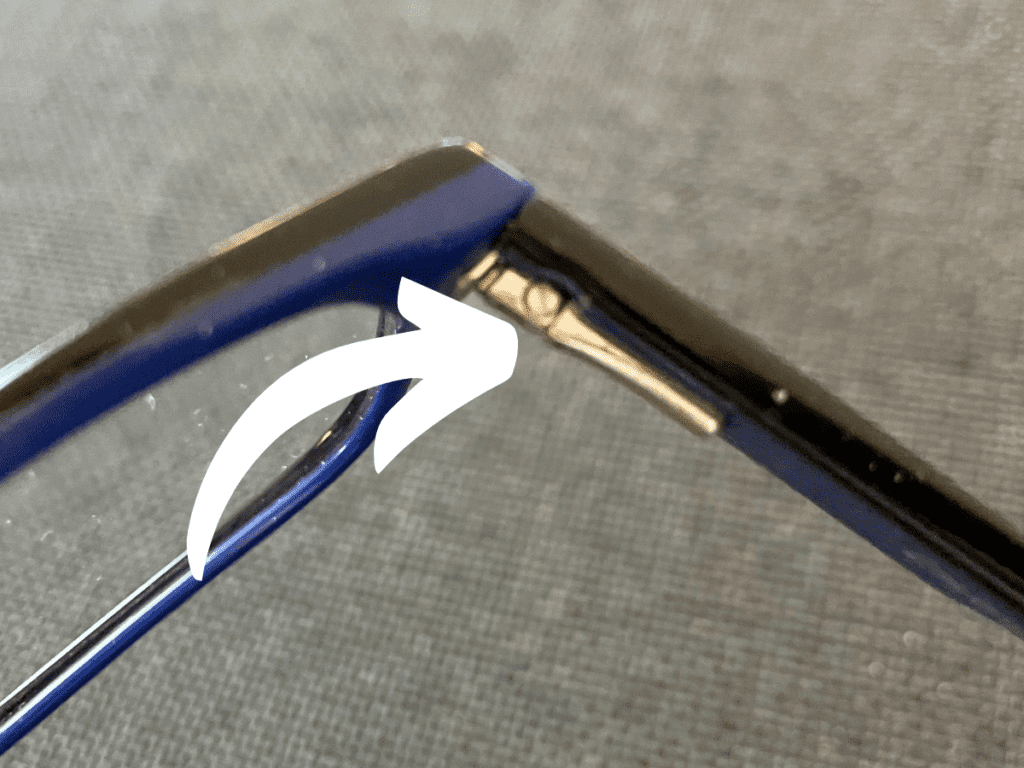
You can either opt to fix the problem yourself if you have the tools and skills or consult your optician. Depending on the results from their examination of the hinges and measuring the temple tension, they can recommend some actions.
If the temple appears bent they might use a flame heater to reshape it. There are several ways the frame might get bent which includes, overstretching over time, or even being tried on by someone with a wider head.
Granted the causes of stretching abound all they need to do is to use a frame heater and restore the frame shape back. If misalignment is beyond repair you might require to dig deeper into your pocket for a new frame or glasses.
Glass Chains
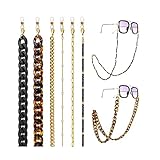
Glass chains are attached at both glass frame temples to create a loop behind your head. This makes glass chains excellent in preventing the glass from slipping. Not only that but they protect glasses against falling and breaking.
Also, a glass chain is a useful tool in another way, especially when fitted on reading glasses. You can conveniently hang the glasses on your neck, instead of taking them off during a snack break. Pretty cool, right?
Another wonderful thing with glass chains is their versatility in designs and colors. That means you can easily get a piece that matches your dressing style.
Eyewear Strap
No products found.
The eyewear strap is a stretching string that is attached at both ends of the glass frame tip, forming a loop around the back of the head. Unlike the glass chains, eyewear bands firmly fit around the back of the head. But they serve the same purpose as the glass chains, which is to keep the glasses from slipping down.
Eyewear straps are popular with sportspeople due to the nature of their activities. But they’re not exclusive to them.
Anyone can buy eyeglasses fitted with them or have them fixed for you at the local optician shop. Eyewear straps are adjustable, which makes them quite versatile, comfortable, and stylish.
Wash Your Face With Natural Oils

Oily skins aggravate the glass slipping problem. As a result of the oily skin, the nose pad, and the glass temple become slippery. To prevent this, you have to wash your face before putting on the glasses and once or twice during the day.
Cleansing and rinsing thoroughly are even better at clearing the skin off the oils. Alternatively, you might want to carry cleaning wipes to clean off the oily skin. The drawback of this method is its effect on the skin.
Continuous cleansing or wiping of the skin might make your skin dry.

- Image Skincare
- Packaging may vary
- Beauty Product
Why Do Glasses Keep Falling Down?
Glasses fall down for several reasons. From worn-out hinges, poorly adjusted nose pads, bent temples, and wrong frames among others. It is only by correctly diagnosing why that happens, that you can pinpoint the cause, and avoid future problems of glass slipping.
Here are some of the reasons glasses fall down.
Poorly Adjusted Nose Pads
Nose pads can be either sitting wide on your nose bridge or closed. If they are wide apart, that could explain why the glasses are sliding down. The closer the gap between them the more firm they’re.
To adjust the nose pad, just push or pull them apart. This is something you can do on your own. If you’ve no idea how to do it, you can watch a tutorial on Youtube for practical demostration of how to do it. But if you feel this is not your cup of tea, you can consult an optician.

Bent Temples
Temples are the arms of the glass frames. If they are not well-positioned they will not hold firmly as they should. The best way to check whether they’re well aligned is to put them on a table and do proper examinations.
If you find the top section of the glasses is not parallel and open wider, or they appear mismatched, it means they’re bent. If they‘re slightly warped you can gently reshape them. But sometimes they might be so misaligned you may need to seek professional help.
Wrong Sized Frames
Putting either wrong-sized or too heavy frames means they will not fit properly on your head. People’s heads are formed differently. Some heads will comfortably fit heavy framed glasses while others will not. So checking the fitness of the glass to your head is essential. Sometimes it would be better to change the frames altogether.
Oily Skin
As we found out earlier, oily skin could be the culprit, and we have discussed above the best measure to help the glasses hold on to the skin. One way is to regularly cleanse and moisturize to maintain the hold of the glass on the skin.
Frequently Asked Questions
How Can I Keep Glasses From Falling off With a Facemask?
The first thing is to wear the mask as usual, and then gently squeeze the wire seal on the mask between the index and the thumb fingers. Then with an eyewear strap on, you can wear the eyeglasses as usual. The glasses will stay put, no matter the movement of your head.
How Can I Keep Glasses From Slipping When Sweating?
To keep your glasses from slipping when sweating use temple hooks. Temple hooks hold firmly on the ears and prevent your glasses from falling off, no matter how sweaty your skin is. Most temple hooks are cheap and comfortable on the skin.
Can I Fix the Problem of Slipping Glass at Home?
This depends on what is causing the problem. For minor issues like poorly adjusted nose pads, you can easily fix them without any tools. For more complex problems such as hinges, you can fix the problem if you’ve got the skills or the tools kit. Otherwise, you might want to visit your local optician for help.
I also have a comprehensive guide on stopping all your clothes from falling down that may interest you to read next.

I’m an expert wardrobe organizer and a bit of a clean freak. I created this website and its YouTube channel to share practical guides about laundry and organizing. My teachings have been featured in multiple large news publications, and I’ve self-published two wardrobe organizing books and an entire course on the subject.