
There is absolutely nothing worse than your clothes getting stained with sunscreen. We’re not too fond of it when we accidentally wipe our faces and get a permanent stain on our favorite shirts. So, we compiled a list of stain-free sunscreens after hours of research so that you can pick one.
So, what should be my first choice for stain-free sunscreen?
According to reviewers, it is the Bask Sheer Moisturizing Sunscreen (tap the link to check the best price.)
While others are on the list, this is a certified hit among users, so you can be assured that it is effective.
But whether it is available or you want to try others that might suit you more, it is good to check out other options. So, below is a comprehensive list of the top 7 stain-free sunscreens.
Why do Sunscreens Stain Clothes?
The question might be running through your head; why do I even have to go through all this trouble to find a sunscreen that does not stain clothes? The primary culprit is the presence of a chemical called avobenzone, which was already mentioned before.
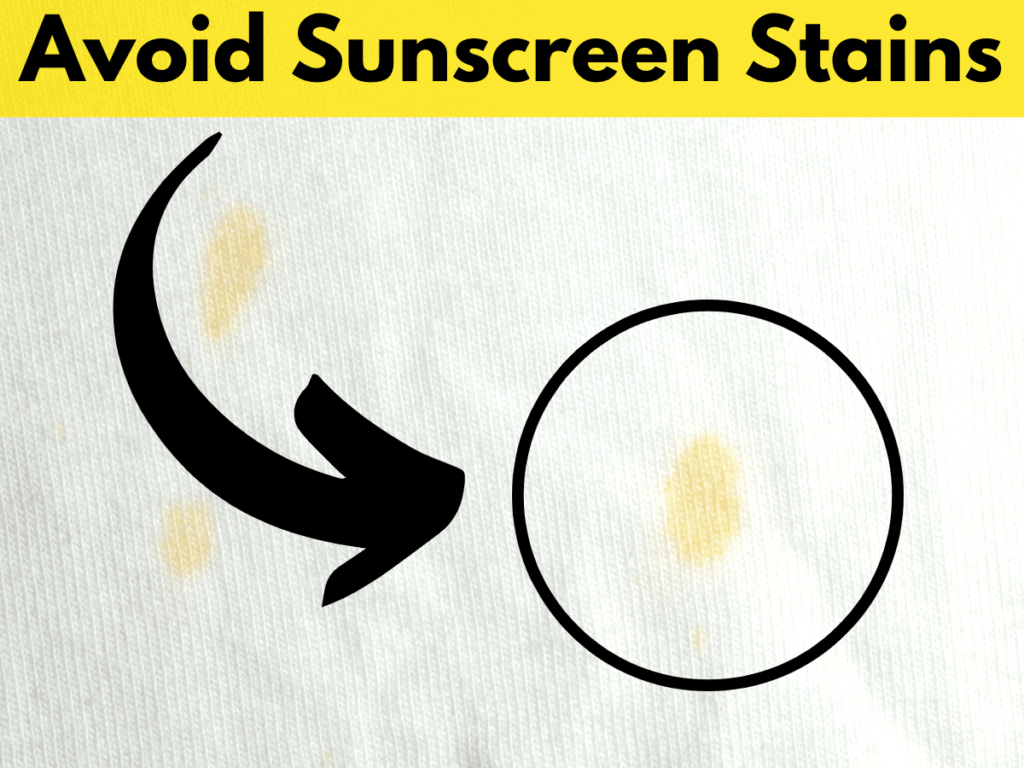
It is a chemical that absorbs the sun’s harmful UV rays, so it is natural that it is a premier ingredient in many sunscreens. While it is incredibly beneficial, it also leaves yellow stains on all your clothes.
The stains are especially pronounced if you use products with a higher SPF so that an SPF30 sunscreen will cause fewer stains than an SPF50. This characteristic is because these UV filters responsible for your protection have a slightly yellowish color.
It gets worse if you are using an oil-based product, as that will leave a stain even less likely to get out. So, looking for a sunscreen that does not destroy all your clothes is essential.
How Can I Remove Stains from my Clothes?
If you had not come across this list before, you might have stained clothes already. Or maybe it was your favorite shirt getting a horrible mark that made you search the internet for stain-free sunscreen in the first place.
If you want a solution for that shirt, I have some advice. First, treat the stain with a laundry product designed to get stains out before washing and try to dry it out in the sun. If the stain is still there, try using lemon juice.
Another method is to soak the stained area in white vinegar before washing it with hot water. You could also try rubbing eucalyptus oil on it for five minutes, as it effectively gets the stubborn stain out from cuffs and collars.
But remember that if you inadvertently got a stain on an expensive material like silk or linen, then do not try to wash it and quickly take it to the dry cleaners.
We hope you find your dream sunscreen from the list and never have to worry about pesky stains on your white t-shirts again!
Bask Sheer Moisturizing Sunscreen
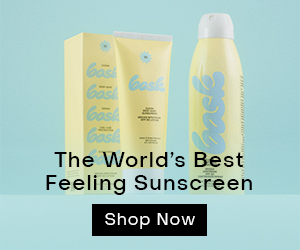
This is another of the must-have sunscreens. If you’ve not tried it on yet, you might be surprised at what you’re losing out on.
First, when it comes to its application, Bask is not one of those tacky, sticky sunscreens that make you feel greasy all day.
It is a smooth, blendable, suave sunscreen that leaves not a whiff of a white cast while offering you the best protection the whole summer day.
Besides, it is one of those unique products with a story behind it. The creation of the sunscreen was founded on inspiration from the loss of one of the family members due to skin cancer.
So without a doubt, it’s a product formulated with a personal conviction to lend a hand in assisting its users in their effort to gain maximum skin protection.
And related to this, bask is entirely organic, with all its ingredients containing no chemical inorganic additives. So the brand has gone the extra mile to keep off all parabens, sulfates, and other harsh ingredients.
Furthermore, Bask sunscreen is hypoallergenic to ensure maximum screen protection.
Speaking of maximum skin protection, the brand itself is active in championing the global effort in fighting against skin cancer.
To this end, they have partnered with the skin protection foundation(SPF) to spread awareness of the importance of sunscreen. And to match their words with action, they’ve committed 10% of their revenue to this cause.
So what does all this mean? If you are looking for a sunscreen inspired less by profit but more by quality and helping humanity, this is it.
Blue Lizard Australian Sunscreen


This sunscreen is the top pick among most reviewers. It is primarily a good pick if you have sensitive skin. The dermatologist-recommended sunscreen is a mineral product, and as an SPF30+, it is very light on your skin.
The main factor that makes it non-staining is that it is avobenzone-free, and since the substance is the primary culprit behind the stains on your clothes, it takes care of the significant problem and will not even stain your white tennis shirts.
It is also a reef-friendly sunscreen as it excludes harmful substances like Oxybenzone and Octinoxate. With substances such as Zinc Oxide and Titanium Dioxide acting as mirrors to reflect UV rays, it guarantees protection from the sun.
Keeping in line with its suitability for sensitive skin, it is also paraben and fragrance-free. It is perfect for the beach as it stays water-resistant for up to 40 minutes and the bottle even turns blue in UV light, so you instantly know when to apply.
SPF30 and SPF 50 variants make it easy to see why it is so widely used. But the only thing that might make you reconsider is that it leaves a slight white cast, a problem with many sunscreens. Its pros outweigh its con, though.
Neutrogena Ultra Sheer Dry-Touch Sunscreen


The brand is no stranger to top lists among many dermatologist-tested lists, and we personally even use their face products. This sunscreen is best suited for sensitive and oily skin types.
While it is not entirely avobenzone-free, its percentage is only 3%, and it has other factors to recommend itself. It uses Helioplex technology with SPF40, one of two recommended methods for sunscreens.
With their new formula being Oxybenzone-free, it has been developed to help prevent cancer and sunburns, and it is being Dry-Touch means that the substance is easy to spread on your skin without feeling greasy or sticky.
It is recommended for daily use as it is an affordable option with many pros; it is water-resistant, lightweight, and PABA-free. Its packaging comes in a tube and sprays forms, so you can pick whichever you prefer.
The only setback it has is that it does leave a white cast which can come across as unsavory, and it also is not sweat-proof, which means that you will have to reapply more often and might not want to use it for places like the beach if you are not someone who goes into the water a lot.
Thinksport SPF 50+ sunscreen


Another prevalent choice, especially among families, the sunscreen is designed for rigorous environments but is also perfect for going about daily. Another avobenzone-free choice, it leaves no stains on your sleeves even after the entire day.
It offers protection against UV rays and broad-spectrum and is an SPF50 product. That said, it is still notable for its relatively light application. It is not oily or greasy and will sit on the skin mildly.
The Thinksport sunscreen was the first to pass Whole Foods Premium Care requirements because it altogether forgoes harmful chemicals like PABA, parabens, phthalates, BPA, oxybenzone, avobenzone, petroleum, gluten, dairy, or toxic chemicals.
It is especially recommended for athletes due to its long wear and easy and quick application. According to the FDA, it has the highest water resistance and is also vegan. It is most suited for oily or sensitive skin and also smells good.
While not everyone finds it completely easy to apply compared to SPF30 or lighter formulas, the only major problem it seems to have is that it is harder to take off at the end of the day than other products, though the protection in return makes it worth it. It also leaves a slight white cast.
Elta MD Broad Spectrum SPF 50 Sunscreen


Another sunscreen meant for sensitive skin, and the Elta MD is another product that boasts of being easy to apply and non-greasy and oil-free. The principal substance it uses is a transparent 9% Zinc Oxide formula for the best protection.
Offering UVA and UBA protection, it is also another suitable choice for places like the beach as it stays water-resistant for around 80 minutes. It is a broad-spectrum coverage sunscreen and can be used for the entire body.
It also comes in a tube or spray bottle. It is especially recommended for skin prone to acne, hyperpigmentation, and Rosacea regarding sensitive skin. Since it is a mineral-based sunscreen, it lacks the most harmful chemicals.
With two variations, the SPF46 for more sensitive skin and the SPF50 for normal skin, the product is a sure win. It is also fragrance and paraben-free and will not clog your pores. And of course, it does not stain your clothes easily.
While it is not the cheapest product on this list, it is still recommended since it is even avobenzone-free, meaning it offers the most benefits while also being a dermatologist-recommended brand.
Raw Elements Natural Sunscreen


If you are someone who goes for products instantly if they are natural, then this is your choice from this list. Since the brand’s motto is to be as environment-friendly as possible, it altogether forgoes any harmful chemicals and allergens.
Its characteristics make it perfect for everyday and sensitive skin types. But apart from being the mandatory stain-free, it is also a very light formula that has drawn praise from all first-time users, who have called it their go-to product.
It provides water resistance for up to 80 minutes, which is currently the highest possible for sunscreens. It comes in a reusable tin made of recyclable material has also made it commendable.
The tin makes it easy to apply and reduces the chances of waste, and its use of non-nano Zinc Oxide also makes it an ideal choice. It is 95% organic and completely cruelty-free. It is appropriate for all ages and skin types and leaves it feeling moisturized.
It may take a bit of time to get used to, though, as it can be sticky and leave some residue. The smell might also be off-putting to some, but overall, it is a good choice if you are looking for an option that ticks all your boxes while also being environment-friendly.
Aveeno Positively Mineral Sensitive Skin Sunscreen


Another option for sensitive skin is a mineral sunscreen, free from most harmful chemicals. But this sunscreen focuses more on extra protection than others on the list and is a more concentrated formula.
It is an SPF50 formula, so it is on the heavier side and uses 100% Zinc Oxide as the primary substance, with standout ingredient oats making it especially good for the skin. It is another dermatologist-recommended product free from all parabens, phthalates, and dyes.
It is also good to use before workouts and jogs as it is sweat-proof and water-resistant for up to 80 minutes. The skin absorbs the lotion quickly and has a matte, sheer finish.
It is also non-comedogenic and non-irritating; it is a perfect choice for daily use, especially for those with sensitive skin. However, you may want to test it before buying it as your staple sunscreen because it has irritated some people’s skin.
Other reviewers have complained that it does not spread quickly on the skin. But with a four-star rating from over around 5000 users, it is undoubtedly an option to consider if it suits you.
Badger Baby SPF30 Sunscreen


This last option is for all the mothers looking for a sunscreen that is perfect for their babies and will not cause all their little one’s clothes to be stained yellow. It is a highly light option that uses only seven ingredients.
Being hypoallergenic and primarily organic, it utilizes non-nano Zinc Oxide and natural ingredients such as organic sea buckthorn, sunflower oil, and beeswax. Large zinc oxide particles ensure that the sunscreen stays on the skin and is not absorbed.
It is 98% organic and leaves out all harmful substances like oxybenzone, and it is baby-friendly and reef-friendly. It also has a nice calendula and chamomile smell, which are known to be calming fragrances.
With a light SPF30 and mineral-based formula, it is a pediatrician-tested sunscreen that is gluten-free. It is a good choice for mothers who want to make sure their child is protected from the sun but does not end up consuming something harmful.
It is perfect for your baby if you are going on a beach outing, as it stays sweat and water-resistant for around 40 minutes. All in all, it is an excellent mild, eco-friendly, and sensitive sunscreen for children.
If you use sunscreen often, you already know the struggle with the stains on your hems, sleeves, and collars, but you cannot forgo sunscreen if you want to avoid sunburn. That is why avobenzone-free sunscreens are getting so popular now.
Apart from that, since avobenzone is not an environment-friendly chemical, efforts are being made it make many sunscreens without it. There have also been experiments to react avobenzone and octinoxate with beta-cyclodextrin yields to make them environment-friendly.
It is unsure if it will solve the stain problem as it may be beneficial in the long run, but it is still inconvenient to see your clothes go to waste.
We hope this list helps you find the perfect sunscreen so you can enjoy protection from the sun without staining your clothes!
Next, check out my guide on removing yellow stains from white clothes, or my dedicated guide on removing sunscreen from clothes.

I’m an expert wardrobe organizer and a bit of a clean freak. I created this website and its YouTube channel to share practical guides about laundry and organizing. My teachings have been featured in multiple large news publications, and I’ve self-published two wardrobe organizing books and an entire course on the subject.