
The gate agent in San Francisco tags your carry-on for under-the-plane gate-check and the bag disappears for 4 hours, or 24, or 72. The personal item under the seat is the only bag you have for the next 24 hours, and the question is what you put in it before the flight.
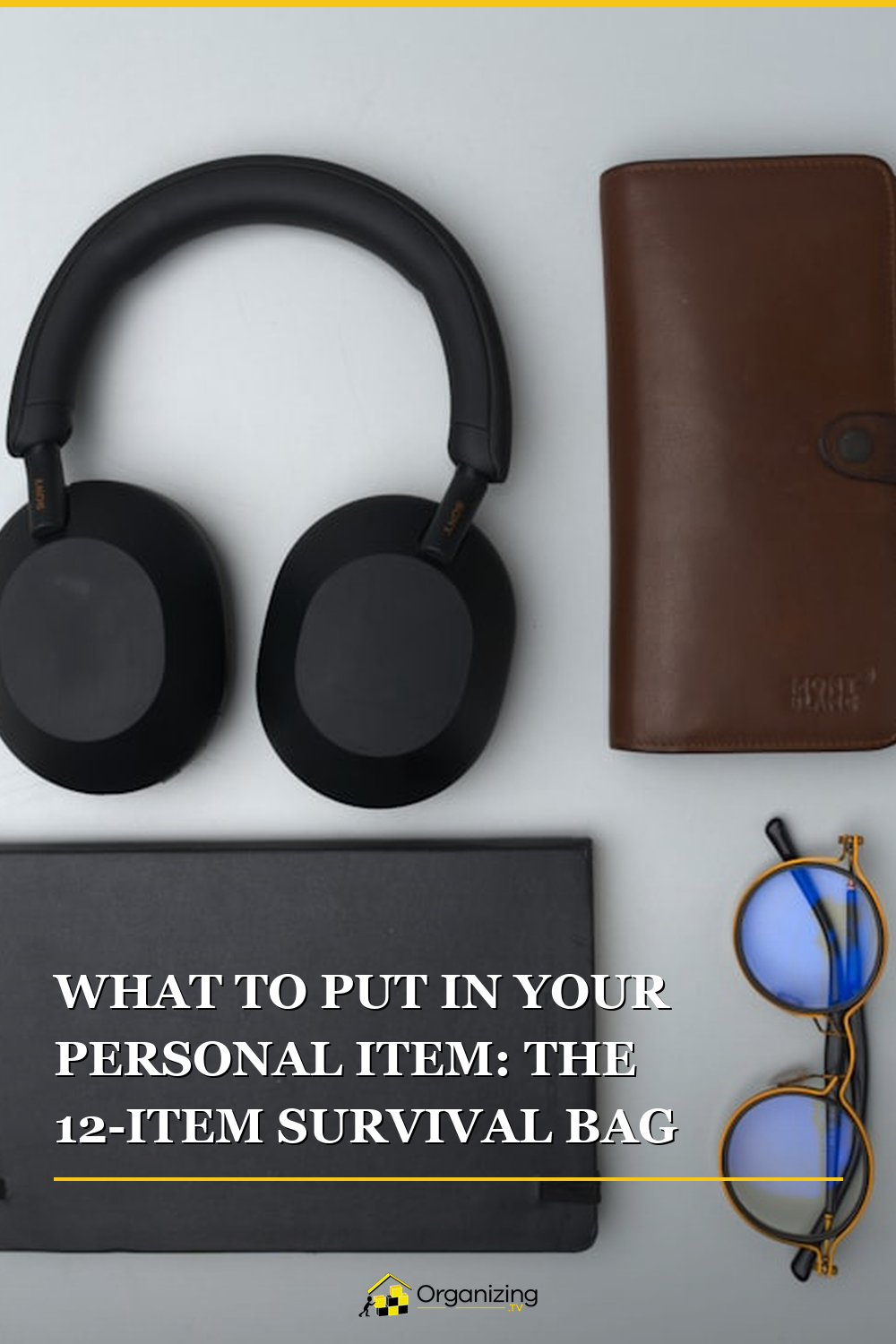
The 12-item personal-item survival list is the structural answer. Each item solves a specific 24-hour failure mode, and the list together turns the personal item from the “extra bag” into the survival bag that keeps the trip running while the carry-on is missing.
The amateur version of the personal item is “things I want during the flight.” The actual version is “things the trip depends on if everything else goes wrong,” and the difference is 12 specific items in 1 specific bag.
Below walks the 12-item survival list, the bag-selection rule, the under-seat-dimension reality check by airline, the packing order, the mid-flight access pattern, and the personal-item-vs-carry-on decision rule.
Pack the 12-item personal-item list and the bag handles every gate-check, lost-luggage, and 24-hour delay without breaking the trip.
TL;DR: The 12-item personal-item survival list handles gate-check, lost-luggage, and 24-hour-delay scenarios in one bag.

The 12-item personal-item survival list
- 1. Passport and travel documents: visa pages, boarding pass printed backup, hotel reservation printed backup
- 2. Prescription medications in original bottles: 25 percent buffer for delays, doctor’s letter, pill organizer for in-trip dosing
- 3. Phone and charger plus international plug adapter: the lifeline for navigation, communication, and emergency calls
- 4. Headphones (over-ear or noise-cancelling): sleep aid on long-haul, cabin noise during cruise is loud (commonly in the 75 to 85 decibel range)
- 5. Empty water bottle plus 1 to 2 snacks: refill airside, snack covers the meal-skip on tight connections
- 6. 1 change of clothes (tee, underwear, socks): the lost-bag insurance, fits in 1 packing cube
- 7. Toothbrush kit (toothbrush, paste, deodorant): the post-flight refresh in the airport bathroom
- 8. Glasses or contacts plus solution: backup pair if the primary breaks, contacts for the long-haul-with-glasses preference
- 9. Insurance card and emergency contacts list: printed backup separate from the phone, in case the phone dies
- 10. $100 emergency cash in destination currency: hotel tip, taxi, ATM fee buffer, the pickpocket scenario backup
- 11. Laptop or tablet with downloaded entertainment: the 8-hour flight entertainment, the work-on-the-flight option
- 12. Lightweight cardigan or layer: the cabin temperature regulator, also the post-flight blanket
The 12-item list is the survival kit, not the convenience kit, full stop. Every item solves a specific 24-hour failure mode, and skipping any one of them breaks the personal-item-as-survival-bag rule.
Per the TSA What Can I Bring guidance, the personal item is the bag that goes under the seat in front of the passenger and never gets gate-checked, making it the only consistent place for items that the trip depends on.
The bag-selection rule
- Maximum dimensions: a common upper bound is around 18 x 14 x 8 inches (45 x 35 x 20 cm) on US legacy carriers, with smaller limits on budget and European budget airlines: verify against the strictest airline on the itinerary
- Soft-sided bag preferred: molds to the under-seat shape, fits more than a rigid box of the same dimensions
- Multiple compartments: 1 quick-access (passport, phone), 1 main (clothes, electronics), 1 zippered (cash, meds)
- Trolley sleeve on the back: rides on the carry-on handle for the airport walk, no extra carrying weight
- Visible-name tag inside and outside: the lost-and-found scenario, name plus phone plus email
The bag-selection rule is the structural foundation for the survival-list packing, full stop. Wrong-size bag means the items do not fit, the airline cap is violated, or the under-seat space is unusable.
The packing order
- Heaviest items at the bottom: laptop, tablet, water bottle (filled at the airside)
- Medium items in the middle: 1 change of clothes, toothbrush kit, cardigan
- Frequently-accessed items at the top: headphones, snacks, charger, hand sanitizer
- Quick-access items in the front pocket: passport, boarding pass, phone, hotel reservation
- Cash and meds in the zippered pocket: theft prevention, no exposure when the bag is open
The packing order makes the personal item functional under the seat, full stop. Heavy at the bottom keeps the bag stable, accessible at the top means no digging for the boarding pass mid-line.
What the standard guides skip
The Points Guy, NerdWallet, AAA, AARP, AFAR, and most airline blogs publish personal-item packing guides. They share four blind spots that warp the recommendation.
First, they list “everything you might need” instead of “everything the trip depends on.” The 12-item rule is what fits in the bag without making it a second carry-on.
Second, they skip the lost-bag scenario. The personal item must contain the day-1 survival kit if the carry-on goes walkabout, including 1 change of clothes and the doctor’s letter.
Third, they ignore the bag-selection rule. Wrong-size bag fails at the gate scale, the under-seat space, or the airline cap.
Fourth, none of the standard guides cover the packing order. The frequently-accessed items end up at the bottom and the boarding pass disappears under the laptop.
The structure above corrects all four blind spots: 12-item survival rule, lost-bag day-1 kit, bag-selection criteria, and packing order.
The personal-item-vs-carry-on decision
- If the trip would derail without it: personal item: meds, passport, charger, glasses, day-1 outfit, emergency cash
- If a 4 to 24-hour delay would matter: personal item: phone, laptop for work, contact-lens solution, the connection-flight backup outfit
- If the bag could vanish and you would only lose convenience: carry-on: bulk wardrobe, second pair of shoes, hair tools, full-size toiletries
- If it is fragile or expensive: personal item: camera lens, prescription glasses, jewelry over $500
- If it is the day-of-arrival meeting outfit: carry-on (flat layer): the personal item is too cramped to keep the dress shirt unwrinkled
The personal-item-vs-carry-on decision is the single rule that separates the survival-bag traveler from the just-an-extra-bag traveler. Apply the 4-hour rule per item, route accordingly, and the trip survives the gate-check.
The under-seat-space reality check
The under-seat space varies dramatically by airline and aircraft type. Knowing the actual dimensions before booking saves the gate-counter overweight scare.

- US legacy airlines (American, Delta, United): generally around 18 x 14 x 8 inches: the standard personal-item allowance, fits the 12-item survival list with room to spare; verify the exact dimensions on the airline site, they differ
- US budget airlines (Spirit, Frontier, Allegiant): often a smaller personal-item box, sometimes around 18 x 14 x 8 but with strict enforcement: verify on the airline site, gate-counter measurement is strict
- European budget (Ryanair, Wizz, Vueling): typically a small under-seat bag (around 40 x 20 x 25 cm): medium, fits most of the 12-item list but tight; check the metric dimensions, they enforce in cm
- Asian premium (Singapore, ANA, Cathay): generous personal-item allowance, generally comparable to US legacy: verify the airline site for the exact dimensions and any combined weight cap
- Bulkhead and emergency-exit rows: no under-seat space at all, the bag goes overhead, the personal-item-survival approach is broken in those rows
The under-seat reality check is the structural fix for the “my bag does not fit” gate-counter scare, full stop. Verify the airline limit and aircraft type at booking, before the bag is purchased.
The 5-minute mid-flight access pattern
The personal item is accessed 5 to 10 times during a typical flight. The access pattern below makes each retrieval take 10 seconds instead of 90.
- Top of the bag: snack, headphones, water bottle: the items needed during cruise, no digging
- Front pocket: phone, charger, hand sanitizer, mints: the items needed every 30 minutes, easy access
- Side pocket: empty water bottle and gum: for the post-takeoff hydration and the ear-pop landing
- Zippered inner pocket: passport, boarding pass, hotel reservation, cash, meds: the high-value items, theft-resistant
- Bottom of the bag: laptop or tablet, change of clothes: the rarely-accessed items, space-saving
The access pattern is the operational layer of the personal-item system, full stop. Right placement turns the personal item from “where did I put my charger” into “10 seconds and ready.”
What never goes in the personal item
- Liquids over 100 ml (TSA confiscation, even in the personal item)
- Sharp objects (TSA confiscation, the bag is screened with the carry-on)
- Anything you can replace at the destination (souvenirs, bulky guidebooks, extra electronics)
- Valuables you would not bring on a city walk (high-end jewelry, large amounts of cash beyond emergency)
- The dressy meeting outfit (wrinkles in the cramped under-seat space, pack in carry-on flat)
Per the The Points Guy personal item packing guidance, the survival-bag framing plus the bag-selection rule plus the packing order is the configuration that maximizes both function and TSA compliance.
The personal-item packing diagram
The packing diagram shows where each of the 12 items lives in the bag. Print it, follow it, do not improvise.
| Compartment | Items | Why |
|---|---|---|
| Front pocket (quick access) | Phone, charger, hand sanitizer, mints | Accessed every 30 minutes |
| Top of main | Snack, headphones, water bottle | Accessed during cruise |
| Middle of main | Cardigan, toothbrush kit, glasses case | Layered for temperature, refresh kit |
| Bottom of main | Laptop or tablet, change of clothes | Heavy at bottom, rarely accessed |
| Side pocket | Empty water bottle, gum | Refilled airside, ear-pop landing |
| Zippered inner pocket | Passport, boarding pass, hotel reservation, $100 cash, prescription meds | High-value, theft-resistant |
The packing diagram is the gold-standard reference. 12 items, 6 compartments, every retrieval in 10 seconds.
What I keep in my own personal item
My 22-liter personal-item-size bag has carried the same 12-item survival list on every trip for years, full stop. Eagle Creek packing cubes for 7 years, the same toiletries in the transparent mesh bag, the empty water bottle for the airside refill, and the documents in the zippered inner pocket where they stay theft-resistant.
Electronics and documents go in the same bag because the requirements are the same: keep dry, keep valuable, keep accessible for security. The laptop sleeve doubles as the document folder for the passport copy, the prescription papers, and the printed boarding pass backup, with the cash and ATM card in the same compartment.
The personal-item bag never leaves my shoulder from the front door to the hotel. The carry-on can go gate-checked, get delayed, get rerouted, but the personal item is the constant; whatever is in it is what I have for the next 24 hours, every time.
The 5-minute pre-trip personal-item audit
The audit takes 5 minutes the night before departure and confirms the 12-item survival list is intact. Run it once, sleep easy.
- Walk the 12-item list against the bag (2 minutes): passport, meds, phone+charger, headphones, water bottle, snack, change of clothes, toothbrush, glasses, paperwork, $100 cash, cardigan
- Verify the under-seat dimensions of the booked airline (1 minute): bag fits, no last-minute surprises at the gate
- Check the access pattern (1 minute): high-frequency items at top and front pocket, high-value items in zippered inner
- Confirm the day-1 outfit is in the personal item (30 seconds): tee, underwear, socks, the lost-bag insurance
- Check the bag weight on the bathroom scale (30 seconds): under the airline limit (typically 7 kg combined with carry-on, or no separate cap for the personal item)
The 5-minute audit is the world-class habit that turns the personal item from “hope it has what I need” into “tested and ready.” 5 minutes of attention beats 24 hours of emergency shopping at the destination.
How does this fit into a broader packing system?
The personal item is the survival bag, the carry-on is the wardrobe-and-toiletries bag, and the optional checked bag is the bulk-and-shoes bag. Each one has a job, and the personal-item job is the trip-essentials job.
The Space-Saving Travel Packing Method picks the bag first, builds a 7-outfit capsule that scales from weekend to multi-month, and lands the weight at or below 7 kg by design.
Get instant access to the Space-Saving Travel Packing Method ($67, 30-day money-back guarantee).
Pin this so you’re ready with your personal item survival bag on your next trip.

12-year nomad, carry-on-only traveler across 5 continents, and creator of Organizing.TV.
I help you pack smaller, stress less, and actually enjoy the packing part of travel.
