
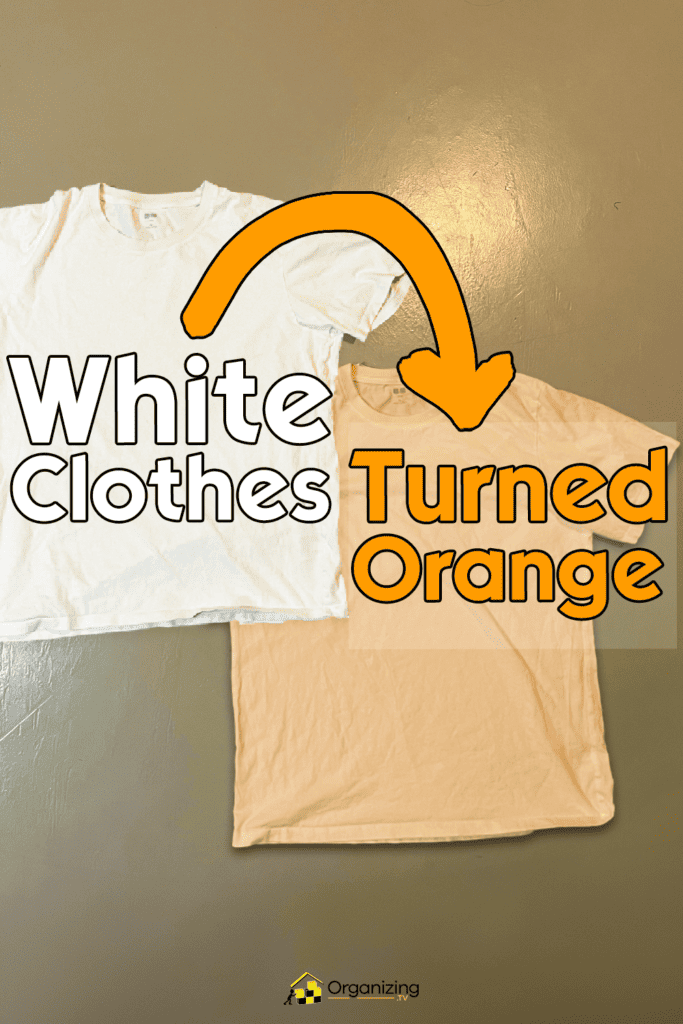
Did you open your washing machine and come face to face with clothes that have turned orange? Why did your clothes come out of the washing machine with new stains?
Your clothes turned orange due to rust, which is usually the cause of orange spots on your clothes. Rust is iron oxide, which is the result of oxidation, and it is created when iron and oxygen combine with water. Water is the single catalyst that causes iron to rust and is a reddish-orange color.
Fortunately, rust on clothing can be treated relatively easily. This article will detail how to remove rust from clothing. It will also go on to troubleshoot the root of the rust and help resolve it.
Washing Machine Deposits Rust on Clothes
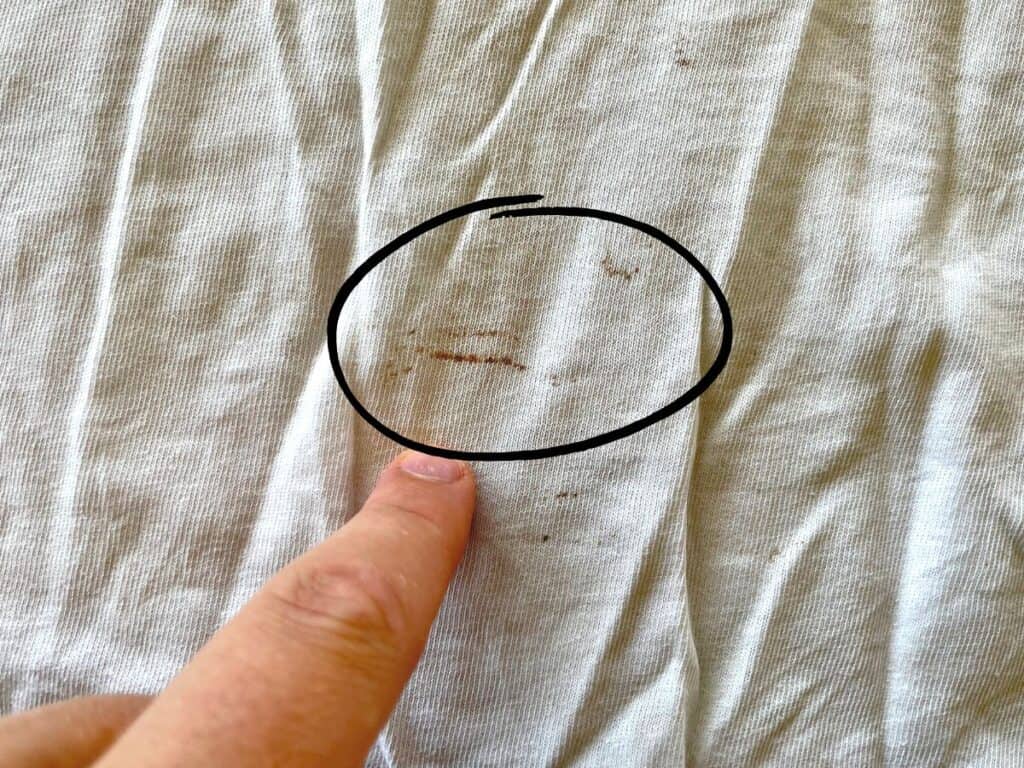
Rust can lead to many problems. At best, it is not aesthetically pleasing, but as it progresses, the process of rusting can thin iron, rendering it useless for its intended purpose.
Over time, iron can completely turn into rust.
If you notice rust on several articles of clothing, there is a good chance that your washing machine is the cause. Occasionally, your washing machine may actually stain your clothes while washing them.
There are four ways that your machine may be damaging your clothes with these unsightly orange stains:
- Foreign metal objects
- Rust in the washing machine
- Iron oxide in the water
- Rusted pipes
Each of these culprits is discussed in greater detail below.
Foreign Metal Objects
Every once in a while, you may end up washing clothing with contents in your pockets. Usually, this is not problematic, but sometimes, some of these objects can become a more significant problem.
Small metal objects, like paper clips, money clips, and keys, may work their way out of the pockets of your clothes and into the agitator of your washing machine. These small objects just sit, degrading over time as they are exposed to water over and over.
As these objects corrode, they may eventually cause rust to leak in the wash.
How To Fix
The solution is to remove the agitator from the washing machine. Here’s how you do that:
- Unplug the unit.
- Using a flashlight, carefully inspect the inside. If you see any foreign objects, remove them.
- After removing any objects you find, clean your washing machine. Simply run an empty load using hot water and add two cups of apple cider vinegar. Apple cider vinegar is particularly effective at removing any rust particles left behind.
Rust Inside the Washing Machine
Most washing machines currently manufactured will not rust, as they are typically made with stainless steel drums, which are rust-resistant. However, there is a chance that rust may develop inside the appliance, especially in older models.
How to Fix
Rust in the washing machine can be remedied with lemon juice or apple cider vinegar. As stated above, an empty wash cycle should do the trick. If you choose lemon juice, 2 cups (0.47 L) are still the necessary amount, as it does well at breaking down the iron oxide.
Although rare with newer models, the exterior may rust as well. While it is less likely that the inside will leak rust onto your load of laundry, it is advisable to remove the rust if it appears.
Here’s how to do that:
- Remove rust by spraying an equal parts vinegar and water solution onto the affected areas.
- Let it sit for five minutes, then wipe off with a cloth or rag.
- Scrub the rust off with a baking soda and water paste using a non-abrasive cloth.
- Rust can be sanded off with 150-grit sandpaper.
- To prevent future exterior rust, you can treat the area with a rust-resistant primer.
Iron Oxide in the Water
There is a chance that the cause of the rust stems from the water itself, which may be harder to determine as water that appears clear can still contain rust particles. So even with clear water, you might still have orange clothes at the end of the wash cycle.
How To Fix
The best indicator of rust in the water supply is a water test kit, available at home improvement stores. If rust is detected in your water, you can attempt to eliminate it with one of two methods. If the iron levels are low, a water softening system should resolve the issue.
For higher levels, a water filtration system is the best choice.
Rusted Pipes
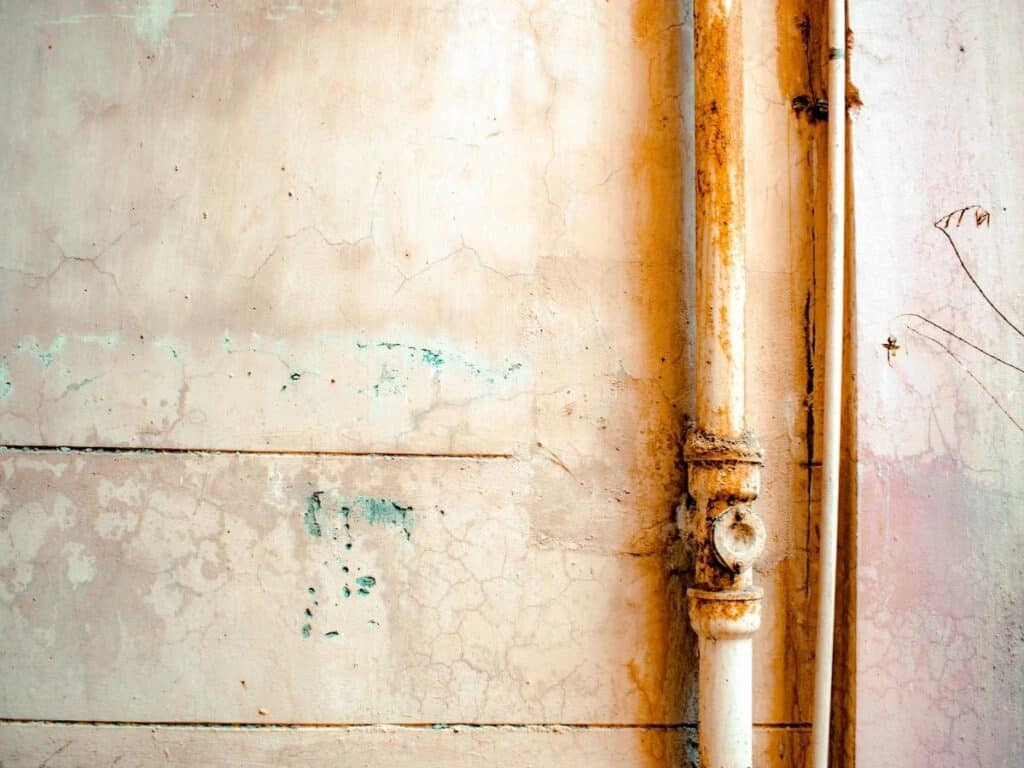
Sometimes, the problem extends beyond the actual washing machine. If nothing else seems to be wrong, but your clothes continually have rust stains, you may, unfortunately, have rusted pipes, which are more characteristic of older homes.
Homes built prior to the 1960s were generally outfitted with galvanized pipes, which are more prone to rust on the inside. Today, PVC piping prevails in homes. Rusted pipes will only worsen with time, and the only remedy is to replace the pipes.
A licensed plumber can help locate damaged pipes and install new pipes.
How To Remove Rust From Clothing
Fortunately, the orange specks and stains on your white clothing can be removed with the right products. In fact, they can be cleaned very easily as long as you use the appropriate product, as long as it’s not bleach.
Bleach serves many purposes in our lives and our laundry rooms, as it is ideal for whitening clothes and removing various stains. While bleach is versatile, it is actually disastrous for rust stains.
Bleach or bleach products will only worsen a rust stain, as it oxidizes iron, and will only ruin the clothing further, possibly permanently. It will likely set the stain.
Remove Rust Stains With Rust Removing Products
There are several rust-removing products that are readily available, which contain strong acids and are highly effective at dissolving the rust that has appeared on your clothes.
Follow these stain removal steps:
- Dampen the area with plain water.
- Spray the rust remover product onto the area. The stain should slowly shrink.
- Once the stain is gone, rinse the garment with plain water.
- Send the garments through a wash cycle as you would normally wash the item, but skip the dryer. The garment should air dry following the wash.
Conclusion
Orange stains on your clothes can be disheartening. However, removing the stains is not a difficult process. To prevent rust stains from staining more clothing, locate the cause of the rust and eliminate it.
I wrote a comprehensive guide on why your clothes are changing color that covers every type of discoloration. Feel free to check it out next.

I’m an expert wardrobe organizer and a bit of a clean freak. I created this website and its YouTube channel to share practical guides about laundry and organizing. My teachings have been featured in multiple large news publications, and I’ve self-published two wardrobe organizing books and an entire course on the subject.