
While it’s absolutely nothing to be ashamed of, the bulge is something that is not always appropriate to put on display. And for some men, it may be something they’re not comfortable showing to the world at all.
The good news is there are several methods you can use to prevent showing your bulge.
Below is a list of the various methods you can use to prevent showing a bulge. Check them out, and we are sure you will find something that meets your preferences.
Remember, not all the methods will work for one individual, but at least one or two will help you.
Change Your Underwear
This is the first and lowest level you can use to minimize your bulge. Don’t think of going commando (not wearing any underwear).
Doing so will not change a thing. In some cases, it may make matters worse. At the same time, boxer shorts may not be as effective.
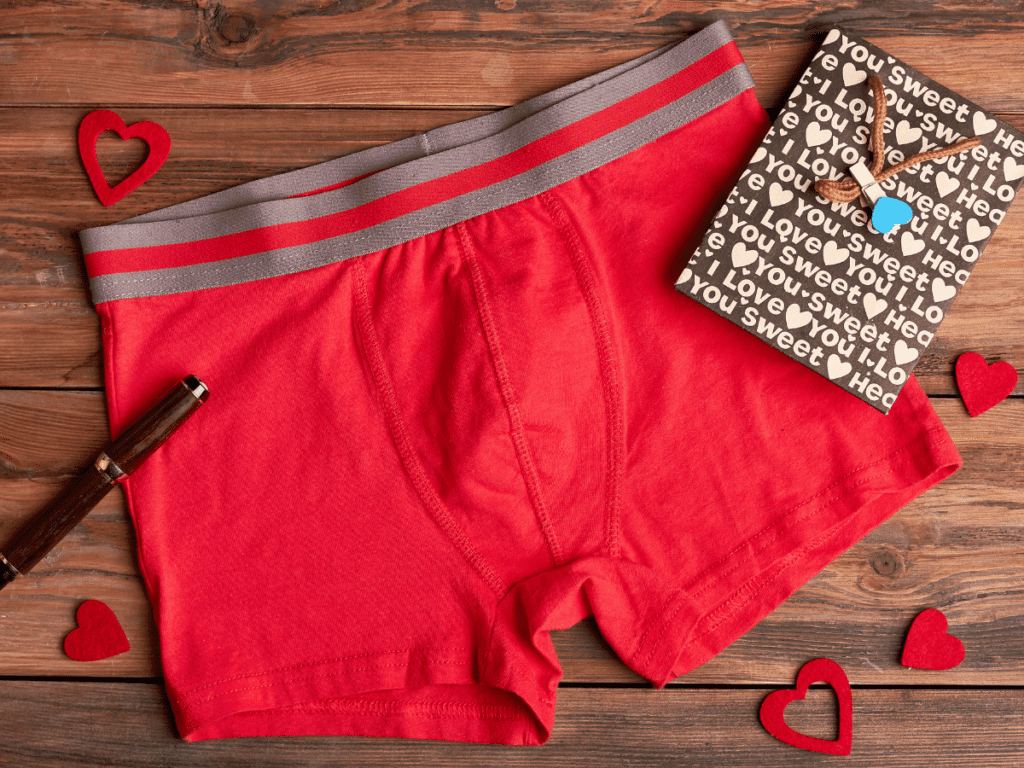
On the other hand, boxer briefs or traditional briefs may be needed. The best option for minimizing your bulge using underwear is compression underwear.
Just as the name suggests, they are designed to provide compression on your private parts. Ideally, they are designed to be used by athletes.
So how does this work? They lightly squeeze any muscles experiencing strain. By doing this, they can delay and reduce soreness.
The fact they squeeze your private parts is a part of the design. In the long run, this type of underwear prevents bulges without causing any discomfort.
You may have heard that pouch underwear may be a good solution. We noticed that some people had found this to work.
However, if you try a pair of this type of underwear and it doesn’t work for you, go for compression underwear.
This is the best solution, especially for men with large private parts.
What about Jeans?
When it comes to bulging, jeans can be your worst nightmare or best friend. It depends on your body type and the size of your private parts.
For example, if you are well endowed, you should never wear skinny jeans. These jeans tend to make matters worse when it comes to bulging.
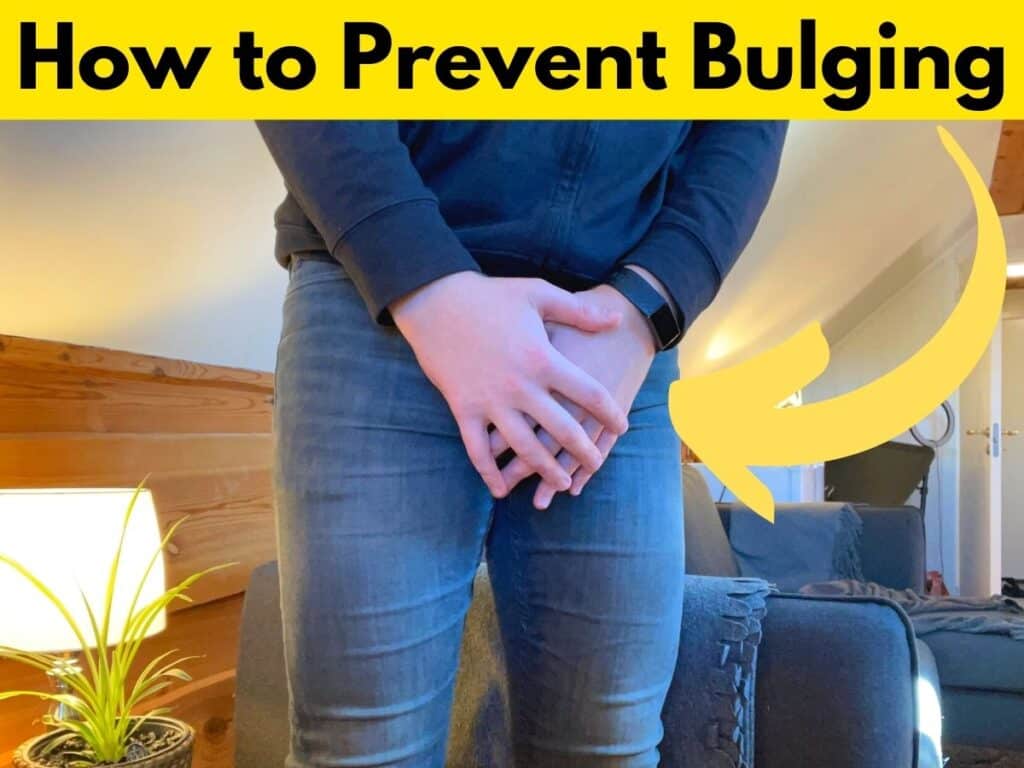
Let’s say you are a skinny guy who normally uses “slim fit” as the minimal skinny jeans option. If you find some bulging happening at that size, you should steer away from skinny jeans.
Instead, try going for looser fits that may not be as skinny but reduce the amount of bulge showing.
For example, you may try going for a straight cut. This site is likely to give you more room and a reduced bulge.
If you are a person who uses the gym often and you have built up strong quads, go for “athletic fit.”
These have more room in the thighs and seat for someone with strong quads. It’s also a great option if you are well endowed and need your private parts to “breathe.”
Avoid jeans with less elasticity and heavier fabric weight. They are likely to have issues conforming to your shape, meaning they will automatically increase your bulge.
Unfortunately, such jeans tend to last longer than their lighter and more elastic counterparts.
You should also avoid button fly jeans. They tend to accentuate your bulge because they have an increase of buttons and fabric layers right over your package.
This means zipper flies are the best option for preventing bulges in jeans. Look out for some jeans that come with a crotch gusset. They are manufactured with an extra diamond of fabric built into the crotch.
Such jeans are developed for men who move a lot when wearing jeans. For example, this is a great option if a construction worker wants to prevent showing a bulge.
They are also great for any man who wants to reduce their bulge.
Finally, color, believe it or not, has an impact on your bulge when you wear jeans. This is also known as the “wash” in jeans parlance.
Remember that a lighter wash will show more bugle than a darker wash. You will notice we are going to repeat this theme throughout this guide. This means it’s a proven way to prevent bulges.
Last but not least, avoid “whiskering.” This is also known as artificial wear lines. They have proved to be instrumental in accentuating your bulge.
If you need to use them, we suggest you try them first. If your bulge isn’t accentuated or seems normal, you can wear them.
I also have a guide on how to stop pants from riding up that may interest you.
Slacks and Suits

The majority of the points on preventing showing bulge in jeans are used in more formal pants. They include but are not limited to suit pants, slacks, and khakis.
However, there is more emphasis due to the thinner fabrics.
In slacks, lack of using undergarments or using loose ones are not recommended. They are likely to increase the bulge instead of reducing it.
Such garments tend to increase the bulge when the light hits the pants right.
Additionally, like with jeans, skinny cuts leave less room for your private parts. On the other hand, lighter colors tend to highlight your contours better. This is why we recommend wearing dark pants or slacks.
Unlike jeans, slacks have an option known as pleats. They are folds that draw the pants tighter at the waist. At the same time, they leave more fabric through the seat.
On the downside, pleated slacks are no longer in fashion. We also noticed that they don’t look all that good. If you don’t mind looking a bit old school, these are the ways.
If you are having bulge problems, these may be your only option. This is the case, especially if you work in a school or you’re required to wear lighter colors such as khaki at work.
Tailoring
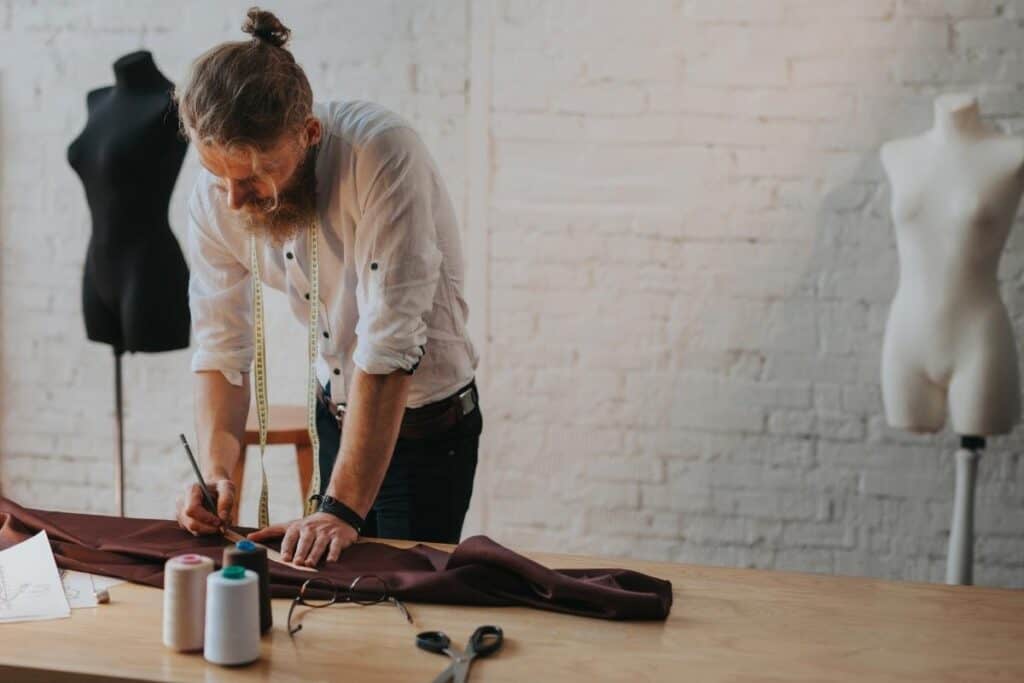
One of the disadvantages of tailoring is you may spend some money to alter the clothes you already have. However, tailoring can make a huge difference when it comes to preventing bulges.
This is more for huge people who wear suit pants and slacks.
Most men used to wear boxers in the past, but they were tighter than the options available today. It was common for a tailor to fit a suit at that time.
They would ask the buyer which side they wore. This meant the pant leg where you hang down.
Currently, that is not a major issue for most men. The advent of modern boxer briefs and common briefs has eliminated the need for that question.
Additionally, modern slacks have been typically worn lower on the waist. This means they provide more room for the crotch and therefore prevent showing a bulge.
If you are someone that has bulging issues, a tailor will help you prevent it. All you need is to tell your tailor you are having bulging problems. It’s better to be straightforward if you want the best results.
Once a tailor understands why you need to restructure your clothes, they will be better positioned to prevent bulges.
The tailor will likely create more space for your crotch and seat. They will also reduce the fabric strain that causes the bulge, effectively reducing it.
How about Shorts?
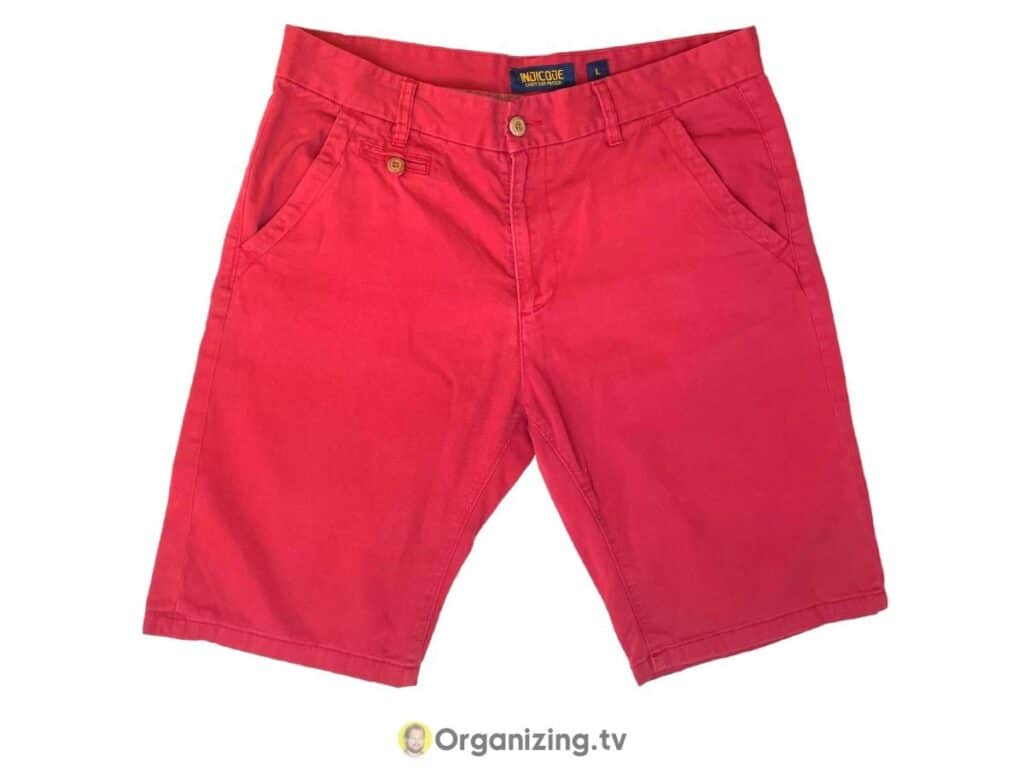
The same problem you face with slacks is the same problem you get with shorts. For instance, shorts tend to be made from lighter colored and thinner fabrics. Additionally, they tend to have a slimmer cut.
Furthermore, shorts tend to have an inseam with a higher rise. The inseam would be the area between the legs if you didn’t know.
This means they are likely to come up close to your genitals. You can run out of room pretty quickly if you have a lot hanging down in that area. This tends to let you show off more than you planned.
Shorts are the hardest to manage when it comes to preventing showing bulges. This doesn’t mean there is nothing you can do.
The first step would be getting larger shorts than your regular size. Try finding those that are a bit large for your hips. Finish by wearing a belt to hold them up.
Using these methods, you get extra space without wearing something too baggy. Alternatively, larger shorts need you to wear them a bit lower on your hips.
Make sure you use a belt when you do this. The move will lower the crotch from the bulge territory, preventing you from successfully showing a bulge.
My guide on how to stop shorts from riding up may interest you.
Gym Shorts

By their nature, gym shorts are difficult to manage when bulging. Such clothes are designed thin to allow for adequate ventilation.
Their design is meant to allow for minimal restriction when you exercise. The downside is such shorts tend to be very “draping.” This tends to highlight your assets in a not too flattering way.
When it comes to gym shorts, there are two schools of thought.
The first one is you need to put on restrictive underwear similar to what we mentioned above.
These will ensure your private parts are strapped down.
The second option is to accept the bulging and go about your workout as if nothing has happened.
Both of these options are acceptable, meaning you are to decide the way forward. Keep in mind at the gym; you need to focus on the workout and not how you look.
Furthermore, the majority of people at the gym will be focusing on their workouts. This means very people will be able to notice your bulge.
Unless you are showing off deliberately, preventing bulges on gym shorts should not be your primary concern.
What of Swimming Trunks?
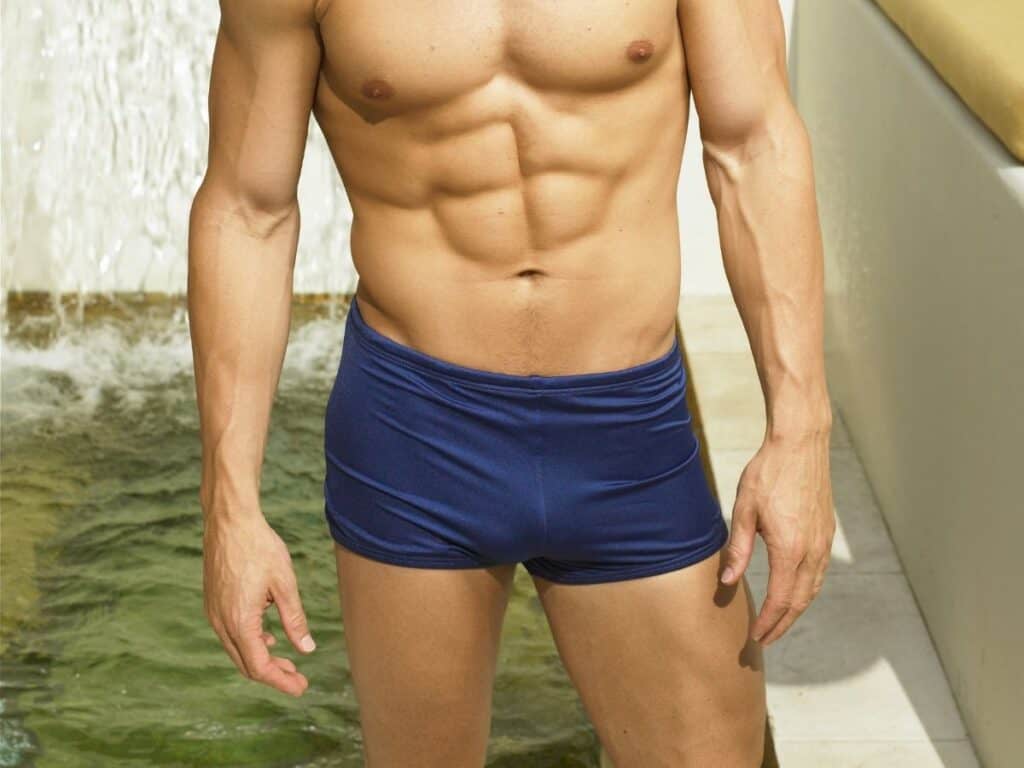
This is one of the dreaded issues men face when they want to go swimming. It’s believed that avoiding a bulge at the swimming pool is impossible.
That is not a fact. If you didn’t know, there are some things you can do to prevent bulging at the beach or pool you use.
It’s an issue for any man who uses swim shorts. This means if you are well endowed, the problem is accentuated.
The same solutions used for regular shorts and pants apply for swimming trunks or swimsuits. You need to control the size of your bulge using the right undergarments.
For instance, you can control the amount of bulge by using swim briefs or a snug liner. Additionally, you can opt for patterned and dark fabrics as they are great at preventing bulges.
Take note that breaking the suction is the important thing you can do.
To do this, pull out on your swimming trunks or suit’s legs when exiting the water. This lets the air in and water out. The result is the swimsuit will not stay formed on your genitals.
Does Posture Matter?

Posture matters, although it may not be obvious immediately. The way you sit or stand has a huge impact on how much bulge you show.
For example, when you lean back, your hips are thrust forward. Bad posture with time may result in your pelvis tilting back. This raises your genitals forward and up.
Strive to stand straight while keeping your hips square and your shoulder back.
At the same time, your pelvis is tilted to raise your crotch if you slouch when you sit. This means you are likely to experience a bigger bulge when you recline.
Sitting upright is the best way to avoid this from happening. It also ensures your genitals are hand more naturally.
The flipside of sitting upright is that your private parts always need room to hang between your thighs. This means you need to ensure your knees are apart. In some cases, this isn’t feasible.
For example, you may be accused of “manspreading.”
In some cases, people don’t consider it appropriate to heft your genitals up onto your thighs to put your legs together as women do.
Unfortunately, this is one of the things that people will not understand.
It is what it is, and you have to do what makes you comfortable.
Conclusion
The above information is designed to help anyone who wants to prevent a bulge. Some people may find a solution from one section, while others may want to use various sections.
Either way, you are guaranteed to prevent a bulge when you use the information provided.
I also wrote a COMPREHENSIVE guide on how to keep your other body parts from awkwardly showing through your clothes. Feel free to check it out next.

I’m an expert wardrobe organizer and a bit of a clean freak. I created this website and its YouTube channel to share practical guides about laundry and organizing. My teachings have been featured in multiple large news publications, and I’ve self-published two wardrobe organizing books and an entire course on the subject.

Bryck Ruger
Saturday 16th of September 2023
Oh, what an offensive and shameful organ the penis is. We must hide it at all costs. No hint must be seen lest someone realize the person they’re seeing is a male! How horrid!
Jake
Thursday 23rd of February 2023
Who tries to prevent a bulge? Most guys I know are perfectly fine if their junk makes a bulge in their clothes! It's just part of being a guy! Everyone knows that guys have genitalia, that it's external (i.e. it protrudes), and that it's perfectly natural for it to create a small bulge in one's clothing! I don't know any guys who would go to all that work to hide a natural and normal part of themselves! And, in fact, most guys are kinda proud of their bulges, especially if it's a large bulge.