
Pajamas are loose and comfortable clothes we like to wear at home, especially around bedtime. But for all their comfort, pajamas tend to rid up your legs and waist in your sleep.
Or even when you just sitting or lying on the couch. Sooner or later, the pajama pants or any other sleepwear you prefer, slide up your legs and become crumbled under your body.
That’s as far from comfortable as you would want your pajamas to be.
In general, your pajamas and sleepwear tend to ride up mostly because they’re the wrong size and fit. Loose garments with nothing to hold on to on the body tend to ride up the more you move. This also happens because the fabric is too soft or maybe because of your own body anatomy that lets the clothes ride up unhindered.
But it’s not pajamas that give you this problem. Anything you wear to bed from shorts to nighties can ride up and become uncomfortable to sleep in.
Read on to find out more about this problem and how to stop pajamas from riding up.
All about Pajamas Riding up

Sleepwear such as pajamas is all about comfort and not coming in the way as you lay sprawled on the bed. The last thing you would want is for the pajama pants to ride up your legs or even for the top to roll up under your back or side and feel like you’re sleeping on a lumpy mattress. And to get the pajamas straightened out and untangled is not easy. You could literally lose sleep over this issue.
Don’t get me wrong. This riding-up issue is not limited to pajamas. Any item of clothing you wear in the comfort of your home can and does ride up. And not just in bed. Even when you sit on a couch and relax your back a little, your shorts, dress, nightie, or sweatpants would ride up and become crumbled and knotted under you.
Worse still, if you like to wear shorts in bed or while lounging on a lazy afternoon, those shorts would ride all the way up your legs and reveal parts of you that you’d rather keep hidden. Trying to move in this situation would only make things worse and might cause the shorts seats to clamp on your body like a vice.
Why Pajamas Ride up
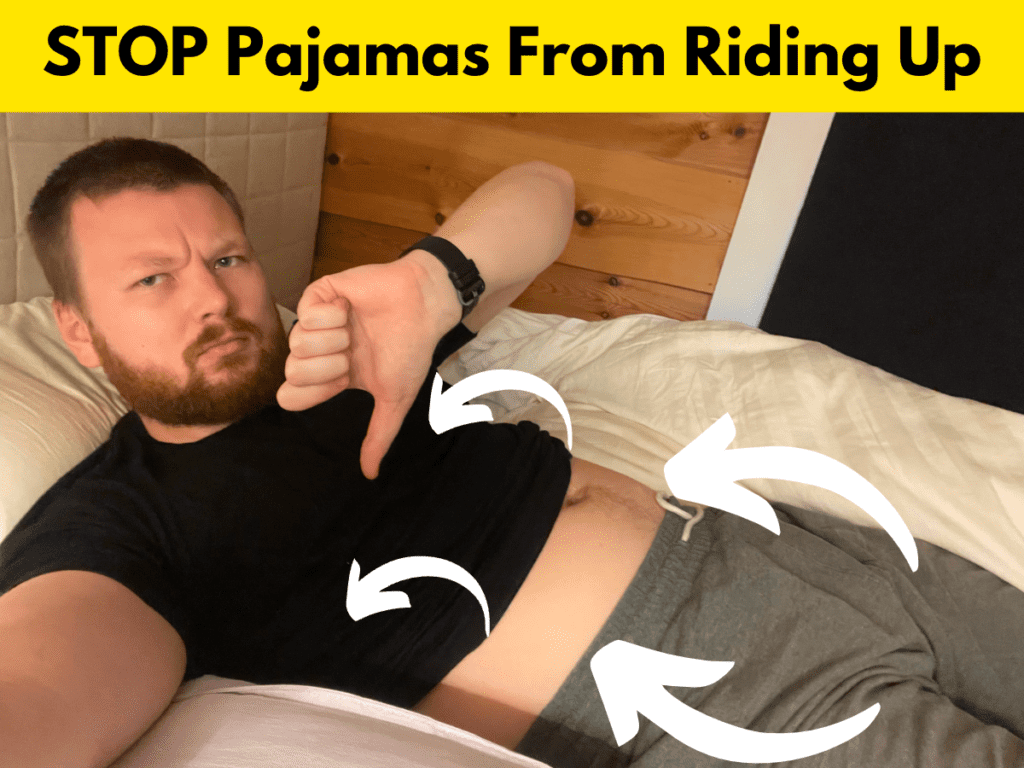
Pajamas ride up for all kinds of different reasons. Some of these reasons have to do with the size of the pajamas themselves. Others are related to the fabric and cut of the garments. And then there’s your own body shape and how it facilitates the riding up of the pajamas over your body.
Conservative Cut
One of the reasons people prefer to wear pajamas to bed is that they’re loose and comfortable garments where functionality is the main focus rather than the looks. You wear the pajamas when you go to sleep so that you can thrash about in bed without having the pajamas restrict your movements. But that’s not always the case.
Some pajama styles are all about looking good and hugging your body just the right way. This sacrifices the comfort for the sake of looking chic. Instead of giving your limbs room to exercise the full range of motions, the pajamas come in the way and limit your movements. But in your sleep, you don’t care about looking stylish. So the pajamas ride up your legs and chafe your thighs.
Size Considerations
When you buy pajamas, you always aim to get one that is slightly larger than your size. You want the pajamas to fit, but also to feel comfortable. In fact, comfort should be the number one consideration when choosing the right pajamas for you. If you decide to get pajamas that fit you well, then you’re looking at many nights spent trying to get the pajamas untangled.
There’s another side to this pajama size issue. More often than not, the garments would shrink after washing them a few times. If the pajamas were the right fit when you bought them, they’ll become one size too small after you wash them. That leads to the pajama top riding up your waist while the legs grip your thighs and cause burns.
Soft Materials
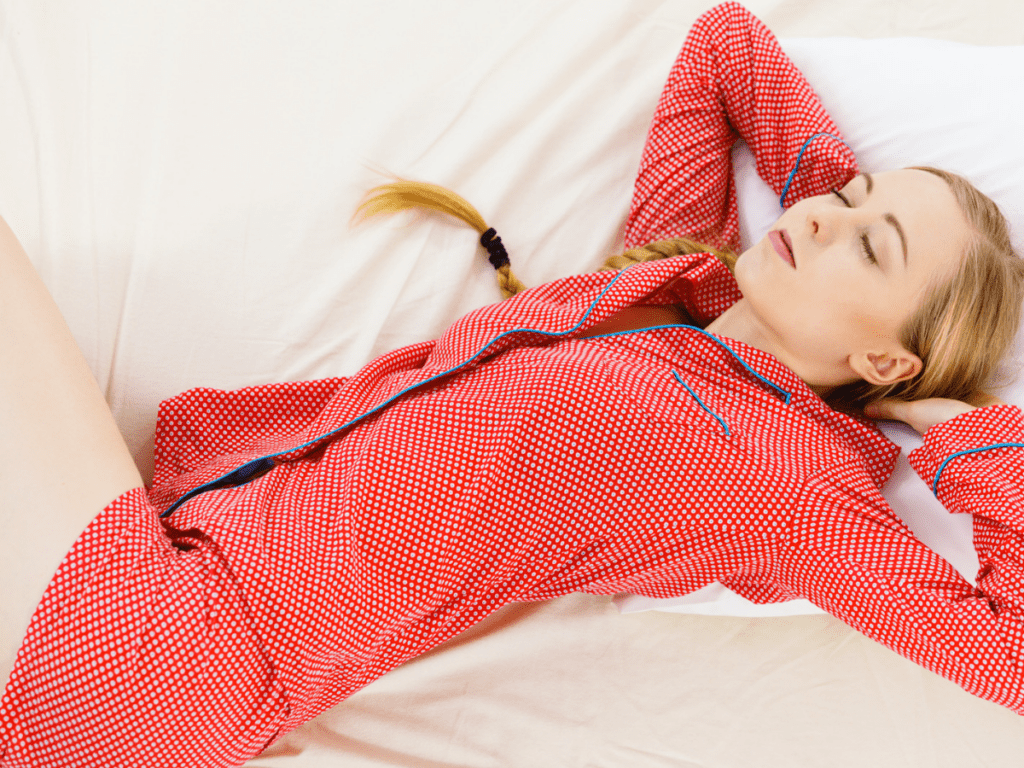
Pajamas are often made of a combination of cotton and silk while others are made of acrylic and stain. Cotton is comfortable while silk is smooth on the skin and makes you look elegant in the homely pajamas. But this combination can be lethal as far as the issue of riding up is concerned. A comfortable and soft fabric has less friction and won’t stay where it’s supposed to for long.
Once you swing your leg out from under the covers on a warm night or stretch your arm across the bed in your sleep, the pajamas respond by trying to resist your movement. But the soft fabric cannot hold you back so the pajamas rumble up and become frumpy. And you’re one body roll away from having the pajama top riding up your chest area.
Body Shape

Although pajamas are designed to flow freely along your body, the fact is, people come in different body shapes and sizes that even the generic measuring standards that clothes manufacturers adhere to cannot cover entirely. Size L for example cannot account for a person with bigger hips than chest area. As for size XL, it still has a long way to go before it can fit people of that size perfectly.
I mentioned the hip and chest areas because that’s where the pajamas would ride up most often. If you are blessed with big hips, you’ll strain the pajama pants and cause them to ride up your legs quickly. And the same applies to people with large chests or big bellies. The various curves in the human body make it easier for the pajamas to slide, roll, and crumble.
How to Stop Pajamas from Riding up
The problem with pajamas is that you still need them to be comfortable while trying to keep them flowing breezily along your body and not scrunching up or tying themselves into knots. That means you can’t apply regular solutions like spraying hairspray on your legs to keep them in place or applying polyester boning or silicone caulk around the hems like on pants.
Unless you enjoy the scratches and chafing you’ll get all night, all these solutions will only make the pajamas or nightwear too uncomfortable to wear in bed. Instead, you need to get a little creative with your solutions to keep the pajamas from riding up without sacrificing the comfort of your sleepwear garments. Here are some solutions to try out.
Elastic Bands
This is by far the easiest and most practical solution to pajama pants, sweatpants, shorts, or any other garment that goes around your legs. You can do this even if you have zero experience with sewing or doing anything with clothes except for putting them on and taking them off. You’ll need a pair of elastic bands for each garment you want to amend, scissors, and thread and needles.
Start by testing the elastic bands and making sure they cannot go above your calves. Then use the scissors to undo the hems of the pajama legs. Place the elastic inside of the hem and sew it back. Now try the pants on. When you pull the legs up the bands will keep them well below your calves. If you’re trying this with shorts, make sure the elastic band fits around your thigh.
Right Size
I already pointed out that getting the wrong pajama size is a recipe for having the pants ride up your legs while the pajama top scrunches up around your waist. This can be the result of the pajamas being too big or too small for you. Pajamas that are one or more sizes too big for you will slide on and off easily and bundle up around your hips.

The same is true for pajamas that are too small for you. The legs are already chafing your thighs even when you don’t move your legs. As for the small pajama top, it’s already itching to ride up your waist and pile over your chest area with little provocation. So always try your pajamas before buying them at the store and aim for comfort rather than looks.
Right Materials
Satin pajamas are more likely to ride up your body than those made of pure cotton. The fact is, the fabric itself without much traction is less likely to stay around your ankles all night. As you toss and roll in your sleep, the smooth material just makes it easier for the pajamas to ride up and end up wedged in the most unlikely places by the time you get up in the morning.

In that case, you should avoid soft and smooth fabrics such as silk, satin, and acrylic. Polycotton is not a good option as well since the polyester reduces the friction in the cotton. Ideally, you should go with either cotton or linen pajamas and nightwear. They’re comfortable, have lots of traction, and don’t tend to slide off the body that easily.
FAQs
Why do my pants ride up when I sit?
Pants are made to look good and fit your lower half with the hems a couple of inches safely above the floor. However, when you sit down, you bend your hips and knees which requires more fabric that the pants simply don’t have. Something has got to give and in this case, the hems would give.
Your hips pull at the pants when you sit and since the waist is securely buttoned, the hems compensate by riding up your shins. The seat of the pants piles up in your lap and the pants look nothing like they’re supposed to look. This often happens for pants that are one size too small for you.
Why do my shorts ride up and give me a wedgie?
Shorts are more likely to ride up than pants. By design, they are small and fit your body more snugly than, say, pajamas or sweatpants. The short legs of the shorts only make the problem worse than moving or sitting strains the little fabric you have and causes the shorts to give you a wedgie.
When buying shorts, make sure the hems circle your thighs perfectly. If they ride up your inner thighs even if just a little bit, they’re too small for you and will cause all kinds of problems when you sit, move, or sleep in them.
More on shorts riding up here.
How do you know if your pajama pants are too small?
Your pajama pants should flow gracefully around your hips and legs and rest on or slightly above your toes. While the length of the pajama pants is important, the width of the legs and seat is just as crucial for your comfort as well. So always check that the seat of the pajama pants doesn’t hug your hips tightly. It’s not supposed to do that.
Next check that your thighs don’t touch the material of the pants. Focus mainly on your inner thighs and make sure that when you walk, sit, or stand, the fabric doesn’t cause friction against your skin. That’s how you know your pajama pants are too small.
How do I keep my spandex shorts from riding up?
You can keep your spandex shorts from riding up by sewing elastic bands in the hems or wearing biker shorts under them. You could also try boning them to keep them firm and prevent them from scrunching up.
Conclusion
Your pajamas are a source of comfort to help you relax and sleep without restricting your movement or riding up your legs and waist. Always choose the right pajama size for you and select natural fabrics such as cotton and linen which are less likely to slide up your body while you walk, sit, or sleep.
I have also created a comprehensive guide on stopping all your clothes from riding up that may interest you to read next.

I’m an expert wardrobe organizer and a bit of a clean freak. I created this website and its YouTube channel to share practical guides about laundry and organizing. My teachings have been featured in multiple large news publications, and I’ve self-published two wardrobe organizing books and an entire course on the subject.