
You crouch down to grab something and feel the breeze on your lower back. Again.
You know exactly what everyone behind you can see, and hiking up your pants only buys you five minutes before it happens again.
TL;DR: This is almost always a waistband shape problem. Switch to higher-rise pants, add a properly-fitted belt or suspenders, and wear a shirt long enough to cover the gap.
Your lower back curves inward, and your pants do not follow that curve, so the waistband lifts away from your body every time you bend.
- A waistband that fits your hips but is too loose at the back creates a gap that opens the moment you lean forward.
- Low-rise pants sit so low that any bend drops the waistband below the point of no return.
- If you carry more weight in the midsection than in the rear, the waistband has nothing to grip against in back.
Here are the fixes, from free adjustments you can try right now to permanent alterations that eliminate the problem for good.
If plumber’s crack is part of a broader pattern where your clothes shift and slide during the day, see how to stop all clothes from falling down for the full system.
Why It Happens
The waistband does not match your body’s curve
Your lower back curves inward between your waist and your hips.
A well-fitting waistband follows that curve.
A poorly-fitting one bridges straight across, leaving a gap between the fabric and your skin.
When you stand upright, the gap is small and your belt or shirt hides it.
When you bend forward, your hips push backward, the waistband pivots on the front of your body, and the back of the waistband lifts away from your skin.
The gap becomes large enough to see straight down your lower back.
This is the same rise mismatch problem described in how to keep underwear from showing when you bend over, just taken to the next level.
Your pants are too low-rise for your body
Low-rise pants sit at the hip bone instead of at the natural waist.
There is very little fabric between the waistband and the top of your rear.
Any forward bend drops the waistband below the point where it can contain your lower back.
High-rise pants sit 2 to 4 inches higher, which means there is more fabric between the waistband and the danger zone. The waistband has to drop much further before anything is exposed.
You carry weight in front but not in back
If your stomach pushes the front of the waistband outward while your rear does not fill out the back, the waistband gets pulled down in front and gaps open in back.
A belt helps but does not solve the underlying shape mismatch.
The waistband is trying to sit level, but your body is not level from front to back.
This video from undershirtguy covers specific fixes for people with a flat rear who struggle with pants falling down:

This is extremely common for men over 40 and anyone who has lost muscle mass in the glutes. The pants were designed for a body shape that distributes weight more evenly around the waistband.
The pants are simply too big
Sometimes the problem is just sizing. Pants that are one size too large in the waist will slide down no matter what.
The extra fabric bunches under a belt and still leaves gaps at the back. If you have lost weight since you bought the pants, this is the first thing to check.
How to Fix It
Fix 1: Wear higher-rise pants
If you already own higher-rise pants, this fix costs nothing.
High-rise pants sit at or above the natural waist, which puts 3 to 5 extra inches of fabric between the waistband and your lower back.
You have to bend much further before anything shows.
Mid-rise is the minimum.
Low-rise pants are architecturally incapable of preventing plumber’s crack on most body types.
If you wear exclusively low-rise pants and this is a constant problem, the rise is the cause.
Fix 2: Add a belt that actually fits
A belt prevents the waistband from sliding down, but only if the belt fits correctly.
A belt that is too loose does nothing.
A belt that is too tight creates a muffin top effect where the waistband digs in at the front and gaps at the back.
The right belt fit: you should be on the middle hole (not the tightest or loosest), and the belt should hold the waistband snug against your lower back without compressing your midsection. If you cannot achieve this, the pants do not fit, and the belt is compensating rather than solving.
For pants without belt loops, a stretch belt that threads through loops on the belt itself can work. Some people also use suspenders for pants that refuse to stay up.
Fix 3: Try suspenders
Suspenders hold pants up from the shoulders instead of the waist.
Your pants cannot slide down if they are being held up from above.
It is the most reliable fix for people who have tried everything else.
Suspenders are especially effective if you carry weight in the midsection, because they bypass the waist entirely. The pants hang from your shoulders, so your belly shape does not affect where the waistband sits.
For a look that works without drawing attention, wear suspenders under an untucked button-down or casual shirt.
The shirt covers the straps completely.
Button-on suspenders look cleaner than clip-on versions, but clip-ons work on any pants without needing alterations.

This video from HIS WARDROBE demonstrates a hidden suspender alternative that keeps pants in place without a traditional belt:

If traditional suspenders feel too bulky, hidden suspender systems attach at just two points (front and back center) and sit flat under a shirt. These are designed specifically for people who want the function of suspenders without anyone knowing they are wearing them.
Fix 4: Get the waistband altered
A tailor can fix the back waistband gap permanently for $15 to $25. The alteration involves taking in the center back seam of the waistband, removing the excess fabric that creates the gap.
If you have pants you love that gap at the back, this is the fix.
The tailor pinches the excess fabric at the center back, marks how much to remove, and sews new darts or takes in the existing seam.
The result is a waistband that follows the curve of your lower back instead of bridging across it.
Another common alteration is adding elastic to the back of the waistband. The tailor makes small openings under the side belt loops, threads a piece of elastic through the inside of the waistband, and anchors it at both ends.
The elastic pulls the back of the waistband inward, closing the gap without visible changes to the outside of the pants. This is a reversible alteration that works on jeans, dress pants, and work pants.
Fix 5: Wear longer shirts or layers
A shirt that extends 4 to 6 inches past your waistband covers the gap even when it opens.
This does not fix the gap itself, but it hides the consequence.
Nobody sees your lower back because the shirt is in the way.
Tuck the shirt in if the pants have a waistband that holds it. A tucked shirt provides a fabric barrier between the gap and the outside world.
For casual wear, a longer untucked shirt works just as well. Many brands now make shirts with extended back hems specifically for this reason.
An undershirt adds another layer of coverage. Even if your outer shirt rides up slightly, the undershirt stays tucked and covers the gap.
Fix 6: Choose pants with built-in solutions
Some pants are designed specifically to prevent this problem:
- Elastic-back waistbands: Jeans and work pants with elastic inserts in the back of the waistband self-adjust to close the gap. These are common in work wear brands.
- Contoured waistbands: Some brands cut the waistband in a curve instead of a straight line, following the natural shape of the lower back.
- Higher back rise: Some jeans have a back rise that is 1 to 2 inches higher than the front rise, giving extra coverage in the back without making the front uncomfortably high.
- Non-slip waistband lining: A silicone or rubber strip on the inside of the waistband grips your shirt or skin, preventing the pants from sliding down.
Specific Situations
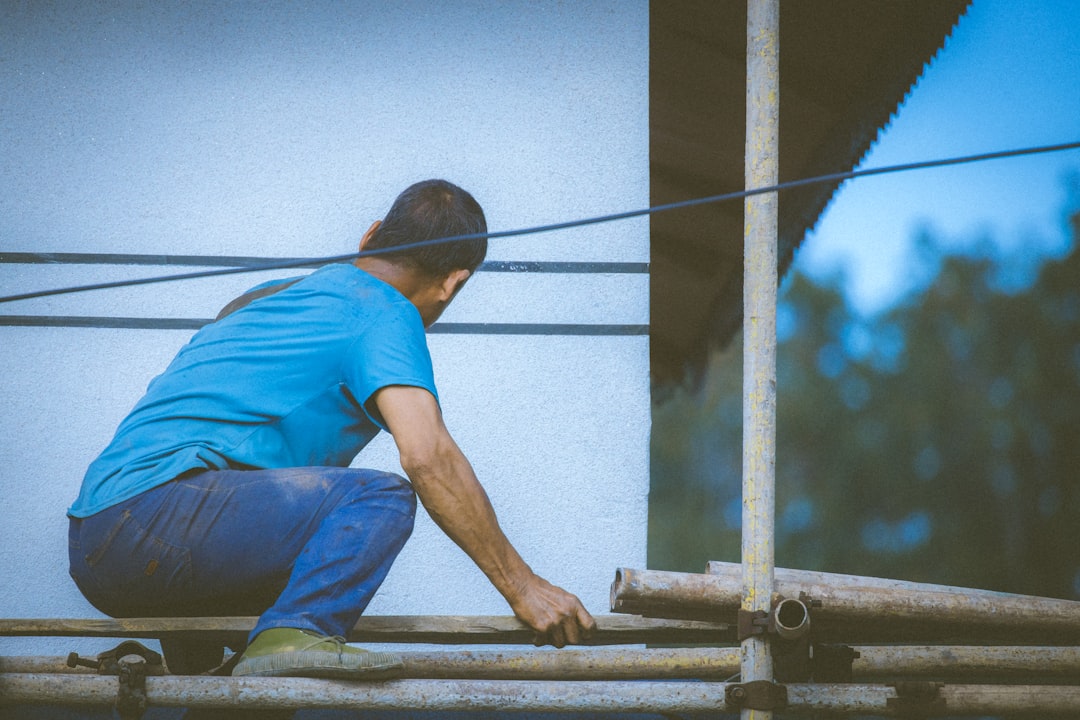
At work (construction, plumbing, manual labor)
This is where the problem gets its name.
Constant bending, kneeling, and crouching make the gap worse than any other activity.
The fixes that work for manual labor:
- Work pants with elastic-back waistbands (Carhartt, Dickies, and Duluth Trading all make these)
- Suspenders worn under an overshirt or flannel
- A longer undershirt tucked in tight, with the work shirt layered on top
- High-rise work pants instead of regular-rise
Sitting at a desk
Office chairs push the back of the waistband down when you lean forward.
A belt and a tucked shirt handle this for most people.
If you wear dress pants, having the back waist taken in by a tailor is the cleanest fix.
Casual and everyday
Mid-rise or high-rise jeans with a belt and a shirt that extends past the waistband by at least 3 inches. This is the most forgiving combination for everyday movement.
Working out or playing sports
Athletic pants with elastic waistbands rarely cause plumber’s crack because the elastic grips your waist continuously.
If you wear basketball shorts or sweatpants that ride low, a drawstring pulled snug fixes it.
For weightlifting, a lifting belt provides extra coverage during squats and deadlifts.
What Makes It Worse
Low-rise pants without a belt. This is the most common cause.
There is almost no margin for error. One bend and the gap opens.
A heavy tool belt or loaded pockets. Weight in the pockets or on a tool belt pulls the waistband down faster than body movement alone.
If you carry tools, suspenders or a higher-rise pant compensate for the extra weight.
Pants that are too big. An extra inch in the waist means the pants have room to slide. Even a belt cannot fully compensate for pants that are too large.
Sitting and standing repeatedly. Each sit-stand cycle shifts the waistband slightly.
Over a full day, the pants migrate downward unless something (belt, suspenders, elastic) holds them in place.
Bottom line: Higher-rise pants, a properly-fitted belt, and a shirt long enough to cover the gap. That three-part combination prevents plumber’s crack in almost every situation.
If visible underwear is the main issue rather than full lower-back exposure, see how to keep underwear from showing when you bend over for targeted fixes.
For the full picture on keeping clothes in position all day, see how to stop all clothes from falling down.
Pin this page for the next time you catch yourself hiking up your pants in public.

12-year nomad, carry-on-only traveler across 5 continents, and creator of Organizing.TV.
I help you pack smaller, stress less, and actually enjoy the packing part of travel.